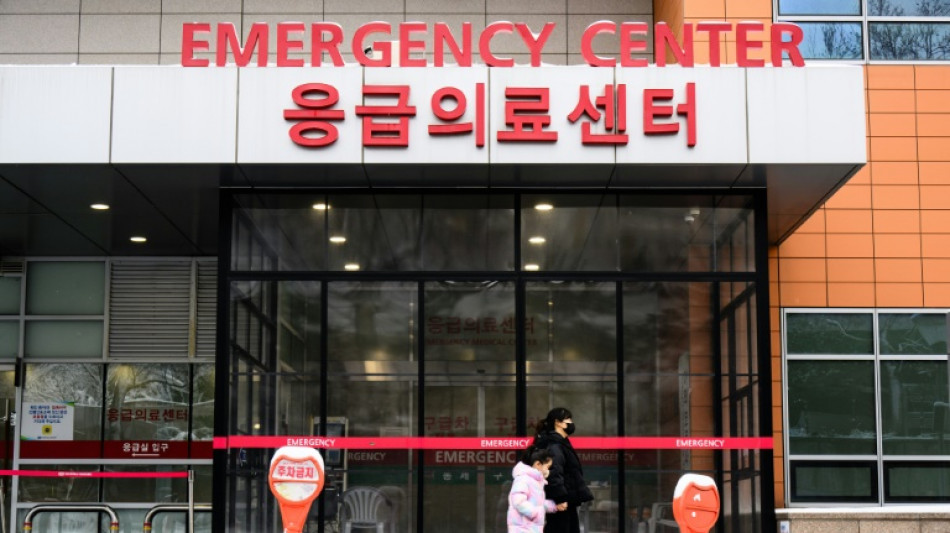
S. Korea urges doctors to return to work as protests continue / Photo: ANTHONY WALLACE - AFP/File

 أين الأمن القومي العربي؟.. تحليل نقدي لغياب الرؤية المشتركة

 Crude Oil Prices Rise on Reports of Houthi Attack on Saudi Refinery

 El Nino’s Weakening Grip on Tamil Nadu Rainfall Hinges on Potential Cyclone

 Black Friday Discounts Cut Prices on Two Top-Rated Wiper Blades

 Twickenham Grounds Team Prepares Pitch for Six Matches in Three Days

 Luxembourg City Plans €13 Million Abrigado Centre for 2029

 Two A1 Crashes Create Kilometres of Rush-Hour Congestion

 South Africa Places 36 Hospitals on Standby for Possible Imported Ebola Cases

 Tamil Nadu Secures Rs 58,214 Crore in Investments at Vettri Conclave

 فرنسا تدعو لتجريم "الفصل العنصري القائم على الجنس" دولياً

 أزمة الصواريخ الاعتراضية في البنتاغون: استنزاف المخزونات يفرض تعبئة صناعية حتى 2030

South Korea called Monday for trainee doctors to return to work, saying they would be spared punitive actions if they went back to the hospitals, as protests over medical reforms entered a second week.
Thousands of junior doctors have resigned and stopped showing up to work as part of a spiralling action against government plans to sharply increase medical school admissions in the face of shortages plus a rapidly ageing society.
The mass work stoppage has resulted in cancellations and postponements of surgeries for cancer patients and C-sections for pregnant women, with the government raising its public health alert to the highest level over the fallout.
Doctors are considered essential workers in South Korea and are restricted by law from striking.
The government has repeatedly claimed the mass resignation is unlawful, and has threatened to take legal action against those involved, or cancel their medical licences, Yonhap news agency has reported.
The government made a "final appeal" Monday for the doctors to return to work this week, interior minister Lee Sang-min said during an crisis management meeting.
"If you return to the hospital by February 29, you will not be held accountable for what happened in the past," he said.
Lee said the prolonged collective action posed "threats to the lives and health of patients".
"The hospital was the space where your dream of treating sick patients was realised every day," he said to striking doctors, adding: "I hope you will return to the workplaces... and engage in dialogue for better medical environment."
Hospitals across the country have struggled with a shortage of doctors in the past week, with local media reporting Monday that more doctors -- including fellows and even fresh medical school graduates -- were joining the protests.
Seoul says it has one of the lowest doctor-to-population ratios among developed countries, and the government is pushing hard to admit 2,000 more students to medical schools annually, from next year.
Doctors have voiced fierce opposition to the government's plan, claiming it would hurt the quality of service.
Proponents of the reform say doctors are mainly concerned reforms could erode their salaries and social status.
Junior doctors say the new medical education reforms are the final straw in a profession where they already struggle with tough working conditions, and that the over-reliance on trainees in the current healthcare system was not reasonable or fair.
But polls suggest up to 75 percent of the South Korean public supports the increase in medical school admissions, with those living in remote areas struggling to access quality health care.
F.Qawasmeh--SF-PST

