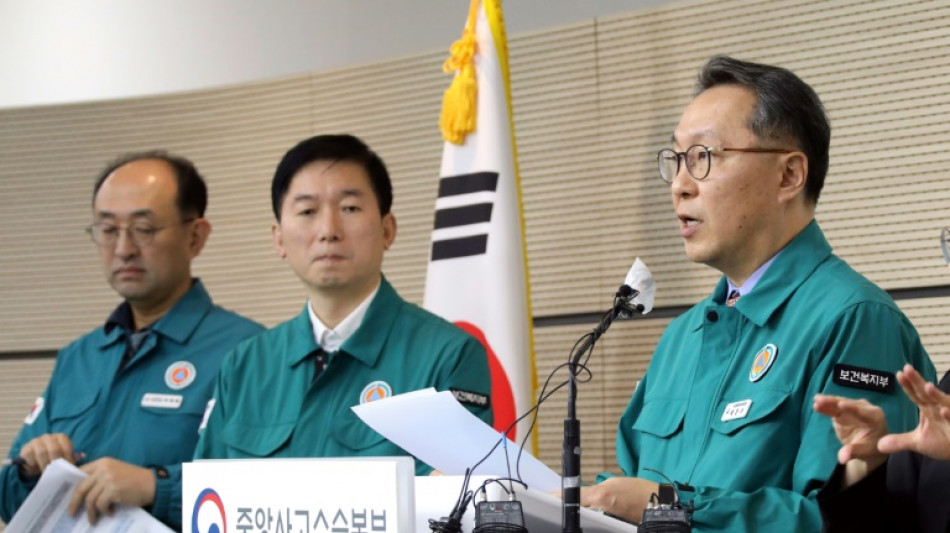
S. Korean trainee doctors stop work to protest medical reforms / Photo: - - YONHAP/AFP

 أين الأمن القومي العربي؟.. تحليل نقدي لغياب الرؤية المشتركة

 Crude Oil Prices Rise on Reports of Houthi Attack on Saudi Refinery

 El Nino’s Weakening Grip on Tamil Nadu Rainfall Hinges on Potential Cyclone

 Black Friday Discounts Cut Prices on Two Top-Rated Wiper Blades

 Twickenham Grounds Team Prepares Pitch for Six Matches in Three Days

 Luxembourg City Plans €13 Million Abrigado Centre for 2029

 Two A1 Crashes Create Kilometres of Rush-Hour Congestion

 South Africa Places 36 Hospitals on Standby for Possible Imported Ebola Cases

 Tamil Nadu Secures Rs 58,214 Crore in Investments at Vettri Conclave

 فرنسا تدعو لتجريم "الفصل العنصري القائم على الجنس" دولياً

 أزمة الصواريخ الاعتراضية في البنتاغون: استنزاف المخزونات يفرض تعبئة صناعية حتى 2030

South Korean hospitals turned away some patients and delayed surgeries on Tuesday as hundreds of trainee doctors stopped working in a protest against medical training reforms.
Almost 6,500 doctors submitted their resignations -- nearly half the junior workforce -- with 1,600 walking off the job, Second Vice Health Minister Park Min-soo told reporters.
The government has ordered the doctors back to work, and police have warned of arrests for instigators of the work stoppages, as South Korean law limits the ability of medical staff to strike.
"I express deep concern and regret over the trainee doctors' collective actions, which have resulted in cancellations of surgeries and disruptions in medical services", Park said.
The government's top priority is to "maintain medical emergency services and treatment for serious cases at major hospitals", he said, to "avoid situations in which patients with serious conditions are prevented from accessing treatment".
South Korea says it has one of the lowest doctor-to-population ratios among developed countries, and the government is pushing hard to increase the number of physicians, partly to help a fast-ageing society.
But doctors have voiced fierce opposition to a new government plan to sharply raise medical school admissions, claiming it would hurt the quality of service.
Proponents of the plan say doctors are mainly concerned reforms could erode their salaries and social status.
The training reforms call for a 65 percent increase in the number of students admitted to medical schools by 2,000 people a year, starting from 2025.
The plan is popular with the public, who experts suggest are tired of long wait times at hospitals, with a recent Korean Gallup poll showing over 75 percent of respondents in favour, regardless of political affiliation.
But it has drawn fierce opposition from doctors, with the Korean Medical Association saying the government's threats of legal action were akin to a "witch hunt" and claiming the plan would create a "Cuban-style socialist medical system".
The Korea Association of Medical Colleges has called for a significantly lower admissions increase of 11 percent, a demand the government has rejected.
"I have submitted my resignation letter," Park Dan, head of the Korea Interns and Residents Association, wrote Monday on Facebook.
"I am now able to abandon my dream of becoming a specialist in paediatric emergency medicine without any regrets. I have no intention of going back."
Vice Minister Park said the government's reform plan was necessary given South Korea's rapidly ageing society, saying they anticipated the number of people over 65 would have grown 70 percent by 2035, driving increased demands on hospitals.
C.Hamad--SF-PST

