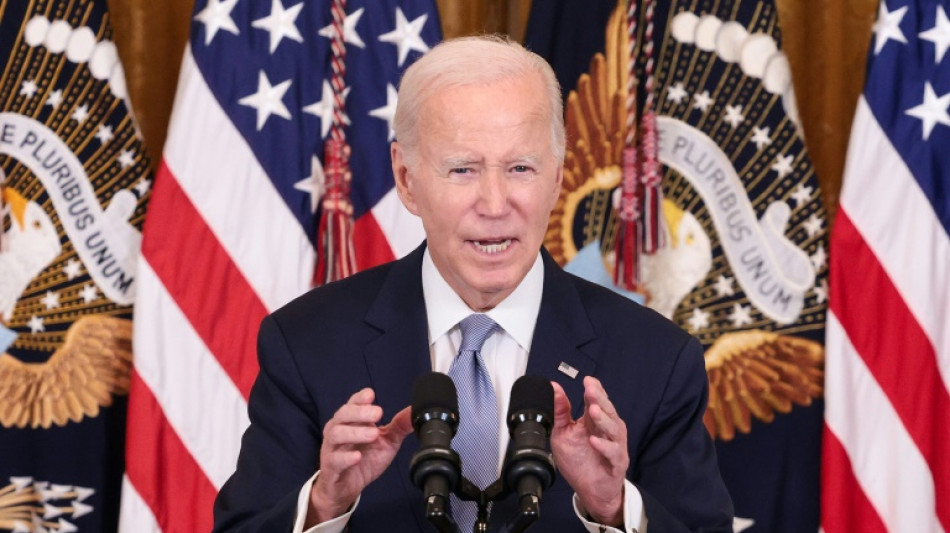
Drugmakers agree to US govt price talks amid pushback / Photo: WIN MCNAMEE - GETTY IMAGES NORTH AMERICA/AFP/File

 Alex Bodi pushes ahead with expansion: ALIX LASERS showroom planned for Bucharest

 Fossil fuels off COP31 agenda as global output keeps rising

 Haze not 'a threat' to Singapore F1 race: organisers

 COP31 organisers say to seek 'ambitious' action with their text

 Bartunkova thrashes Muchova to reach China Open semi-finals

 Drone hits Yandex data centre, in first such attack on Russia

 Oil prices surge and stocks sink on fresh inflation worries

 AI startup Manus raises $500m after Meta acquisition blocked by China

 From refuge to repatriations: Malaysia's Myanmar U-turn
 Morikawa says LIV players face 'business decision' after Rahm exit

 Tenzing Norgay's son says Himalayas sending climate warning

 On your bike! Bottas opts for two wheels to reach Singapore GP

 Alcaraz, Sinner, Osaka commit to Australian Open '1 Point Slam'

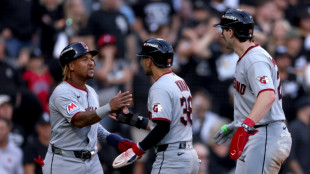
 Dodgers beat Braves to advance in MLB playoffs, Rays oust Yankees

 'A sun as black as my lungs': how corruption crucified a polluted Albania city
 The British historian helping the French rediscover de Gaulle

 Dodgers beat Braves to advance, Guardians survive in MLB playoffs

 Latin American, Caribbean women top Nobel literature buzz

 US says Fiji-based Chinese official paid bribes for Beijing

 After botched US execution, Christa Pike was nearly taken off life support

 Guinea-Bissau junta urges military unit loyal to ex-president to disarm

 As species decline, green turtles offer glimmer of hope
 Brothers Scott and Beauden Barrett named to start for All Blacks

 EU trade chief seeks to dial down China tensions

 'Never again Bolsonaro': thousands march ahead of Brazil election runoff

Major drugmakers have grudgingly agreed to negotiate on reducing prices for 10 medicines, the White House said Tuesday, a key element in President Joe Biden's push to lower healthcare costs ahead of the 2024 election.
Under the initiative, the federal government is using new powers to negotiate the prices of drugs covered by Medicare, the massive health insurance program for people 65 and older.
Biden's landmark Inflation Reduction Act (IRA), the major legislative package of energy transition policy and social reforms he signed last year, allowed Medicare to begin negotiating drug prices for the first time in its nearly 60-year existence.
The White House said makers of 10 medicines for serious illnesses, selected earlier in the year for price negotiations with the US government, have all agreed to participate in the talks ahead of an October 1 deadline.
The drugs include Farxiga by AstraZeneca used against diabetes, and Entresto by Novartis used to treat heart failure.
The treatments also include the anticoagulant Eliquis, used by more than 3.7 million Medicare beneficiaries.
The government is limited at first to choosing only 10 drugs for price negotiations, but can expand the program in subsequent years.
- 'Only viable option' -
Pharmaceutical firms have pushed back against the initiative, coming on board as they said they had no choice.
There are steep consequences for not participating in talks -- manufacturers that fail to comply with the program could face tax penalties.
Novartis said in a statement that it signed the negotiation program agreement as "this was our only viable option."
"If we had not signed the agreement, Novartis would face excessive and crippling fines," a spokesman added.
The company argues that the price-setting provisions are "unconstitutional."
Some firms like Amgen said they signed the manufacturer agreement for the program "in light of the statutory deadline."
But Amgen added it believes the scheme "is unlawful and will impede medical progress" on key therapies.
A Johnson & Johnson spokesperson told AFP: "We continue to believe the IRA's drug price-setting provisions are damaging to the innovation ecosystem."
- Lawsuits -
Several companies have taken legal action challenging the provisions.
Novo Nordisk said these "subject the company's medicines to unconstitutional government-imposed price controls" in announcing its lawsuit last Friday.
Merck in June filed a suit calling the program an unconstitutional "extortion" that would harm pharmaceutical innovation.
"In total, the 10 drugs selected for negotiation accounted for $3.4 billion in out-of-pocket costs for an estimated nine million Medicare enrollees in 2022," the White House said Tuesday.
It called the latest development a "major step towards lower health care costs for seniors and families."
The United States pays on average 2.5 times more for prescription drugs than other developed countries such as France, according to a Rand Corporation study.
Biden, who is campaigning for reelection with a heavy focus on easing voters' financial woes, hailed the price negotiation developments last year as potentially life-altering for millions of Americans.
The change in prices for the 10 drugs are not set to come into effect until January 2026.
Medicare is set to negotiate prices for up to 60 drugs in the next four years, and up to an additional 20 drugs each year after that.
K.AbuDahab--SF-PST