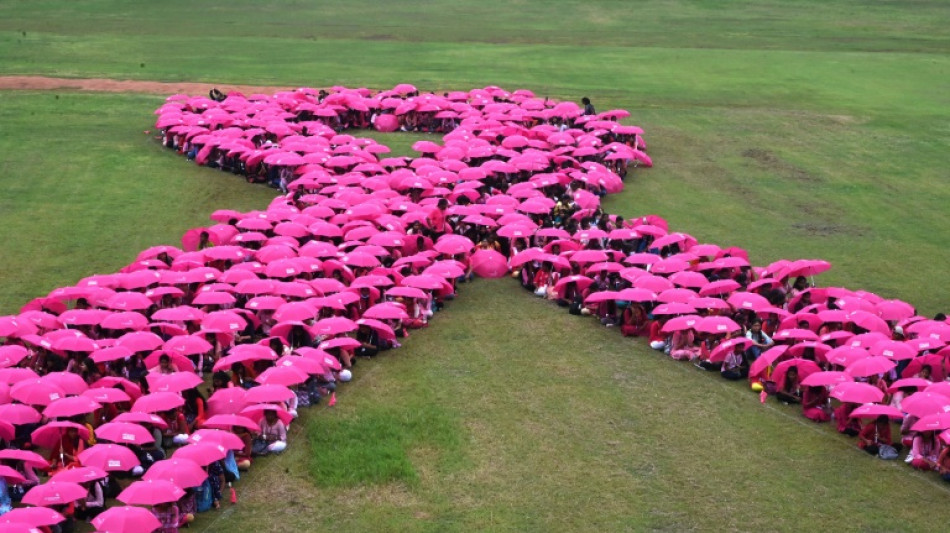
Cancer surging among under-50s worldwide, study says / Photo: Arun SANKAR - AFP

 أين الأمن القومي العربي؟.. تحليل نقدي لغياب الرؤية المشتركة

 Crude Oil Prices Rise on Reports of Houthi Attack on Saudi Refinery

 El Nino’s Weakening Grip on Tamil Nadu Rainfall Hinges on Potential Cyclone

 Black Friday Discounts Cut Prices on Two Top-Rated Wiper Blades

 Twickenham Grounds Team Prepares Pitch for Six Matches in Three Days

 Luxembourg City Plans €13 Million Abrigado Centre for 2029

 Two A1 Crashes Create Kilometres of Rush-Hour Congestion

 South Africa Places 36 Hospitals on Standby for Possible Imported Ebola Cases

 Tamil Nadu Secures Rs 58,214 Crore in Investments at Vettri Conclave

 فرنسا تدعو لتجريم "الفصل العنصري القائم على الجنس" دولياً

 أزمة الصواريخ الاعتراضية في البنتاغون: استنزاف المخزونات يفرض تعبئة صناعية حتى 2030

The number of people under 50 diagnosed with cancer has surged worldwide in the last three decades but it is not fully clear why, a study said on Wednesday.
Cases of cancer among people aged 14 to 49 rose by nearly 80 percent, from 1.82 million to 3.26 million, between 1990 to 2019, according to the study published in the journal BMJ Oncology.
While experts cautioned that some of that increase was explained by population growth, previous research has also indicated that cancer is becoming more commonly diagnosed among under-50s.
The international team of researchers behind the new study pointed to poor diet, smoking and alcohol as major risk factors underlying cancer in the age group.
But "the increasing trend of early-onset cancer burden is still unclear," they added.
A little over one million people under 50 died of cancer in 2019, up 28 percent from 1990, the study said.
The deadliest cancers were breast, windpipe, lung, bowel and stomach cancers, according to the study.
Breast cancer was the most commonly diagnosed over the three decades.
But the cancers that rose the fastest were of the nasopharynx, where the back of the nose meets the top of the throat, and prostate.
Liver cancer meanwhile fell by 2.9 percent a year.
- Causes remain 'elusive' -
The researchers used data from the 2019 Global Burden of Disease Study, analysing the rates of 29 different cancers in 204 countries.
The more developed the country, the more likely it was to have a higher rate of under-50s diagnosed with cancer, the study said.
This could suggest that wealthier countries with better healthcare systems catch cancer earlier, but only a few nations screen for certain cancers in people under 50, the study added.
As well as poor diet, smoking and drinking, genetic factors, physical inactivity and obesity could also contribute to the trend, the study said.
Modelling predicted that the number of global cancer cases in under 50s will rise a further 31 percent by 2030, mostly among people aged 40-49.
The researchers acknowledged that cancer data from different countries varied greatly, with developing nations potentially under-reporting cases and deaths.
Experts not involved in the study said the slower increase in deaths compared to cases was likely due to improvements in early detection and treatment.
Dorothy Bennett, a researcher at the University of London, pointed out that the world's population grew by roughly 46 percent between 1990 and 2019, accounting for some of the increasing cases.
Two doctors at Queen's University Belfast, Ashleigh Hamilton and Helen Coleman, said it was "crucial" to work out what was behind the increasing cases.
"Full understanding of the reasons driving the observed trends remains elusive, although lifestyle factors are likely contributing, and novel areas of research such as antibiotic usage, the gut microbiome, outdoor air pollution and early life exposures are being explored," they said in an editorial linked to the study.
E.AbuRizq--SF-PST

