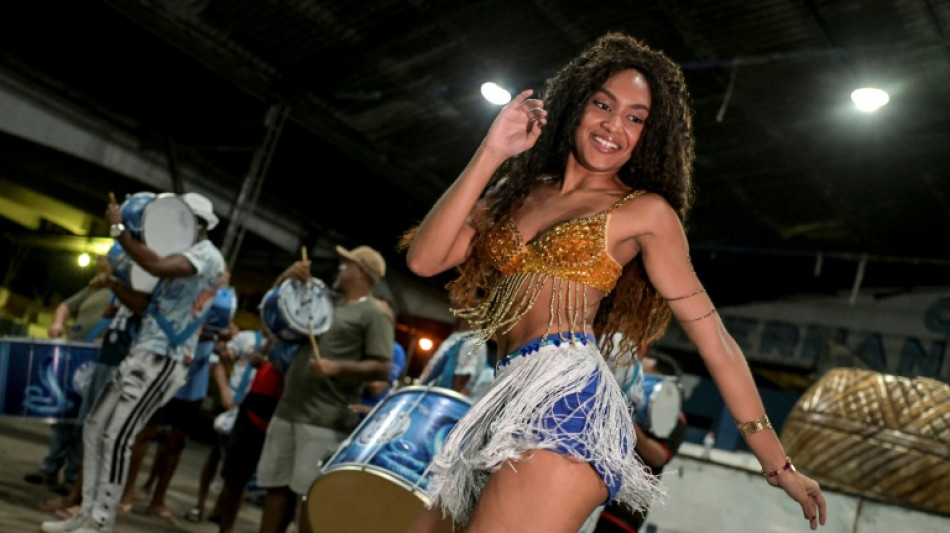
Dreaming of glory at Rio's carnival, far from elite parades / Photo: TERCIO TEIXEIRA - AFP

 Samsung expects 780% quarterly operating profit jump on AI boom

 Guardians survive with 9-3 win over White Sox

 Saudi Arabia says 3 dead at airports after Houthis claim attacks
 Stocks slide as oil sees volatile trading day over Iran war fears
 Microsoft pushes AI vision with new, expensive Surface laptop
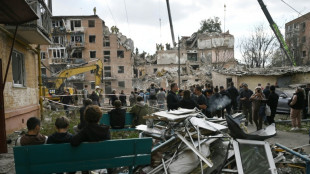 Five children among 28 killed in Russian strikes on Ukraine
 Odell Beckham Jr signs with Minnesota Vikings
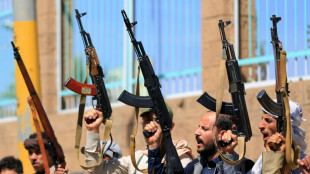 Saudi Arabia says three dead at airports after Houthis claim attacks

 Trump plans to turn Florida golf course into presidential retreat
 WHO says cannot conduct full risk assessment on Russia plague reports
 After botched execution, US woman is awake and shackled to bed
 New Zealand fly-half Mo'unga ruled out of Australia Tests

 Protests in major Turkish city after mayor defects to Erdogan party
 Climate change strips island's title of largest penguin colony: study
 Rubio says West must choose between national power or decline
 Russia's plague scare: What we know

 French luxury giant to fund redevelopment of two Paris streets: city hall
 Trump wants to turn Florida golf course into presidential retreat
 Mayor of Turkish opposition stronghold defects to Erdogan party

 Children among heavy casualties in Ukraine after Russian strikes

 Court orders German ex-spy chief kept in jail after spying, treason arrest

 Guinea caps bottled water prices after sachets banned

 Spared, married, hanged: the last weeks of Iranian protester Alireza Sepahi

 Nobel physics winner's pride at pioneering AI role
 IMF preparing El Nino assistance, concerned about AI bubble burst: chief to AFP
In a faded rehearsal hall in the gritty concrete sprawl of northern Rio de Janeiro, samba dancers and drummers fine-tune their rhythms for a grassroots carnival parade few tourists have heard of.
Remnants of donated props and floats from parades past lie around the space under a viaduct that doubles as a driving school parking lot.
The scene stands in stark contrast to the glittering spectacle of the world-famous Sambodrome parade, which critics say has grown increasingly distant from the poor neighborhoods that sustain the roots of samba.
Drum master Americo Teofilo, 37, dreams of performing among the greats, but is proud to parade in a parallel event in Rio de Janeiro's densely-populated north zone, which he describes as "more for the people."
"The one in the Sambodrome, I am not criticizing, but it is becoming more elitist. But I love both!" he said.
It has been 20 years since his storied samba school Caprichosos de Pilares, founded in 1949, last paraded down the Sambodrome avenue, before tumbling into the bottom division of a competition structured much like a football league.
Rio's Carnival period starts Friday, with the top schools kicking off three days of glittering parades on Sunday.
Teofilo recalls how as a child his whole family, despite being poor, could afford front-row seats at the Sambodrome -- tickets which now cost around $300 each.
This is roughly the minimum monthly wage in Brazil. The cheapest tickets in the grandstands are around $35.
"Nowadays it's very expensive..., it's impossible."
VIP boxes have multiplied along the avenue, with tickets selling for hundreds of dollars and the presence of celebrities such as footballer Neymar or supermodel Gisele Bundchen.
Some promote their own big-name DJs and music stars, which have drawn complaints and fines for drowning out the sounds of samba.
"Sometimes the parade is going on and the electronic music is there, you know?" said Teofilo.
The parade along Intendente Magalhaes avenue, where dozens of schools compete to claw their way up the ranks, is free to watch, and pure homegrown samba.
- 'Forgotten' roots -
Rio's samba and carnival roots are deeply tied to poor, Afro-Brazilian neighborhoods, where community organizations known as samba schools evolved and work year round to make the show happen.
Performing in the top ranks now costs millions of dollars, which schools put towards towering floats, dazzling crystal and feather-covered outfits, and the pomp that make the parade a global attraction.
Rio's tourism agency Riotur president Bernardo Fellows told AFP that 52 million reais ($10 million) had been allocated to samba schools through the ranks.
"The transfer (of funds from city hall) is a bit disproportionate," to the lower-ranked schools, said carnival director for Caprichosos, Henrique Bianchi.
"Of course carnival is for everyone... but here it gets a little more forgotten. But the roots come from here, they come from the North Zone."
Schools like Caprichosos repurpose old floats and props donated by the wealthier schools from their grand parades.
- 'Samba in our veins' -
Paulinha Peixoto, 39, who leads the samba dancers, known for striking outfits and dizzying footwork, said putting on a show was "a team effort".
"We know that the costs are out of our own pockets ... One fixes the other's hair, one helps with the other's makeup. It's samba in our feet, samba in our veins, love in our hearts, and that's it."
She said making it to the Sambodrome was every dancer's dream.
"It's dazzling, it's enchanting. But there's a disconnect. Nowadays it's a luxury carnival, a carnival of feathers, sequins, VIP boxes."
Riotur's Fellows said the debate about Carnival becoming a product for the wealthy and tourists was "legitimate and important" and the growth should not come "at the expense of its popular soul."
For those seeking to spend less money, there are the thousands of street "blocos" or parties and several days of free public rehearsals at the Sambodrome.
But for many, this does not come close to the full-throttle extravaganza.
"There is no question that it's only for the rich," said Adriano Santos, 43, a social worker from the Rocinha favela watching the free rehearsals.
"Rio de Janeiro, for the most part, is made up of people from poor communities.... These people shouldn't just be there to parade to fill the samba school, they need to appreciate the spectacle as well."
V.AbuAwwad--SF-PST