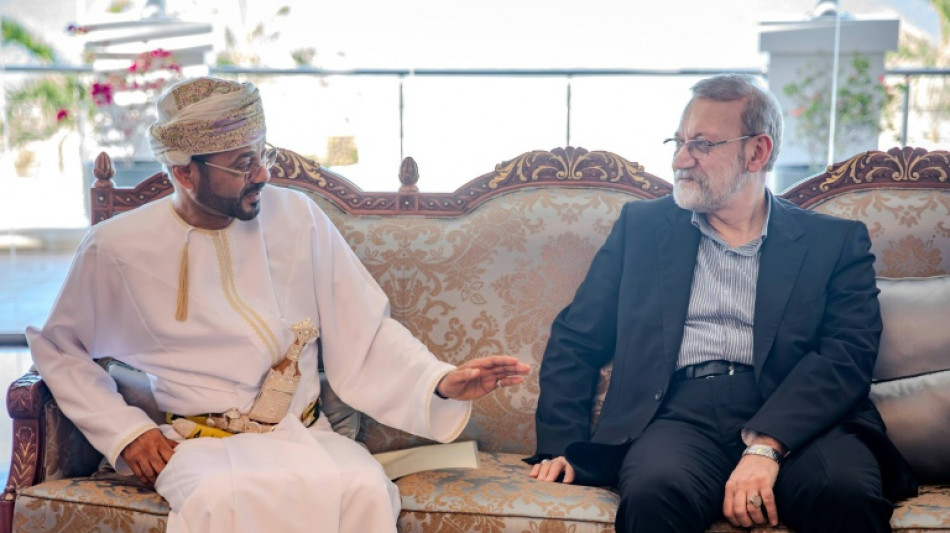
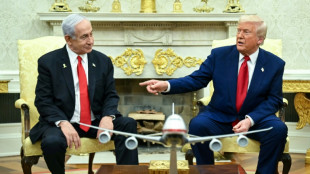
What is going on with Iran-US talks? / Photo: HANDOUT - Iran's Supreme National Security/AFP

 US to auction deep sea mining leases off American Samoa
 Australian lawmaker hurt in car attack underwent surgery overnight: PM
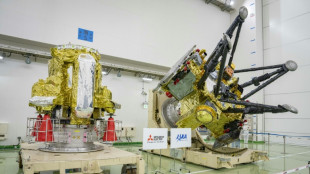 Japan launches rocket for potential world first Mars moon mission

 Ethiopia PM warns Eritrea of 'severe consequences' if supports enemies

 Boland grabs opportunity for Australia as South Africa struggle in second Test
 Ronaldo handed 30-day suspension: Portuguese federation
 France announces curfews as government grapples with unrest

 Boland sets pace as South Africa struggle
 Ukraine on back foot as Kremlin moots US, China meeting
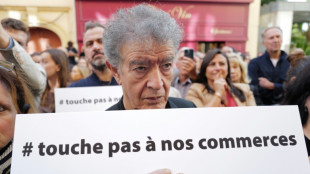
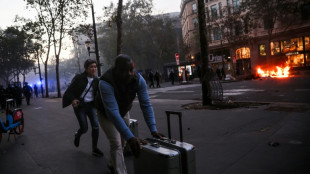 'Stay home!': Tourists find themselves in a France convulsed by protests
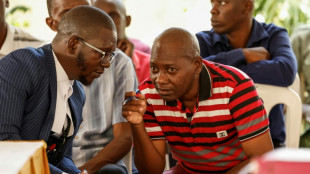 Kenyan cult leader guilty on all charges over 191 starvation deaths
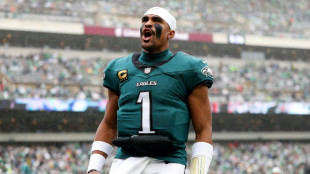 Eagles star Hurts to miss rest of NFL season: reports
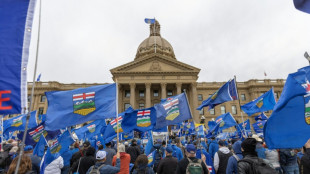 Oil-rich Alberta votes on Canada breakup
 Israel announces arrests after West Bank settler attacks on Westerners
 Guehi insists players have 'trust and belief' in Man City after charges
 UN climate panel head wants swift end to deadlock over key scientific report
 PM calls for curfews in France as govt grapples with unrest
 Man City's Semenyo out for up to eight weeks

 Australian lawmaker critically hurt in 'violent' vehicle attack
 England women's coach Wiegman signs two-year contract extension
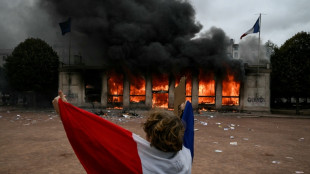 Louvre blocked as France grapples with unrest
 Bollywood actor Tiger Shroff shot at in Mumbai, three suspects held: police
 UN biodiversity summit opens with nature goals off track
 'Physical hell': Hong Kong hosts gruelling underwater hockey tournament
 Police 'lost control' during French protests, says interior minister
Iran and the United States have yet to set a date for a new round of talks after an initial encounter last week on the contested Iranian nuclear programme but, for now, US President Donald Trump is not rushing to launch military action against the Islamic republic.
AFP looks at a critical juncture in the modern history of Iran in the wake of the crackdown on the biggest protests in years in January that according to rights groups has left thousands dead.
- Where is diplomacy? -
Iranian Foreign Minister Abbas Araghchi on February 6 held talks in Oman with US envoy Steve Witkoff and Trump's influential son-in-law Jared Kushner.
The talks were indirect, with the Omanis acting as mediator, although Tehran did later confirm that there was a handshake.
Iran's supreme national security council head Ali Larijani, a mainstay of the establishment for the last decades, this week followed this up with visits to Oman and then US ally Qatar.
There was speculation about the contents of a piece of paper he brandished during the visit to Oman, but so far no new date for talks has been set.
"We didn't have a letter for the Americans, but our Omani friends had some communications," Larijani told Iranian state television.
"There were some remarks the Omani side told us on behalf of the Americans," he added, without offering further clues.
Trump had hailed the Oman talks as "very good" and said there would be another meeting "early" this week, something that has not materialised.
- Is there room for compromise? -
In an upbeat interview with the Financial Times, Turkish Foreign Minister Hakan Fidan indicated that compromise was possible on the key sticking point of uranium enrichment.
The West believes Iran is seeking a nuclear bomb, a charge Tehran denies, and wants a halt to uranium enrichment, a key step in weaponising an atomic programme.
"It is positive that the Americans appear willing to tolerate Iranian enrichment within clearly set boundaries," said Fidan, who has held talks with Iranian and American counterparts.
In a statement after meeting Trump on Wednesday, Israeli Prime Minister Benjamin Netanyahu said the American president thinks he is creating conditions that could achieve "a good deal".
But Netanyahu expressed "general scepticism" and demanded that any deal also consider Iran's ballistic missiles and support for regional proxies and not just the nuclear programme.
However, Iran's number one, supreme leader Ayatollah Ali Khamenei, who for years has pushed a line of confrontation with Washington, has yet to give any public blessing to the diplomacy.
"The enemies who sought to subjugate the Iranian nation through their statements and plans have been thwarted," he said in a message broadcast by state television hailing the turnout Wednesday at rallies commemorating the 1979 Islamic revolution.
- Is Trump still threatening Iran? -
Trump has never ruled out military action on Iran after its crackdown on protests, although he is now focusing on a deal over the nuclear drive.
More than 7,000 people were killed, according to the US-based Human Rights Activists News Agency NGO, the vast majority of them -- 6,506 -- protesters.
An American naval group led by aircraft carrier USS Abraham Lincoln and dubbed an "armada" by Trump remains in Middle Eastern waters in a clear warning to Iran.
But the talks in Washington on Wednesday between Trump and Netanyahu, who has long urged a tougher US line on Iran, ended with Trump saying he had insisted "negotiations with Iran continue to see whether or not a Deal can be consummated".
Trump added on Thursday: "We have to make a deal, otherwise it's going to be very traumatic, very traumatic. I don't want that to happen, but we have to make a deal."
The Wall Street Journal reported that Washington was readying the deployment of a second aircraft carrier strike group to the region, even if no final decision had been taken and plans could change.
The deployment could take place within a timescale of two weeks and the aircraft carrier USS George H.W. Bush could be ready to "expedite" exercises it was currently involved in, it said.
Israel in June waged a 12-day war with Iran backed by the US that was widely seen as degrading -- but not destroying -- Iranian nuclear and ballistic capabilities.
- What happens next? -
Ross Harrison, senior fellow with the US-based Middle East Institute and author of "Decoding Iran's Foreign Policy", argued that the talks represented more of a US "ultimatum" towards Iran rather than "true negotiations".
By participating, Iran was trying to "buy some time, so they can rebuild their missile programme and so forth -- not necessarily the nuclear programme -- but the missile programme", he said, adding that the target audience of Tehran's diplomatic efforts was not necessarily Washington.
"Israel is pushing Trump towards more aggression, but Saudi Arabia, Egypt, Turkey, Qatar and the UAE (United Arab Emirates) are trying to push Trump towards an authentic diplomatic track," he said.
"What the Iranians are doing is showing some good faith by attending these talks, but the real target is not the United States. I think it's our Gulf Arab allies that can possibly forestall a military attack," he added.
U.AlSharif--SF-PST