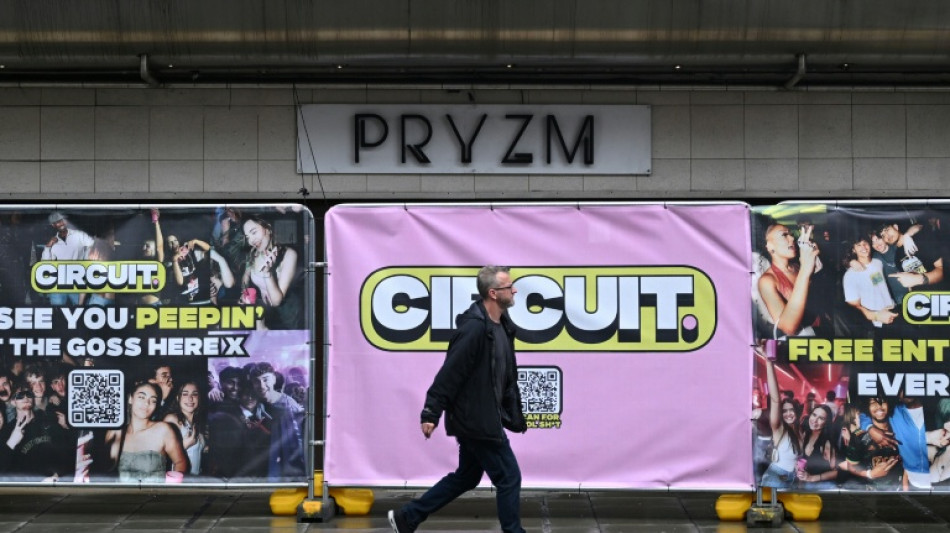
Gen Z shift, high costs force UK nightclubs to reinvent / Photo: JUSTIN TALLIS - AFP

 Madrid mourns evicted retiree, 'icon' of Spain housing protests

 OpenAI revenue gap report rattles AI stocks

 France pledges more teachers after school students vow no let-up

 Bordeaux confirmed in sixth tier of French football

 Trump gives 'national treasure' Musk top US medal after rift

 MLB proposes shortening season, reforming playoffs

 Crew splashes down after 8-month mission on International Space Station

 Protests, clashes as S. African anti-migrant tensions reignite

 Russian data centre hit by drone in first for Ukraine war

 'Fighting for our future': France high school students vow no let-up

 Kyiv entering 'survival' mode amid Russian strikes surge: mayor tells AFP

 Verdict due in Mexico trial over murders of Australia, US surfers

 B2PRIME Welcomes Christina Barbash as Commercial Manager

 Russia forcing Kyiv into 'survival' mode before winter, mayor tells AFP

 Closing arguments begin in Maradona death trial

 UEFA president Ceferin to stand for re-election in 2027

 Nearly 300,000 Nepalis at flood risk: study

 Riyadh kindergarten hit by interception debris as Houthis say targeted airport
 Alex Bodi mizează, alături de CRIF, pe investiții transparente și pe prevenirea riguroasă a spălării banilor
 Gulf Labs, Part of Thailand’s $27 Billion GULF Group, Goes Live as an Injective Validator

 EU okay for winter despite 'historically low' gas stocks: operators

 Rwanda to host F1 Grand Prix: sources close to both sides

 EU top diplomat says bloc in favour of UN Lebanon peacekeepers' extension

 Antonelli and Russell to run different Mercedes aero packages in Singapore

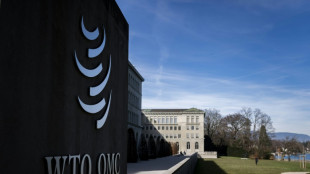 WTO hikes 2026 trade growth forecast on AI boom

Is the party over? UK nightclubs are famed around the world, but Covid and inflation have hit the sector hard, forcing businesses to reinvent themselves to attract new generations to the dance floor.
Pryzm Kingston is a well-known club in southwest London popular with students, where artists like Billie Eilish, Rod Stewart, and Stormzy have performed.
But the converted cinema closed its doors for renovation last month, with its owners saying it was time to "look to the future and reimagine this venue for the next generation of partygoers."
It will be transformed into a smaller club and a dance bar -- "creating venues that reflect what people are looking for now," they added.
Many other British clubs are also trying to re-adjust after around a third of them, about 400 venues, have shut down since 2020, according to the Night Time Industries Association (NTIA).
"Whilst nightclubs were in gentle decline prior to Covid, the pandemic profoundly accelerated things," Tony Rigg, a music industry consultant, told AFP, noting that the cost-of-living crisis had sent bills and rents soaring.
As the first pints of the evening were poured in central London, 26-year-old account manager Conor Nugent told AFP he only goes clubbing for "special occasions," after asking himself "if it's really worth it."
Like 68 percent of 18-to-30-year-olds, the Londoner has cut back on nights out for financial reasons and prefers to save up for concerts and events.
Rigg pointed out that Covid-19 caused a "cultural shift" among Gen Z — those born between 1997 and 2012 — who generally drink less alcohol and largely miss out on the "rite of passage of going out, experiencing clubs and learning some social behaviours."
- Lure of Paris, Berlin -
Rekom UK, the company behind iconic clubs like Pryzm and Atik, filed for bankruptcy in 2024, shutting down 17 venues across the country, citing multiple pressures.
About 20 others, including Kingston, were acquired by Neos Hospitality, which decided to convert some into dance bars or host alcohol-free events.
"The sector has to evolve otherwise it will become obsolete," Rigg acknowledged.
To stop hemorrhaging party-seekers lured by Berlin or Paris, London Mayor Sadiq Khan launched an independent working group called the "Nightlife Taskforce," which is set to publish a report later this year.
"One of the reasons why people love London is our nightlife, our culture," Khan told AFP.
"When I speak to mayors in Paris, in New York and Tokyo, I'm jealous of the powers they have" especially on licensing issues, he said, adding he was looking at other cities like Paris "with envy" as it enjoys a nighttime boom.
He was granted approval in March to overrule certain local authorities who had forced pubs, restaurants, concert halls, and nightclubs to close early.
The government has also announced plans to change regulations to support nightlife venues in certain areas.
"Sadly, in the UK, we struggle with reputational issues and a narrative that makes (clubbing) more of a counterculture element rather than a real economic and cultural driver," NTIA head Michael Kill, who advocates for greater recognition of electronic music and club culture, told AFP.
The night-time sector contributes a vital £153 billion ($203 billion) a year to the UK economy, employing around two million people, according to NTIA.
And with London still enjoying a long, well-established reputation, all is not lost.
The capital remains an "exciting" city, 25-year-old Carys Bromley who recently moved to London from the island of Guernsey, told AFP.
"There's a lot of parties, clubs, and a big nightlife. The places stay open longer, it's busier, a bit more wild," she said.
I.Matar--SF-PST