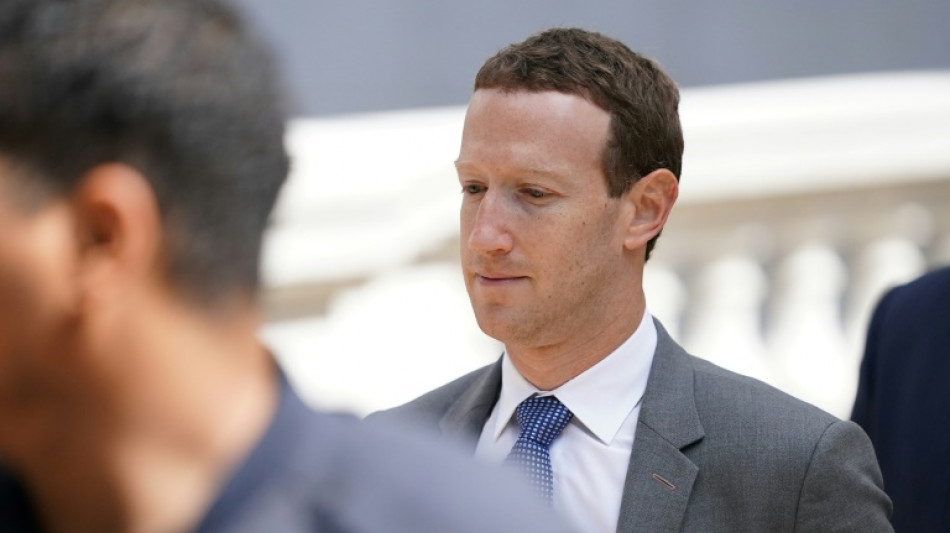
Meta's AI talent war raises questions about strategy / Photo: Nathan Howard - GETTY IMAGES NORTH AMERICA/AFP

 Ms. Rachel Says Celebrity Silence on Gaza Is 'F--ked Up' and Drives Her to Swear

 Maryland Regulators and Air Force Clash Over Jet Fuel Spill Cleanup and Golf Course Exemption

 Bishop Museum Races to Save Rare Megamouth Shark Specimen

 Musk Questions AI Development Viability as SpaceX Leasing Revenue Surges

 مصطفى معروفي ينشر قصيدة 'أصوغ كلامي أهتدي بتجاربي'

 Luxembourg Housing Petition Passes Threshold for Parliamentary Consideration

 Raheem Sterling Receives Suspended Sentence After Lamborghini Crash

 Audience to Choose the Set List at Luxembourg's First FAMIL Jukebox Night

 Luxembourg Pay Rise Delayed as Regional and World Headlines Develop

 مواجهة في البرازيل بين نشطاء وفلسطينيين وسياح إسرائيليين حول جدارية مؤيدة

 رئيس جامعة القدس يستعرض نموذج الشراكة بين التعليم العالي والصناعة في قمة QS بأبوظبي

Mark Zuckerberg and Meta are spending billions to recruit top artificial intelligence talent, triggering debates about whether the aggressive hiring spree will pay off in the competitive generative AI race.
OpenAI CEO Sam Altman recently complained that Meta has offered $100 million bonuses to lure engineers away from his company, where they would join teams already earning substantial salaries.
Several OpenAI employees have accepted Meta's offers, prompting executives at the ChatGPT maker to scramble to retain their best talent.
"I feel a visceral feeling right now, as if someone has broken into our home and stolen something," Chief Research Officer Mark Chen wrote in a Saturday Slack memo obtained by Wired magazine.
Chen said the company was working "around the clock to talk to those with offers" and find ways to keep them at OpenAI.
Meta's recruitment drive has also landed Scale AI founder and former CEO Alexandr Wang, a Silicon Valley rising star, who will lead a new group called Meta Superintelligence Labs, according to an internal memo, whose content was confirmed by the company.
Meta paid more than $14 billion for a 49 percent stake in Scale AI in mid-June, bringing Wang aboard as part of the acquisition. Scale AI specializes in labeling data to train AI models for businesses, governments, and research labs.
"As the pace of AI progress accelerates, developing superintelligence is coming into sight,” Zuckerberg wrote in the memo, which was first reported by Bloomberg.
"I believe this will be the beginning of a new era for humanity, and I am fully committed to doing what it takes for Meta to lead the way," he added.
US media outlets report that Meta's recruitment campaign has also targeted OpenAI co-founder Ilya Sutskever, Google rival Perplexity AI, and the buzzy AI video startup Runway.
Seeking ways to expand his business empire beyond Facebook and Instagram, Zuckerberg is personally leading the charge, driven by concerns that Meta is falling behind competitors in generative AI.
The latest version of Meta's AI model, Llama, ranked below heavyweight rivals in code-writing performance on the LM Arena platform, where users evaluate AI technologies.
Meta is integrating new recruits into a dedicated team focused on developing "superintelligence" -- AI that surpasses human cognitive abilities.
- 'Mercenary' approach -
Tech blogger Zvi Moshowitz believes Zuckerberg had little choice but to act aggressively, though he expects mixed results from the talent grab.
"There are some extreme downsides to going pure mercenary... and being a company with products no one wants to work on," Moshowitz told AFP.
"I don't expect it to work, but I suppose Llama will suck less."
While Meta's stock price approaches record highs and the company's valuation nears $2 trillion, some investors are growing concerned.
Institutional investors worry about Meta's cash management and reserves, according to Baird strategist Ted Mortonson.
"Right now, there are no checks and balances" on Zuckerberg's spending decisions, Mortonson noted.
Though the potential for AI to enhance Meta's profitable advertising business is appealing, "people have a real big concern about spending."
Meta executives envision using AI to streamline advertising from creation to targeting, potentially bypassing creative agencies and offering brands a complete solution.
The AI talent acquisitions represent long-term investments unlikely to boost Meta's profitability immediately, according to CFRA analyst Angelo Zino. "But still, you need those people on board now and to invest aggressively to be ready for that phase" of generative AI development.
The New York Times reports that Zuckerberg is considering moving away from Meta's Llama model, possibly adopting competing AI systems instead.
T.Khatib--SF-PST

