
ADB acting on US concerns over China, bank chief tells AFP / Photo: Thibaud MORITZ - AFP

 Verstappen wins chaotic Singapore sprint after Russell crashes

 Kiss tells Wallabies to 'return fire' after first loss as coach

 Russian strikes kill 11 including 3 children: Ukrainian authorities

 Russian teenager Andreeva breezes into China Open final

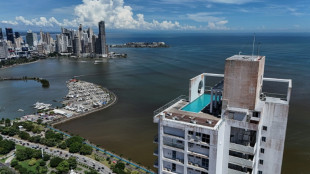 Major earthquake hits Panama, injures at least 27

 India detains 'cockroach' leaders ahead of election protest

 'No divisions, no borders', French astronaut says of seeing Earth

 India's 'cockroach' movement chief detained ahead of major protest

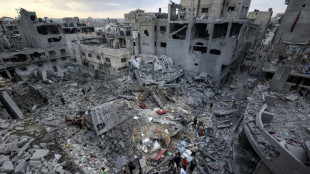 Year later, Gaza ceasefire promises mostly unfulfilled

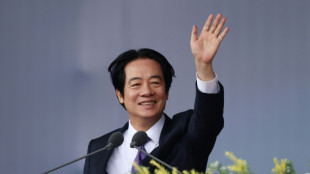 Taiwan's leader says increasing defence spending to 'deter war'

 Major quake hits Panama, no deaths reported

 Hurricane Isaias makes landfall in Florida

 Brazil prosecutors sue Shell for $108 mn over deadly 2024 floods

 Major earthquake destroys buildings, roads in Panama

 Anthropic AI model sent fake murder tip to Philadelphia police

 7.7-magnitude quake rocks Panama, triggers tsunami warning

 Prince Harry booed at English rugby match

 Kiplimo and Feysa seek repeat Chicago Marathon wins

 Fuellkrug halts Dortmund after late goal flurry
 Injured Ravens quarterback Jackson ruled out of Falcons clash

 Brewers aim to take down two-time defending champion Dodgers in NLCS rematch

 Tsunami alert after major earthquake rocks Panama

 Outer bands of Hurricane Isaias lash US Gulf Coast

 Hope, Rutherford fire West Indies to record T20 chase of 250

 Farhan leads Pakistan to T20 win over Sri Lanka

The Asian Development Bank was trying "very hard" to accommodate US concerns over lending to China, the bank's president told AFP, including by slashing loans to the world's second-largest economy.
Global development institutions are in Spain this week for a UN summit on financial aid for the world's poorest overshadowed by Washington's gutting of poverty and climate change programs.
The United States is a major donor to multilateral banks like the ABD, but Washington's future commitment to development lenders has been in doubt since the election of President Donald Trump.
In April, US Treasury Secretary Scott Bessent urged ADB President Masato Kanda "to take concrete steps" to end loans to rival China.
Kanda said lending to Beijing was "radically decreasing" and had already halved from $2 billion in 2020 to $1 billion in 2024.
"We are already on... a declining trajectory," the Japanese head of the Manila-based lender told AFP in an interview in Paris on Friday.
"Probably -- I can't promise -- but probably this declining trajectory will be continued, and someday may be zero," he added, stressing that such a decision would ultimately be decided by the bank's shareholders and board of directors.
Kanda said US demands that ADB curtail financing for China were hardly new and probably "one of the very few agendas across the aisle in the US Congress".
"Even under the Biden administration, it was the same request," Kanda said, referring to the last administration under President Joe Biden.
The United States and Japan are the largest shareholders of ADB, which helps bankroll projects in the Asia-Pacific region that lift living standards and promote economic growth.
China, India and Australia are also significant members.
- 'Universal' challenge -
Kanda said ADB's efforts to raise lending without asking more of taxpayers in donor countries "was very much appreciated by the United States and others".
"I try very hard to accommodate the issues of the United States," he said.
Kanda is among thousands this week attending the International Conference on Financing for Development in Seville, the biggest event in a decade on the crisis-hit aid sector.
The United States in snubbing the UN-sponsored conference, underlining the erosion of global cooperation on combating hunger, disease and climate change.
Trump's cuts have come under particular scrutiny but Germany, Britain and France have also slashed foreign aid while boosting spending in areas such as defence.
With budgets in doubt, multilateral development banks have come under particular pressure to step up financing for projects that tackle global warming and prepare poorer countries for climate disaster.
Last year, rich countries committed $300 billion annually by 2035 for climate finance in the developing world -- well short of the $1.3 trillion that experts say is needed.
Last year, the ADB committed to channelling half its annual lending to climate-related projects by 2030 and Kanda said it was likely this would grow in time.
The bank was navigating a level of global uncertainty not seen in many decades but it was critical to consider the most vulnerable on the rocky road ahead, he added.
"This is not just a short-term phenomenon of one country, but it is rather universal," he said.
"This is a really difficult situation. And as long as we don't improve the root cause of this situation -- for instance, a more fair society -- it will not be so easy."
B.Khalifa--SF-PST