Ritacuba Blanco: death of a Colombian glacier / Photo: Luis ACOSTA - AFP

 China's Xi arrives in Egypt as US sanctions threat looms over Iran links

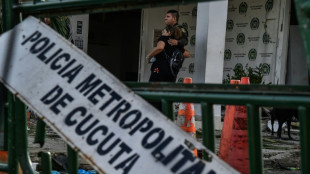 Car bomb at Colombian police station kills one, injures 11

 Rain delays start of play on US Open

 Man City agree blockbuster deal to sign Chelsea star Fernandez: reports

 Alkemya Metacore Secures $50M via Tokenised Equity to Scale Nickel Energy and Security Tech

 Man City chase Fernandez, Arsenal sell Jesus on deadline day

 EU says Russian 'hybrid attacks' won't halt aid to Ukraine

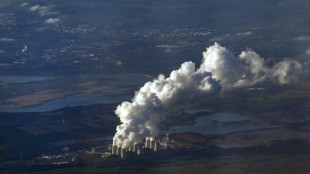 Explosives used in sabotage attack on German power lines

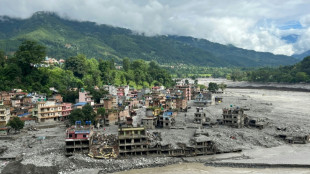 Nepali families hold symbolic funerals for missing after floods

 Newcastle sign Lille forward Fernandez-Pardo

 Even at Elysee, phones are handed in, Macron tells French pupils
 Chelsea agree to sign Atalanta's Ahanor, with Palace loan for this season

 Chelsea sign Atalanta's Ahanor and loan him to Palace

 UK chalks up hottest summer on record for second year running

 China's Xi visits Egypt as US sanctions threat looms over Iran links

 RISE Robotics Awarded $100,000 MassVentures Grant to Accelerate Commercialization of Beltdraulic Technology

 Global bond sell-off deepens on inflation concerns

 Germany's far-right AfD promises 'boom' but economists fear worst

 Former England captain Stokes signs for Adelaide Strikers

 Pakistan selector and ex-captain Misbah resigns after coach sacked

 Shein flattens on Hong Kong debut facing global headwinds

 Eurozone inflation hits three-year high at 3.3% in August
 Man City chase Fernandez, Arsenal eye Alvarez on deadline day

 El Nino hammering Peru anchovy fishing: industry officials

 Mass Russian barrage kills 12 in Kyiv

Just a few months ago, the Colombian mountain peak of Ritacuba Blanco was covered in an unbroken layer of white ice and snow, just as it had been for as long as anyone can remember.
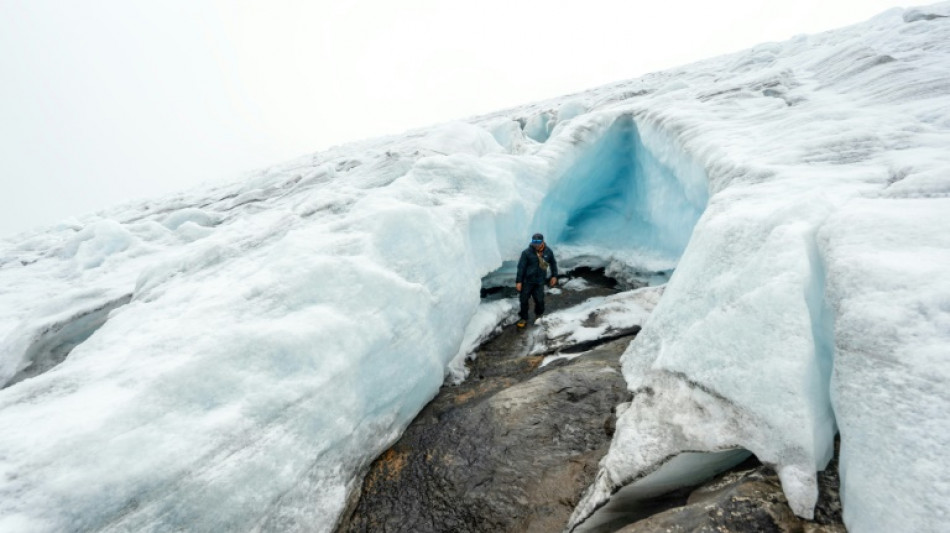
But with the South American country hit by the warming effects of the El Nino weather phenomenon since late last year, large cracks have suddenly appeared in the glacier covering the peak, exposing the rock underneath.
Experts say the glacier is melting at dizzying speeds, with climate change intensifying the effects of El Nino -- which makes an appearance every two to seven years, and lasts about nine to 12 months.
The UN's World Meteorological Organization (WMO) has said that record temperatures since June 2023 were partly caused by El Nino, "but heat-trapping greenhouse gases are unequivocally the main culprit."
"The El Nino phenomenon is perhaps the worst thing that can happen to our snowy peaks or glaciers," said Jorge Luis Ceballos, a glaciologist at the Institute of Hydrology, Meteorology and Environmental Studies (Ideam).
"There is no cloud cover and therefore no snowfall," he pointed out.
Of the 14 tropical glaciers that existed in Colombia in the early 20th century, only six remain -- and are fast receding.
Ritacuba Blanco in the Sierra Nevada del Cocuy National Park, about 250 kilometers (150 miles) northeast of Bogota, is the most at risk.
"At the end of last year, the walls here were about six meters (20 feet) high... today, they are one meter," glacier guide Edwin Prada told AFP on a recent ascent of the peak.
- Last chance for tourists -
According to the most recent recorded data, in 2022, some 12.8 square kilometers (4.9 square miles) of Ritacuba Blanco was covered in ice and snow -- the lowest ever measured by Ideam.
More recently, "the snow melted due to a lack of precipitation and the ice was exposed to solar radiation, which accelerated the thaw," said Ceballos.
Humberto Estepa, a resident of Guican -- a village near Ritacuba Blanco -- said he trembles every time he sets foot on the glacier.
Never has the thaw been "as noticeable as it is now," he told AFP.
"Every time you go up it is worse."
In Asia -- the continent most impacted last year by record global temperatures, according to a recent WMO report -- the icy peaks of the Himalayas are also disappearing, threatening long-term water security.
According to the WMO, ocean warming and rapidly melting glaciers and ice sheets drove the sea level last year to its highest point since satellite records began in 1993.
El Nino caused major fires in Colombia this year, with more than 17,000 hectares of forest going up in flames.
It has also dried up lakes, and the capital Bogota has recently been compelled to take the unprecedented step of rationing municipal water as reservoirs reached record low levels.
Luisa Cepeda, a 39-year-old doctor, took her daughter to see the dying Ritacuba Blanco glacier at sunset.
"I wanted to see it... before it is gone," she said.
"It is sad to see how fractured it is."
G.AbuGhazaleh--SF-PST