Cervical cancer vaccine push has saved 1.4 million lives: Gavi / Photo: Fabrice COFFRINI - AFP/File

 Indonesian court hears 'negligence' complaint against state over fires, haze

 Rubio in Greece to urge against Western civilisation 'decline'
 Micron workers at Taiwan plant vote in favour of strike
 In 'The Social Reckoning,' Jeremy Allen White takes on Facebook's 'frightening' ambition
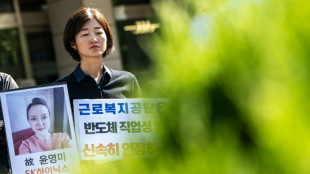 Chip industry activists call for South Korea to recognise cancer cases
 Famine-scarred southern Madagascar braces for El Nino
 How the EU regulates lobbyists
 I.Coast refuge offers lifelong care for youngsters scorned as 'sorcerers'

 Indian central bank hikes rates for first time in more than 3 years
 Hotel Blacklist Launches New Accommodation Industry Risk Assessment Tool

 Bangladesh nuclear plant draws hope -- and worry

 US beat Canada 1-0 to wrap up four-win international break
 Turkey, Australia's joint COP31 leadership raises doubts

 For Turkish NGOs, COP31 offers rare space for action

 Sleep, appetite, gene-editing experts contend for Nobel chemistry prize

 Nobel Peace Prize haunted by the 'spectre' of Trump

 Africa launches own credit agency in bid for cheaper borrowing

 US, China, EU: three paths to regulating AI

 Australia's High Court rules against coal mine in landmark climate case
 Australia touts new funds for Pacific infrastructure at Fiji 'pre-COP'

 Eva Marie Saint, Oscar winner of Hollywood classics, dies at 102

 Australia probes app used in cheap smart glasses over privacy fears
 England needed to 'move on' from World Cup pain, says Tuchel

 O'Neill to stay at Celtic after period of "reflection"

 Kane marks 125th England cap with Wembley Nations League double

A three-year campaign to bring vaccines against human papillomavirus (HPV) to low-income countries has prevented 1.4 million cervical cancer deaths, the vaccine alliance Gavi said Monday.
"An estimated 86 million girls are now protected against the leading cause of cervical cancer, thanks to a concerted three-year effort by Gavi, the Vaccine Alliance and lower-income countries," the organisation said.
It added in a statement to mark World Cervical Cancer Elimination Day that "an estimated 1.4 million future deaths" had been prevented.
Cancer caused by HPV disproportionately affects low-income countries, which often lack screening services and access to treatment.
These countries accounted for 90 percent of the 350,000 cervical cancer deaths recorded in 2022, according to Gavi.
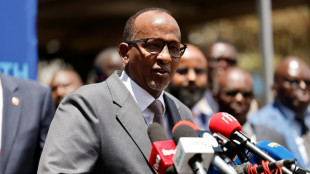
The organisation's chief executive Sania Nishtar credited the "incredible commitment" by countries and organisations for helping to reach the target of protecting 86 million girls.
Gavi said that across Africa the coverage rate for the vaccine had risen from four percent of girls in 2014 to 44 percent at the end of 2024, higher than for Europe on 38 percent.
The alliance said it used economies of scale to bring down prices and make vaccines available to about 50 poorer countries.
"Gavi secured commitments from manufacturers to invest in HPV vaccines -– and the price of HPV vaccines in Gavi-supported countries is now between $2.90 and $5.18 per dose, compared with US$100 or more elsewhere," said the statement.
"This collaborative effort is driving major global progress towards eliminating one of the deadliest diseases affecting women," she said, while stressing that the cancer still kills a woman every two minutes.
The World Health Organization (WHO) officially backed a single-dose HPV vaccination schedule instead of the previous two doses in 2022, allowing twice as many girls to be vaccinated with existing stocks.
L.Hussein--SF-PST