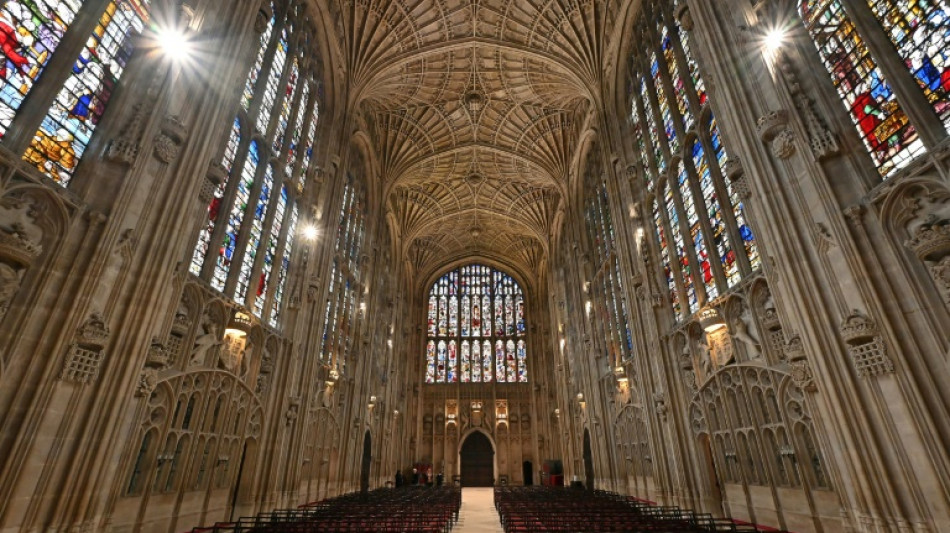
UK's iconic King's College Chapel gets controversial solar makeover / Photo: Justin TALLIS - AFP

 مليبانד: الوضع الإنساني في غزة مفجع والحكومة البريطانية لن تقف مكتوفة الأيدي

 First-time boat buyers advised to assess full ownership costs
 Planning and preparation can reduce stress of interstate relocation

 Two more arrested in Carrie Mullane suspected murder investigation

 Mayo school appeals for information after convent and chapel vandalism

 GLP-1 Users Show Higher Rates of Nail Detachment in New Studies

 Canadian soldier Aidan Goulding remembered at Vancouver funeral

 Tayyab Arif hits 57 on Pakistan Test debut against Sri Lanka

 Robert Trujillo discusses literacy and social justice children’s books

 Civil rights advocate William Bill Tucker dies aged 98

 US Treasury order targets bank transfers linked to crypto exchange MEXC

 Eagles record six sacks as rushing attack struggles against Giants

 Thames Water seeks to delay £12bn in debt repayments

 Newark boxing gym expands alternative education programme

 Democrats consider impeachment drive against Defence Secretary Hegseth

 Rail journey offers a slower route to a Berlin city break

 Arsenal control title race as Manchester United fall into bottom three

 Suspected Krakow gunman dies after attack that killed six

 Carrick backs Dalot after hostile reception from Manchester United fans

 Belgian PM Bart De Wever Given New Deadline to Resolve €10 Billion Budget Deadlock

High above the historic streets of Cambridge in eastern England, the installation of solar panels atop King's College Chapel, the world-famous university's most recognisable landmark, has stirred excitement -- and controversy.
The eco-friendly addition to the six-centuries-old Gothic structure -- the oldest surviving part of the most famous of Cambridge University's 31 colleges -- has pitted heritage guardians against environmental sustainability proponents.
Cambridge City Council and the church diocese granted permission for the nearly 500 photovoltaic panels, despite objections from local planning officials and Historic England, the public body responsible for renowned and old monuments.
It argued, among other things, that the scheme would "compromise the beauty of the chapel", while the council's own planning committee said it would erode the "authenticity and integrity" of the building, which is Grade I listed.
The Grade 1 designation is given to structures of exceptional national, architectural or historical importance, and provides them with greater protections.
The chapel, founded by King Henry VI in 1441, is considered to be one of the finest examples of late English Gothic architecture, famous for its 16th-century stained glass windows, its wooden rood screen and its extraordinary fan vaulting.
Still an active house of worship, it hosts an annual Christmas Eve carol service, televised on the BBC, that dates back more than a century.
- 'Wonderful opportunity' -
But the city council and the Church of England's Diocese of Ely opted to override the concerns, concluding that the public benefits of the solar panels outweigh their potential harm.
"When you begin to think about the younger people and their future, you have to take the climate crisis really seriously," Stephen Cherry, the dean of the chapel, told AFP.
"And so for me, it is a wonderful opportunity to marry these two things together -- backward-looking tradition and formality and the future for human beings."
The battle over the panels began after King's College decided the chapel's lead roof had exceeded its natural lifespan and was no longer watertight.
Restoration work began last year, but permission for the 438 solar panels to be laid on both the north- and south-facing roof facades did not come through until February.
The college identified the chapel roof as the single largest potential opportunity for renewable electricity generation on its site.
Once fully installed, the panels will generate 123,000 kilowatt hours of power a year, meeting 5.5 percent of the college's annual electricity demand.
King's College provost Gillian Tett said the unique project was a historic moment for the chapel and Britain's architectural heritage.
"It is only one step on the road towards cleaner, greener energy but it is a potent and inspirational symbol of our commitment to being good stewards of our environment," she said.
- 'Virtue signalling' -
But critics are unimpressed.
"King's College Chapel is one of England's most famous buildings," John Neale, head of development advice at Historic England, told AFP.
"It is a masterpiece of late medieval architecture and widely appreciated as such.
"In our view, to cover the roofs with solar panels, which are highly reflective, will introduce a very discordant element."
Although the panels will not be highly visible from the ground, Neale noted, they will appear in views of the roof and college skyline and affect the way the chapel is appreciated -- especially in sunlight.
"We are really not against doing something about climate change. We're just very keen that it be done carefully," he said.
David Abulafia, an emeritus professor of Mediterranean history at the university, penned an article in conservative magazine The Spectator at the time of the decision, deriding the choice.
He accused the chapel's caretakers of "virtue signalling", arguing the panels were "out of place in the outer fabric of one of Britain's most extraordinary buildings".
"Transforming the chapel roof for small gains and the satisfaction of making a gesture ends up doing more harm than good," he wrote.
The overhaul of the roof is expected to be complete by the end of December.
E.Qaddoumi--SF-PST