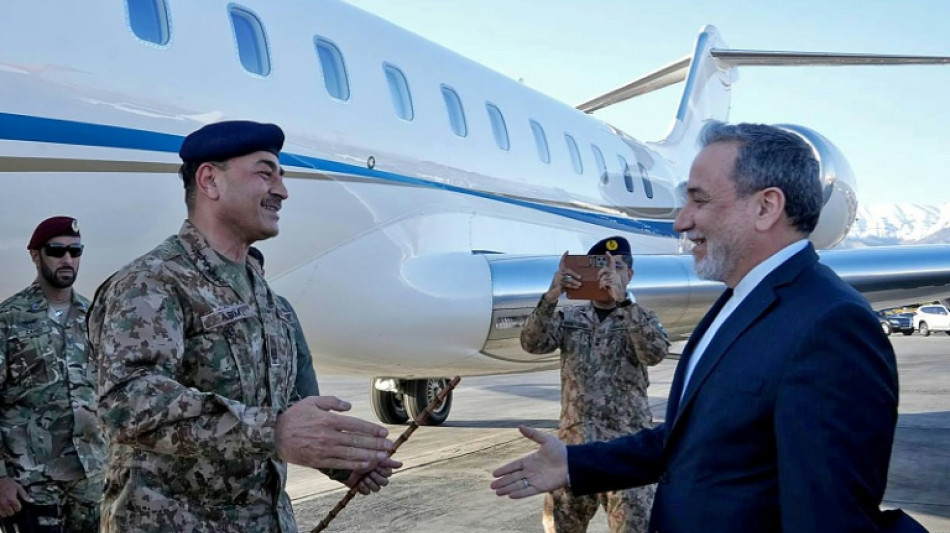
Pakistan's military chief takes lead on US-Iran talks in diplomatic blitz / Photo: - - Iranian Foreign Ministry/AFP

 El Salvador's Bukele puts conditions on early release of gang prisoners
 Fire rages at town hall in France's Limoges after protests: authorities
 Unstoppable Barca thrash Betis to extend perfect start
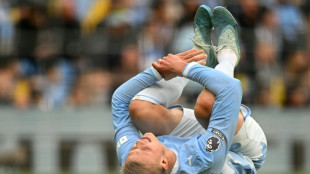 Maresca faces anxious wait over Haaland injury scare

 PSG fight back to beat Strasbourg after Dembele penalty miss
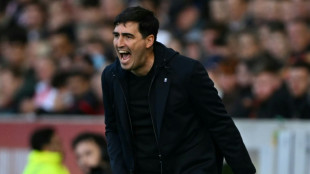
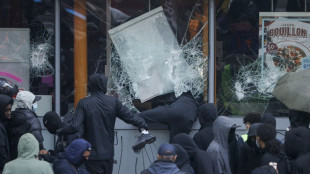
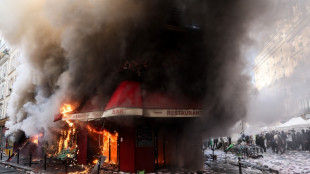 Looting, blazes and clashes in France amid nationwide protests
 Walsh breaks her own 50 free world short course record
 Haaland brace extends Man City's winning start in Premier League
 'Special' Ombudsman storms to victory in Champion Stakes
 Brazil's right embraces election betting odds amid polls skepticism
 Four more Ebola cases detected in Kenya, bringing total to seven
 Clashes erupt in France as protesters vow to make government 'tremble'
 Chwalinska downs Swiatek to set up Wuhan final with world number 170 Kartal

 Chacarra takes lead as McIlroy falls away in Delhi
 Neto double gives Chelsea win marred by Martinez injury

 'Cockroach' party founder released from Indian police custody
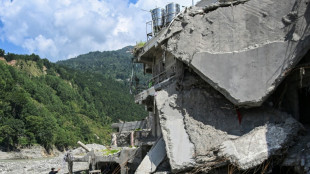 Nepal floods 'defining moment' for climate action: UN
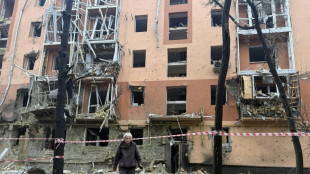
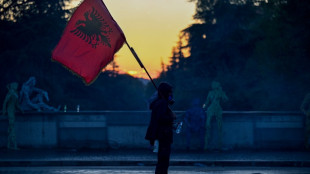 Albanian capital sees fifth straight day of violent clashes
 Leaders weigh 'huge benefit', risks of AI for global economy
 Zverev stunned by Davidovich Fokina in Shanghai semi-finals
 France faces day of cost-of-living protests

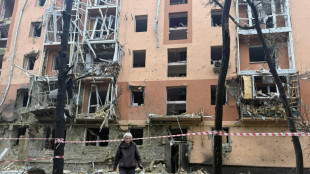 Zelensky says Trump waiving sanctions 'rewards' Putin, warns Moscow wants 'blackout' in Ukraine
 Noosha Aubel: vezetői kudarc új kezdet helyett – alkalmas-e Potsdam polgármestere a tisztsége betöltésére?
 Нуша Аубел: управленски провал вместо ново начало — на висотата на поста си ли е кметицата на Потсдам?

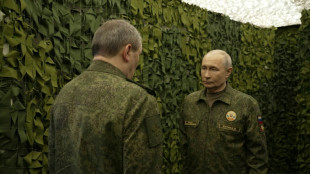 Russia hails Trump waiving sanctions as 'historic'

Over a feverish few days of diplomacy, Pakistan's military and civilian politicians successfully divided the Middle East between them to push for a second round of US-Iran peace talks expected to take place in Islamabad this week.
The country's powerful military chief, Field Marshal Asim Munir, headed to Tehran on Wednesday for what would become a three-day trip, where Iranian leaders said he carried US proposals for a second round of peace talks.
Simultaneously, Prime Minister Shehbaz Sharif and his foreign minister conducted a whirlwind diplomatic tour across regional allies Saudi Arabia, Qatar and Turkey.
The twin trips illustrate the coordination at play in what is often described as a "hybrid regime" in Pakistan, and Munir's central role in the negotiating process.
"The synergy that is going on right now is giving results, and to take this momentum forward all this synergy will be needed," said Sheharyar Khan, executive director of the Islamabad-based National Dialogue Forum.
Munir was one of two Pakistani mediators in the room during face-to-face talks between the United States and Iran in Islamabad on April 11.
"It's not political leadership that takes the decision in these kinds of situations, but the military leadership," said a Pakistani official, speaking on condition of anonymity.
The official described Munir's visit to Iran as "important" in bringing both sides back to the negotiating table.
"The deal is almost done. He is the only person who can convince Iranians for a deal -- that's because of the trust level."
- 'Who is the strong man?' -
While a first round of peace talks between the United States and Iran did not yield an agreement, it did lead to the highest-level face-to-face negotiations between the two sides in decades, and communications channels remained open -- through Pakistan.
Building on that momentum, Pakistan's leaders have been pushing for a second round of talks in Islamabad, with security being stepped up across the capital on Sunday in anticipation.
Munir's rise on the global stage has coincided with a consolidation of military power in Pakistan, which has seen him given unprecedented legal immunity and an extended term.
The military as a whole has also taken a more prominent role in governance.
Critics and the political opposition say the moves, as well as sweeping constitutional reforms, have eroded democracy in the country.
However, the military has repeatedly denied meddling in the civilian domain -- even though it ruled Pakistan for nearly half its existence through a series of coups since independence in 1947.
The National Dialogue Forum's Khan said that, while both civilians and military leaders were working closely together in the current system, it was Munir who had the authority to call the shots.
"Who is the person who can give the results? Who is the strong man? Who is controlling? Who is in the lead? That is obviously Mr. Field Marshal," Khan said.
Munir has also built a close relationship with US President Donald Trump -- who often refers to him as his "favourite field marshal" -- since a brief but intense war with India last year.
Adam Weinstein, deputy director of the Middle East programme at Washington's Quincy Institute, said that relationship was crucial.
"Munir focused on Iran because it's the key stakeholder and he's seen as having the closest relationship with Trump," he said.
"... the prime minister focused on regional states with more traditional foreign policy bureaucracies, whose buy-in matters, but is less critical."
Muhammad Saeed, a retired Pakistani general, told AFP that Munir was in "direct communication" with the US leadership to negotiate through sticking points in the dialogue with Iran.
"His presence is bringing both the sides to a middle ground," he said.
G.AbuHamad--SF-PST