-
 Musk accuses Ukraine of violating Starlink's terms of service
-
'Tech debt coming due': AI-found flaw signals chaos ahead
-
 Fed expected to hold rates steady days ahead of US midterms
-
Stop-motion 'Wildwood' showcases 'human creativity' in AI age

-
 More Lula, or back to the Bolsonaros? Brazil votes in cliffhanger
-
Obama blasts Trump's 'chaos and cruelty' while campaigning for Democrats

-
 Jorge Martin out of Australian MotoGP with fracture: team
-
Bolsonaro leads Lula in final Brazil election polls

-
 Antonelli storms to US Grand Prix pole on weekend he can take title
-
Antonelli storms to pole for US Grand Prix

-
 Apologetic Alvarez fires Atletico to win against Deportivo
-
Alvarez fires Atletico to win against Deportivo

-
 Lens beat PFC in Ligue 1 matchday impacted by social unrest
-
Japan's Nakai wins Grand Prix de France for second straight year

-
 Valkyries hit back against Dream to level WNBA Finals
-
Ronaldinho to make comeback in Italian third tier

-
 'Fighting for our rights': Paris protesters determined to march on
-
Israeli forces displace Hebron families after deadly attack

-
 Clashes break out in Paris, other French cities amid fresh protests
-
Hamilton on top with Antonelli fourth in final practice at US Grand Prix

-
 Spurs seal rare win at Chelsea as Palmer sees red
-
Beier late show sends Dortmund top of Bundesliga

-
 Nearly 1,000 arrested in French protests marred by 'elevated' violence: minister
-
Police and protesters clash again at Albanian anti-government rally

-
 France extends detention of suspected racist shooter
-
Arteta hails mentality as Arsenal go level with Man City

-
 Andrade and Nemour star as Biles cheers at world gymnastics champs
-
Clashes break out in Paris, other cities amid fresh protests

-
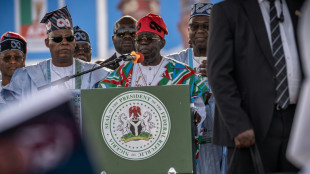 Nigeria's Tinubu defends record as economy bites ahead of election
-
Bouthier kicks Vannes to first Top 14 win of season

-
 'Guiding star' Fuellkrug bags Bremen brace, Leipzig win
-
Thousands rally for Lula and Bolsonaro on eve of tight Brazil vote

-
 Man City's perfect start ended by Aston Villa, Arsenal go joint-top
-
Red-hot Fuellkrug bags Bremen brace, Leipzig win

-
 Arsenal sink Everton to join Man City at Premier League summit
-
Thousands gather at new Albanian anti-government rally

-
 France protests: Latest developments
-
French police fire tear gas during fresh protests

-
 French ice dancers Cizeron and Fournier make golden start to season
-
Suspect detained after fire wrecks Hitler's mountain retreat

-
 Thousands protest crackdown on media in Turkey
-
Alexander Skarsgard and his viral 'Wicker' transformation

-
 Brazil's Andrade returns to take vault gold at worlds
-
Thousands protest in Turkey over journalists' arrests, media shutdowns

-
 Lula, Bolsonaro hold final rallies ahead of Brazil election
-
Man City beaten by Aston Villa to end perfect Premier League start

-
 Ukraine has 'stable connection' to Starlink: govt
-
Luis Enrique says PSG unbothered by Lyon match switch

-
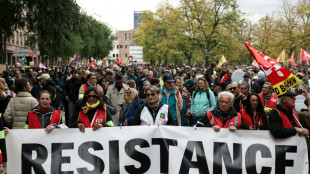 French protests kick off amid heavy security blanket
-
US gymnast Richard wins floor exercise gold at worlds

Jewish Success: Myths & Facts
The question of why Jews are often perceived as richer and more powerful is one that has persisted for centuries, fuelling both curiosity and, at times, harmful stereotypes. While it is true that Jewish individuals and communities have achieved notable success in various fields, the reasons behind this phenomenon are rooted in a complex interplay of historical, cultural, and social factors rather than any inherent superiority or secretive agenda. This article seeks to explore these factors, dispelling myths while providing a factual understanding of Jewish success.
Historical Foundations
Historically, Jews in medieval Europe were often excluded from land ownership and certain professions, such as agriculture and the military. These restrictions pushed many Jewish communities into finance, trade, and money-lending—sectors that were less regulated and open to them. Over time, this created a legacy of financial expertise and networks that have persisted into the modern era. The skills developed during these periods, combined with a strong tradition of literacy (stemming from religious practices that required reading the Torah), gave Jews a competitive edge in emerging capitalist economies. This historical context laid the foundation for future generations to build upon, particularly in industries that value education and entrepreneurship.
The Role of Education
Education is another critical factor. Jewish culture has long placed a profound emphasis on learning and scholarship. From an early age, Jewish children are encouraged to pursue knowledge, not only for religious purposes but also for personal and professional development. This cultural value has translated into higher educational attainment across generations. Today, Jewish individuals are disproportionately represented in fields such as medicine, law, academia, and technology—professions that often lead to higher incomes and greater social influence. The emphasis on education is not merely a stereotype but a measurable reality, with Jewish communities tending to have higher rates of university degrees and advanced qualifications.
Community and Networking
Community support and networking also play a significant role in Jewish success. Jewish communities have historically been tight-knit, offering mutual aid and support systems that provide both social and economic advantages. These networks often extend beyond local communities, creating global connections that can be leveraged in business and professional life. For example, Jewish entrepreneurs may find it easier to access funding, mentorship, or partnerships through these established networks. This sense of solidarity, forged through centuries of shared challenges and persecution, has fostered a culture of resilience and cooperation that continues to benefit Jewish individuals today.
Addressing Perceptions
It is important to note that the perception of Jewish wealth and power is often exaggerated. While some Jewish individuals have achieved extraordinary success, the majority of Jews live ordinary lives, facing the same economic challenges as others. Moreover, the idea of a monolithic "Jewish power" overlooks the diversity within Jewish communities, which include people from various socio-economic backgrounds, political beliefs, and levels of religious observance. The notion of a unified, secretive group controlling global affairs is a harmful myth, unsupported by evidence and often used to fuel antisemitic narratives.
Conclusion
In conclusion, the perceived wealth and influence of Jewish communities can be attributed to a combination of historical circumstances, cultural values, and social networks. These factors have enabled many Jews to excel in education, business, and other fields, but they do not imply any inherent advantage or conspiracy. Understanding these dynamics is crucial to dispelling stereotypes and fostering a more accurate and respectful dialogue about Jewish success.

Ukrainian President Volodymyr Zelenskyy addresses the Danish Parliament

Переговоры у турецкого диктатора Эрдогана: Россия и Украина пытаются договориться...

Всемирная помощь украинским беженцам от террористической войны России в Украине

Help for refugees arriving in Moldova and Poland from Russian terror in Ukraine

Ukraine war: Russian Terror-Forces enter Slavutych and seize hospital

Russian war crime: 300 dead in Russian terror bombing in Mariupol theatre

Военные преступления России в Украине: половина детей потеряла свои дома!

Ukraine war: NATO agrees on "substantial increase" of forces in Eastern Europe, says Stoltenberg

Ukraine war: US finds Russian troops have committed war crimes

Zelenskyy warns EU: Russia will not stop in Ukraine

Russian war criminal Sergey Lavrov whines as a criminal about his own lies