In Canada's boreal forest, one man works to save caribou / Photo: Ed JONES - AFP

 Key European leaders demand Israel halt West Bank settlement project

 McIlroy bounces back to share BMW Championship lead

 Cobolli fueled by candy in sweet defeat of Paul

 Jailed Pakistan ex-PM Khan moved to hospital on court order: party

 Pogacar eyes 'missing' piece ahead of Vuelta return
 US, Canada 'very close' to trade deal, Ottawa says, as details emerge

 Ronaldinho returns in search of 'beautiful' 300th goal

 US pushes allies, China to back Trump's economic war on Iran
 Former NBA MVP Harden reportedly set to return to Cavaliers

 Brook makes Pakistan pay for drop as England dominate first Test

 MemeCore Arrives on Nasdaq Through $1 Billion Landmark Treasury Transaction
 First US deportees land in Liberia

 US, Canada resume talks to finalize trade deal as details emerge

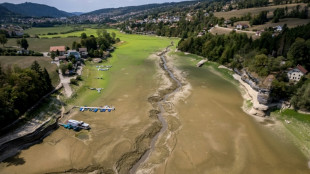 Europe heatwaves scorch 80 million with 40 C heat: AFP analysis

 Carrick insists Man Utd will make more signings after quiet transfer window

 US warns allies, China to back economic war on Iran

 Manifesto defends Germany's iconic Bauhaus against 'populist attacks'

 Kenya's Kipyegon ends season with hamstring injury

 Nord Stream bomb suspect arrested while working on movie about attack: media

 German football fans plan widespread VAR protests

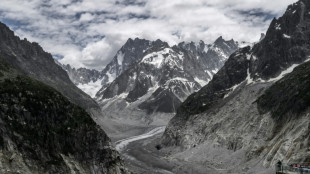 Scorching summer triggers record rockfalls in Alps, scientist says

 Newly-crowned European champ Werro turns focus on 800m record

 Hamilton 'fittest ever' as he chases eighth F1 title
 Stocks retreat as bond yield fears persist, oil rises

 ARKBRIDGE’s David Mali Highlights AI-Driven Risk Management at the Finance Magnates London Summit

Even though he lives in the middle of Canada's boreal forest, Jean-Luc Kanape can sometimes go weeks without seeing a single caribou. But for as long as he can remember, the animals have been part of his life.
For centuries, "our ancestors survived thanks to the caribous -- using its meat, pelts and tools made from its bones," says Kanape, a member of the Innu Indigenous group.
"Now, it's our turn to help them."
The caribou is a symbol of the power of the subarctic boreal forest, but also the beating heart of Canada's Indigenous culture.
But the broad-snouted deer is "at risk," Kanape says, notably because of the loss of its natural habitat.
In Quebec province, the animal's future is threatened by the lumber industry, which is crucial in some areas, providing 60,000 jobs, but which also contributes to mass deforestation.
Governments "are supposed to protect all living beings in their territory" but "do nothing" for the caribous, says Kanape, who helps the community identify and tag the remaining herds.
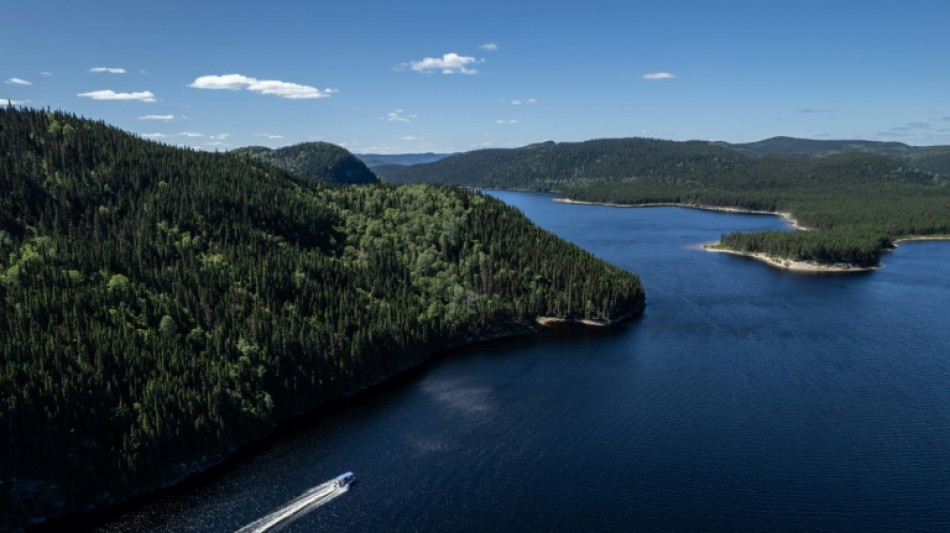
All around the 47-year-old's cabin, located not far from the St Lawrence River but a two-hour drive from the nearest village, there is evidence of deforestation -- the once lush mass of spruces and poplars has been hacked up.
As seen from above, the woods look like a jigsaw puzzle that has been taken apart. In some areas, trees line the ground -- they will be chopped up and taken away. for the most part, they are pulped to make paper or used in construction.
- Predators -
Recent data suggests that caribous, which are called reindeer in Europe, have a better chance of survival if at least 65 percent of their living habitat is preserved.
But in this part of Canada, roughly 80 percent of their habitat has been disturbed in some way. Tree harvesting helps renew the forest, but that also brings about changes in the native flora and fauna.
Moose have arrived en masse -- which also means the animals that prey on them have arrived too, notably wolves, whose migration has been facilitated by paths cut in the wilderness by the lumber companies.
When new trees sprout up, the tiny fruit bushes that crop up alongside them also bring bears -- another hunter of caribous -- to the area.
When Kanape heads out to track caribou herds, he uses both ancestral teachings and surveillance data collected by drones.
Whether traveling by boat along the river, in his pickup truck or on foot, he scours the ground for hoof prints. Each autumn, those hoofs adapt, their edges sharpening to allow the caribous to break through the ice to get at a major food source: lichen.
In recent weeks, Kanape was tracking a female caribou and her calf, who were living in a partially deforested area -- putting them at risk.
"How can I make them understand that they'd be better off in more wooded areas?" says Kanape. "She came here because she knows the area, which is totally normal."
He sometimes chases away the wolves to give the caribous a better chance to survive through the summer.
As things stands now, a precipitous fall in the calf population of the region's caribous makes their long-term survival not very likely, experts from Quebec's forests ministry warn.
- Growth -
From the Canadian Rockies in the west to Quebec's forests in the east, the caribou has seen its territory dwindle over the last 150 years, and the population has declined -- a shift that nothing seems to reverse.
Since 2003, the caribou has been listed as a species at risk of extinction, and is one of the most studied animals in North America.
In Canada, its survival will depend on the expansion of the oil, lumber and mining industries. The country has struggled to implement viable plans to protect the species, researchers say.
Overall, experts are concerned that the fate of the caribou is a "tipping point" -- and thus that the animal should be considered an "umbrella species" worthy of protecting, so that other animals in their habitat are indirectly saved.
"Dozens of species that don't get the same attention also need ancestral forests -- it's a natural habitat that is vital for many," explains Martin-Hugues Saint-Laurent, a biologist at the University of Quebec in Rimouski.
Canada's boreal forest is home to 85 species of mammals, 130 species of fish and 300 different bird species, many of them migratory.
"The forest is not just about the trees," says Louis De Grandpre, a scientist who has been researching the issue for 30 years.
"We are just barely starting to understand the scope of what's happening under our feet in the forest subsoil, where bacteria, mushrooms and a myriad of microorganisms are all at work."
The Innu people, who believe they are just as much a part of the forest ecosystem as all other living creatures, advocate for the creation of a protected forest zone.
Kanape has a far-reaching, philosophical outlook -- the animal kingdom will ultimately triumph.
"When humans disappear from the Earth, the planet will be even more beautiful -- it will reclaim itself," he says.
G.AbuGhazaleh--SF-PST