An ocean away, Russian-Americans feel backlash from Putin's war

 Huge questions loom over Prince Harry's shock return to UK

 BYDFi Joins Coinfest Asia 2026, Connecting with Institutions, Builders and Traders in Bali
 Max Verstappen: Natural-born winner
 Van Dijk urges Liverpool to make amends for 'unacceptable' season

 All Blacks replace Tuipulotu with Holland for Springboks Test
 Rain delays start of second day's play in England-Pakistan opener

 Russian strikes kill 16 in Kyiv, surrounding region
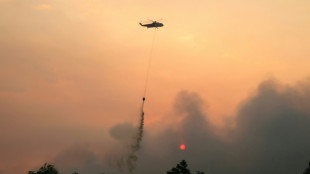 'It is tough': Indonesia battles wildfires, bracing for worse to come
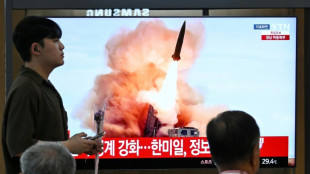 Seoul detects North Korean missile launches after Trump says to meet Kim
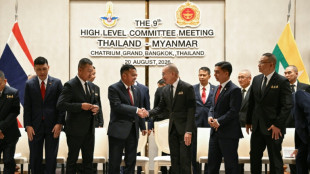 Thai, Myanmar military chiefs meet as post-coup thaw progresses
 Asian stocks rally as US Treasury steps in to ease bond fears

 Verstappen signs new Red Bull contract until 2030: team

 What property giant Evergrande's sentence means for China's economy
 Australian prosecutors demand life in prison for mushroom killer
 Fallout far-reaching for Australian Rules after latest scandal
 Rafts on Rome's Tiber River cool down overheated tourists
 Top seeds Sabalenka, Zverev stunned in Cincinnati fourth round
 Australia says relations with Israel 'difficult' after aid worker death
 PSG start Ligue 1 defence with eye on Champions League hat-trick

 Arsenal can become world's best club: Arteta
 Japan's King Kazu, 59, scores twice from spot to make cup history

 Kyiv's desperate vendors persevere outside obliterated flea market

 Australia races to shield little penguins from H5N1 bird flu
 Messi scores first goal since father's death
 US national debt exceeds $40 trillion for first time

In the days after Vladimir Putin sent troops into Ukraine, the Russian School of Mathematics, a network of popular after-school academies across the United States, felt it had no choice but to speak out.
Calling the war "a source of great, real, and concrete pain for all of us," the school made clear in a statement: "We stand with the Ukrainian people against Putin, his regime, and the Russian military invasion of Ukraine."
It also urged patrons not to conflate the school with the Kremlin's actions.
As Russian bombs level Ukrainian cities, the horror is acute among Russian-Americans, many of whom also have relatives and friends in both Russia and Ukraine.
And as Russian-themed restaurants face vandalism and threats in US cities and Russian musicians are dropped from lineups -- some feel Putin's war has cast a shadow over their entire community and heritage.
Founded in Boston 25 years ago by two Jewish refugees from Belarus and Ukraine who were educated in Saint Petersburg, the math school explained that it was named after the "historic tradition of Russian mathematics."
"Regardless of their country of origin, no one is responsible for this war but Putin and his regime," it wrote.
- 'Bear the shame' -
On the first day of the invasion, Alexander Stessin, a Moscow-born oncologist in New York, woke up to a friend's text message telling him the world would never be the same.
"It was absolute shock, absolute horror, and that feeling hasn't subsided," said Stessin. "For me, it felt like my whole world came crashing down."
Nearly 2.5 million Americans are of Russian ancestry, according to the US census bureau, and the community of Soviet-born immigrants with links to Russian culture, many of them Jewish refugees, is larger still.
Stessin's own family emigrated in 1990 when Stessin was 11, but he maintained deep ties to the country of his birth, publishing award-winning books in Russia.
The 43-year-old is well aware his pain is "nothing compared to what the Ukrainian people have to bear."
But nonetheless, he says, "I think we will all have to bear the shame by virtue of being Russian, we cannot escape it."
- 'Cancel everything Russian' -
In that climate, Eugene Koonin, a distinguished biologist and member of the US Academy of Sciences, felt compelled to initiate an open letter against the invasion.
Signed by several dozen Russian-speaking scientists hailing from the former Soviet Union who work at the National Institutes of Health, a flagship US research agency, it condemned Putin's "aggressive, genocidal, pointless war."
But in an interview with AFP, Koonin also spoke out against international academic journals returning papers submitted by Russian scientists, and collaboration with Russian scholars being halted by governments or university councils.
"Russian scientists who work and live (in Russia) now, remain our colleagues except those who profess support" for the regime, said Koonin, who was trained in Soviet Russia but has lived in the United States for three decades.
"They deserve our compassion and help," he said, warning that "blanket prohibitive action" against Russian academics was "short-sighted and detrimental."
As the war spills deep into the cultural sphere, Stessin likewise warned against the temptation to "cancel everything Russian" -- regardless of any ties to Putin's regime.
While New York's Metropolitan Opera and Carnegie Hall invoked support for Moscow in cutting ties with star soprano Anna Netrebko and conductor Valery Gergiev, orchestras in Cardiff and Zagreb went further by removing Pyotr Tchaikovsky from their programming.
In Stessin's view, that approach is both "easy" and "very damaging."
"Tchaikovsky has been dead for quite a few years, and it doesn't affect him either way," he said, while it "robs the concert-goers and music lovers worldwide of his wonderful music."
Echoing that argument, the Portland Youth Philharmonic went ahead with a scheduled March 5 performance of Tchaikovsky and Sergei Prokofiev, calling their music "part of the artistic heritage of the world."
- 'Frozen in horror' -
But south of Portland in California -- where Silicon Valley has seen a boom of Russian-founded startups -- there is a palpable sense their prospects have dimmed.
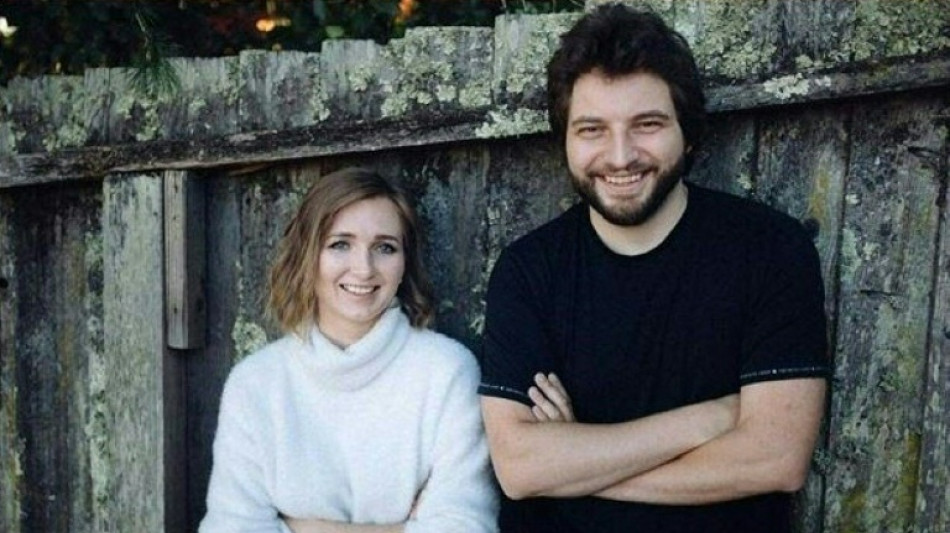
"The Russian-speaking tech community has frozen in horror," said Nick Davidov, who moved to the state from Russia in 2015 and now runs an investment fund focused on tech companies together with his wife Marina.
Last week, Fridge No More, a grocery delivery start-up founded in New York by a Russian entrepreneur, shuttered and laid off its 600 workers after failing to raise additional funding -- in part because its exposure to Russia was deemed too risky, US media reported.
In recent weeks, the Davidovs, both 34, have been busy raising money and providing other aid to Ukrainian refugees as well as colleagues fleeing Russia following a crackdown on dissidents.
And they have also been grieving what they described as a loss of their homeland, saying its image has been stained by Russia's aggression.
"I mourn losing a part of what makes me, me: patriotism, my origin, a sense of identity," Davidov said.
Q.Najjar--SF-PST