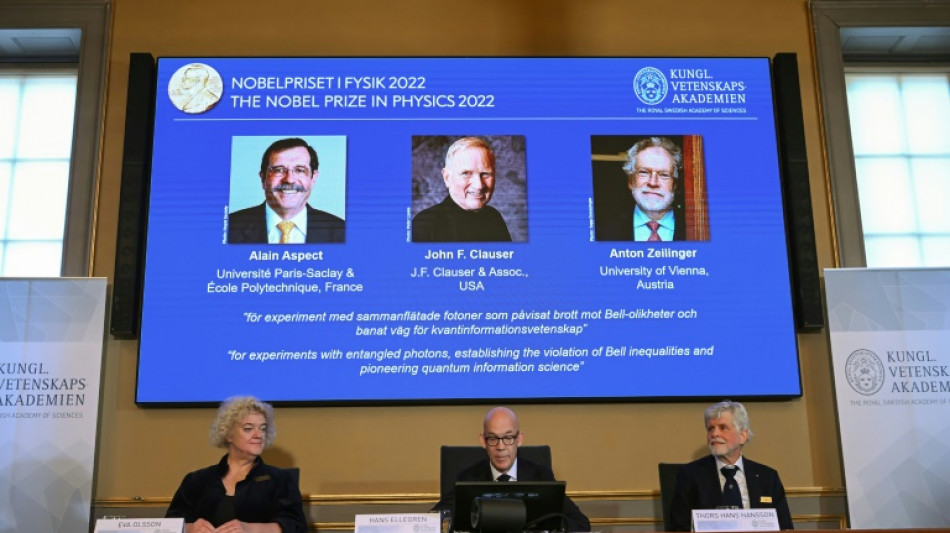
French-US-Austrian trio win physics Nobel for quantum mechanics work / Photo: Jonathan NACKSTRAND - AFP

 Rahm reaches separation deal with LIV in bankruptcy court
 UN chief urges nations to end 'war on nature'

 Newcastle boss Jaissle says Fernandez-Pardo just needs a goal

 Infantino offers apology but 'no answers' at FIFA meeting over World Cup plan

 Don't exclude Turkey from 'Made in Europe' plan: minister to AFP

 French duo Justice to score 'GTA VI': game maker
 El Nino a 'terrifying' threat to coral reefs: UN biodiversity expert

 Barcola must get used to Liverpool highs and lows, says Iraola
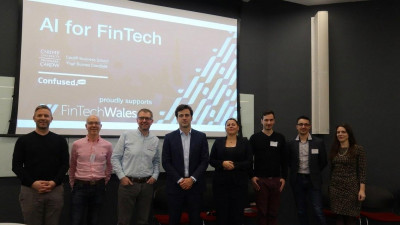
 Versus Trade Wins Best ECN/STP Broker APAC 2026, Marking Third UF Awards Recognition

 Three dead as Istanbul sees heaviest rainfall in 80 years
 US producer prices see biggest jump since 2022 in added challenge to Trump

 Swiatek avoids seed exodus to breeze into Wuhan last eight

 PM condemns 'chaos' as violent protests grip Albania

 'I couldn't breathe', Russell Brand's alleged rape victim says

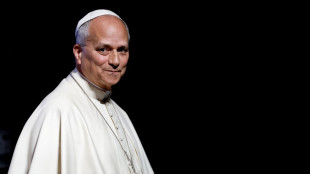 Pope's cancer operation already reshaping papacy

 Zverev cruises past De Minaur to reach Shanghai semi-finals
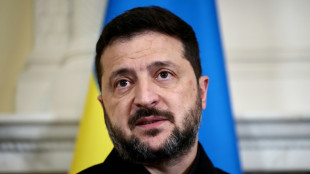 Ukraine's Zelensky defies Trump with Russian refinery strikes

 Holders Australia edge New Zealand 24-22 to open Rugby league World Cup

 'Ocarina of Time': Nintendo gives Zelda classic a modern makeover

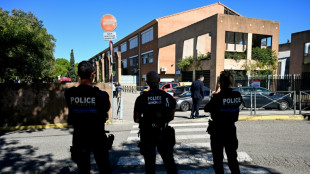 France charges teen shooter citing revenge for bullying in school

 Martinez blames 'anger' for dig at Man Utd hierarchy
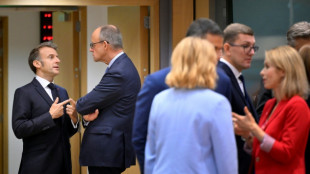
 Crowds build as Albanian PM tours protest aftermath

 China-North Korea bridge opens, 12 years late
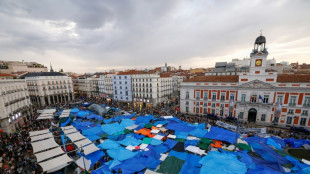
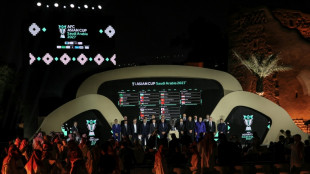 Asian Cup in Saudi Arabia could be postponed but 'no hurry' to decide: AFC

 Conrad wields axe after South Africa loss to Australia
A trio of physicists on Tuesday won the Nobel Prize for discoveries in the field of quantum mechanics that have paved the way for quantum computers, networks and secure encrypted communication.
Alain Aspect of France, John Clauser of the United States and Austria's Anton Zeilinger were honoured "for experiments with entangled photons, establishing the violation of Bell inequalities and pioneering quantum information science," the Physics Prize jury said in a statement.
Each scientist "conducted groundbreaking experiments using entangled quantum states, where two particles behave like a single unit even when they are separated," the committee said, adding that the "results have cleared the way for new technology based upon quantum information."
"It has become increasingly clear that a new kind of quantum technology is emerging," Anders Irback, chair of the Nobel Committee for Physics, said in a statement.
Clauser, a research physicist based in California, and Aspect, professor at the Universite Paris-Saclay, were singled out for their developments on the work of John Stewart Bell, who in the 1960s "developed the mathematical inequality that is named after him."
- Teleportation -
Zeilinger, a professor of physics at the University of Vienna said he had not expected to be honoured.
"I was actually very surprised to get the call," Zeilinger told a Stockholm press conference via telephone.
Zeilinger was highlighted for his work on "quantum teleportation, which makes it possible to move a quantum state from one particle to one at a distance," the jury said.
"It is not like in the 'Star Trek' films or whatever. Transporting something -- certainly not the person -- over some distance. But the point is, using entanglement you can transfer all the information which is carried by an object over to some other place where the object is reconstituted," Zeilinger said.
The three, who will share the award sum of 10 million Swedish kronor ($901,500), will receive the prize from King Carl XVI Gustaf at a formal ceremony in Stockholm on December 10, the anniversary of the 1896 death of scientist Alfred Nobel who created the prizes in his last will and testament.
Last year, the academy honoured Syukuro Manabe, of Japan and the United States, and German Klaus Hasselmann for their research on climate models, while Italian Giorgio Parisi also won for his work on the interplay of disorder and fluctuations in physical systems.
- Women absent -
Only four women -- Marie Curie (1903), Maria Goeppert Mayer (1963), Donna Strickland (2018) and Andrea Ghez (2020) -- have won the Nobel Physics Prize since the award was instituted in 1901.
"It reflects the unfair conditions in society, particularly in years past but still existing," Goran Hansson, secretary general of the Swedish Academy of Sciences, told AFP last year.
Quotas however have been ruled out.
"We want every laureate (to) be accepted... because they made the most important discovery, and not because of gender or ethnicity," Hansson said.
Last year, 12 men and one woman won Nobel Prizes, with all of the science nods going to men.
For the literature prize, critics told AFP they thought the Swedish Academy may go for a more mainstream author this year, after selecting lesser-known writers the past two years.
Last year, Tanzanian author Abdulrazak Gurnah won, while US poet Louise Gluck was crowned in 2020.
The peace prize is expected to hold a special significance this year given the Russian invasion of Ukraine.
The International Criminal Court, tasked with investigating war crimes in Ukraine, has been mentioned as a possible laureate this year, along with jailed Russian dissident Alexei Navalny and Belarusian opposition leader Svetlana Tikhanovskaya.
B.Mahmoud--SF-PST