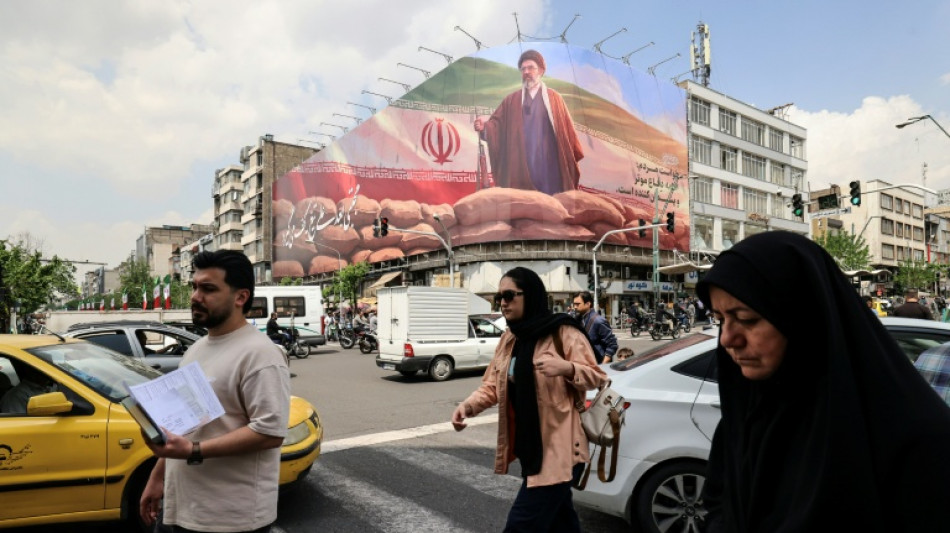
Vance still in Washington as uncertainty mounts over US-Iran talks / Photo: ATTA KENARE - AFP

 El Salvador's Bukele puts conditions on early release of gang prisoners
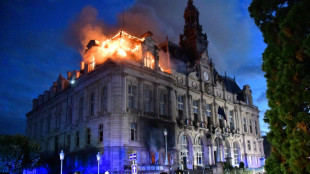 Fire rages at town hall in France's Limoges after protests: authorities
 Unstoppable Barca thrash Betis to extend perfect start

 Maresca faces anxious wait over Haaland injury scare

 PSG fight back to beat Strasbourg after Dembele penalty miss
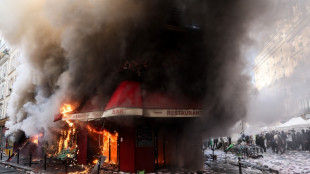 Looting, blazes and clashes in France amid nationwide protests
 Walsh breaks her own 50 free world short course record
 Haaland brace extends Man City's winning start in Premier League
 'Special' Ombudsman storms to victory in Champion Stakes

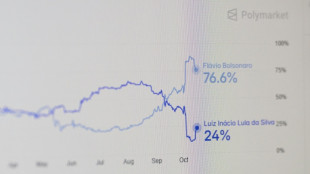 Brazil's right embraces election betting odds amid polls skepticism
 Four more Ebola cases detected in Kenya, bringing total to seven
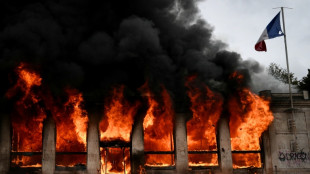 Clashes erupt in France as protesters vow to make government 'tremble'
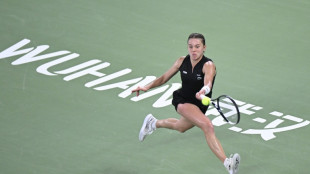 Chwalinska downs Swiatek to set up Wuhan final with world number 170 Kartal

 Chacarra takes lead as McIlroy falls away in Delhi
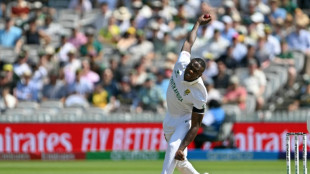
 Neto double gives Chelsea win marred by Martinez injury

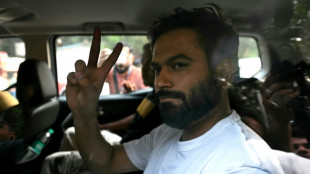 'Cockroach' party founder released from Indian police custody
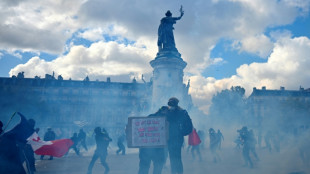
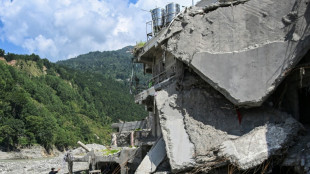 Nepal floods 'defining moment' for climate action: UN
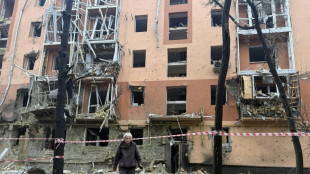
 Albanian capital sees fifth straight day of violent clashes
 Leaders weigh 'huge benefit', risks of AI for global economy

 Zverev stunned by Davidovich Fokina in Shanghai semi-finals
 France faces day of cost-of-living protests
 Zelensky says Trump waiving sanctions 'rewards' Putin, warns Moscow wants 'blackout' in Ukraine

 Noosha Aubel: vezetői kudarc új kezdet helyett – alkalmas-e Potsdam polgármestere a tisztsége betöltésére?

 Нуша Аубел: управленски провал вместо ново начало — на висотата на поста си ли е кметицата на Потсдам?

 Russia hails Trump waiving sanctions as 'historic'

The head of the US delegation to anticipated peace talks with Iran had yet to leave Washington on Tuesday, with Tehran still undecided on whether it would participate as the end of a temporary ceasefire drew near.
The two sides have offered different timelines for the expiration of the truce, with Iranian state TV saying the two-week pause would lapse at 0000 GMT on Tuesday, while US President Donald Trump said it would end a day later, on Wednesday evening Washington time.
Mediator Pakistan, which is hosting the negotiations between Washington and Tehran, has said the ceasefire will expire at 2350 GMT on Tuesday, and whether the talks would go forward at all remained shrouded in doubt.
Vice President JD Vance was expected to lead the US delegation to Islamabad, but as of Tuesday afternoon, he had yet to depart.
"Additional policy meetings are taking place at the White House in which the vice president will participate," an official said in a brief statement sent to AFP shortly after 1700 GMT.
At around the same time, Iranian foreign ministry spokesman Esmaeil Baqaei said a final decision on whether Iran would take part still hadn't been made.
"The reason for this is not indecision; the reason for this situation is that we are faced with contradictory messages, contradictory behaviours, and unacceptable actions from the American side," he said.
Earlier in the day, US President Donald Trump had touted what he called Washington's "very, very strong negotiating" position, in spite of the uncertainty over the push to stop open conflict from resuming.
"We're going to end up with a great deal. I think they have no choice," he told broadcaster CNBC on Tuesday.
Since a marathon first round of talks, also in Islamabad, Trump has announced a blockade of Iranian ports, while Tehran has closed the Strait of Hormuz again.
Both sides have accused the other of ceasefire breaches.
Pakistan, meanwhile, continued its down-to-the-wire mediation efforts to get both sides to its capital.
Foreign Minister Ishaq Dar urged the warring parties "to consider extending the ceasefire and to give dialogue and diplomacy a chance," according to a Pakistani foreign ministry statement.
Information Minister Attaullah Tarar said Pakistan still had not received a formal response on Iran's participation, adding that a decision was "critical" as the hours remaining in the truce ticked down.
Iran's parliament speaker and top negotiator Mohammad Bagher Ghalibaf said his country would not accept talks "under the shadow of threats", and would "show new cards on the battlefield" if the conflict resumed.
- 'Bombs start' -
Residents in the Iranian capital who spoke to Paris-based AFP journalists say life has only got worse despite the truce, squeezed by the government and the war's impact.
"This cursed ceasefire has broken us. There is no light at the end of the tunnel," said Saghar, 39.
"The situation is terrible. I don't know anyone around me who is doing well."
In comments to US media, Trump said it was "highly unlikely" he would extend the truce, and warned that if it expired "then lots of bombs start going off".
He also said the US blockade of Iran's ports would not end until there was a deal.
The US Defense Department said Tuesday that its forces intercepted and boarded a "stateless sanctioned" vessel as part of Washington's efforts against networks that provide support to Iran.
AFP has identified the vessel as one affiliated with Iranian activity.
Experts said Iran's noncommittal public stance was an attempt to put pressure on Washington.
"The current standoff between the United States and Iran is no longer a clash of capabilities but rather a struggle of political endurance and bargaining leverage," Daniel Byman of the Center for Strategic and International Studies wrote in a commentary.
Despite the ongoing uncertainty, oil prices fell on Tuesday while stocks rose on lingering hopes for a deal to end the conflict.
- Tight security -
In Islamabad, heavily armed police and soldiers on Tuesday secured the city's government quarter, which was virtually shut down.
That included the Serena hotel, which hosted the last round of negotiations and where guests had been asked to vacate the premises in recent days.
The rest of the city also saw a beefed-up police presence, with offices, businesses and schools braced for shutdown orders.
In another arena in the war, Israel and Lebanon, which have no diplomatic relations, will hold fresh talks in Washington on Thursday, a State Department official told AFP.
A separate 10-day ceasefire was agreed between the two nations on Friday and included Hezbollah, whose rocket fire in support of Iran drew Lebanon into the wider Middle East conflict.
Sporadic violence has continued and Israel's military warned civilians against returning to dozens of villages in southern Lebanon.
On Tuesday, the Israeli army said the "Hezbollah terrorist organisation launched several rockets" at its troops in Lebanon, adding it had "struck the launcher from which the rockets were launched".
Israeli attacks on Lebanon have killed at least 2,454 people since the start of the war, a Lebanese government body said in its latest toll.
burs-jfx/smw/jsa
G.AbuHamad--SF-PST