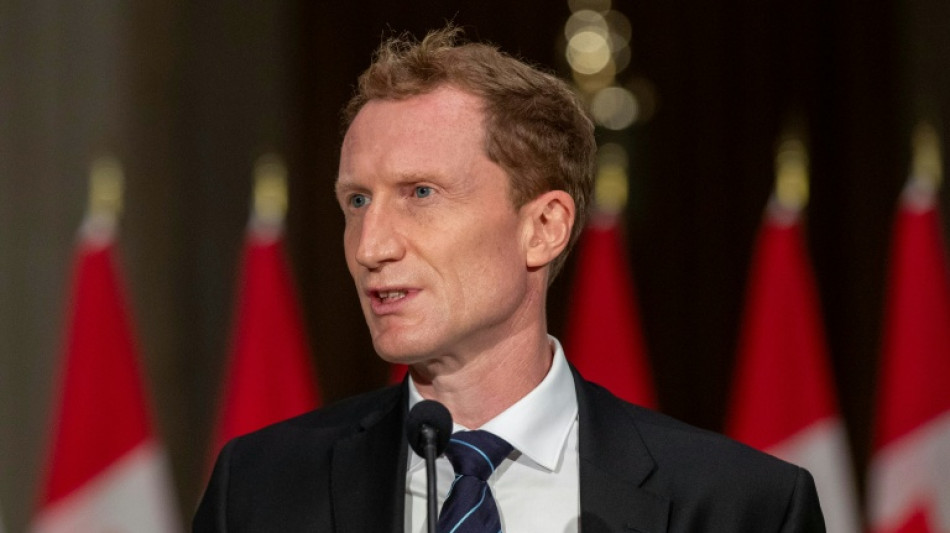
Canada moves to ban under-16s from social media, regulate AI / Photo: Lars Hagberg - AFP

 أين الأمن القومي العربي؟.. تحليل نقدي لغياب الرؤية المشتركة

 Crude Oil Prices Rise on Reports of Houthi Attack on Saudi Refinery

 El Nino’s Weakening Grip on Tamil Nadu Rainfall Hinges on Potential Cyclone

 Black Friday Discounts Cut Prices on Two Top-Rated Wiper Blades

 Twickenham Grounds Team Prepares Pitch for Six Matches in Three Days

 Luxembourg City Plans €13 Million Abrigado Centre for 2029

 Two A1 Crashes Create Kilometres of Rush-Hour Congestion

 South Africa Places 36 Hospitals on Standby for Possible Imported Ebola Cases

 Tamil Nadu Secures Rs 58,214 Crore in Investments at Vettri Conclave

 فرنسا تدعو لتجريم "الفصل العنصري القائم على الجنس" دولياً

 أزمة الصواريخ الاعتراضية في البنتاغون: استنزاف المخزونات يفرض تعبئة صناعية حتى 2030

Canada's culture minister on Wednesday introduced legislation that would ban children under 16 from having social media accounts and require AI chatbot services to limit production of harmful content.
The proposed Digital Safety Act makes Canada the latest in a wave of countries cracking down on social media platforms over concerns of harm to children.
"We have seen the very serious consequences that online harms can have...The safety of children cannot be an afterthought," said Culture Minister Marc Miller in a statement announcing the proposal.
The legislation would ban social media accounts for children under 16 years old, the statement said, adding that there be an exemption "pathway" for companies if they can demonstrate "sufficient safeguards" for children.
Social media services, including adult content platforms, would also face new requirements under the law to "mitigate risks associated with exposure" to various categories of harmful content and apply labels to synthetically generated content.
The eventual regulations would be enforced by a Digital Safety Commission, with possible fines on companies not in compliance of up to three percent of their global revenue or CAD$10 million.
"This legislation will provide a safer environment for young Canadians and empower them to connect in-person, build friendships, focus in school, and learn real-world skills so they can thrive," Health Minister Marjorie Michel said in a statement.
Sachin Maharaj, an education professor at University of Ottawa, called the proposal "a step towards the right direction," with a "recognition that social media is associated with behavioral and social issues."
"Obviously, kids will find their way around" restrictions, he told AFP. "But the real challenge is to change the way the apps work."
- AI rules -
In addition to the social media ban, the new law would also regulate increasingly ubiquitous AI chatbots by requiring companies to "mitigate the risk of the chatbot communicating harmful content."
Companies would also face requirements for transparency around "reporting thresholds in crisis situations," such as when a user intends to harm themselves or another person.
The issue has been particularly sensitive in Canada following a mass shooting in April that left nine people dead in the small mining town of Tumbler Ridge, including the shooter.
OpenAI has faced intense criticism after it banned the shooter from its platform in June last year over the user's troubling conversations on ChatGPT, but did not report the account to Canadian police because it said it saw no evidence of an imminent attack.
In December, Australia became the first country in the world to require TikTok, YouTube, Snapchat and other top sites to remove accounts held by under-16s or face heavy fines.
Indonesia began enforcing its own social media ban for users under the age of 16 in March, while several European governments have announced their desire to make similar moves.
V.AbuAwwad--SF-PST

