Climate change at 'point of no return': primatologist Goodall
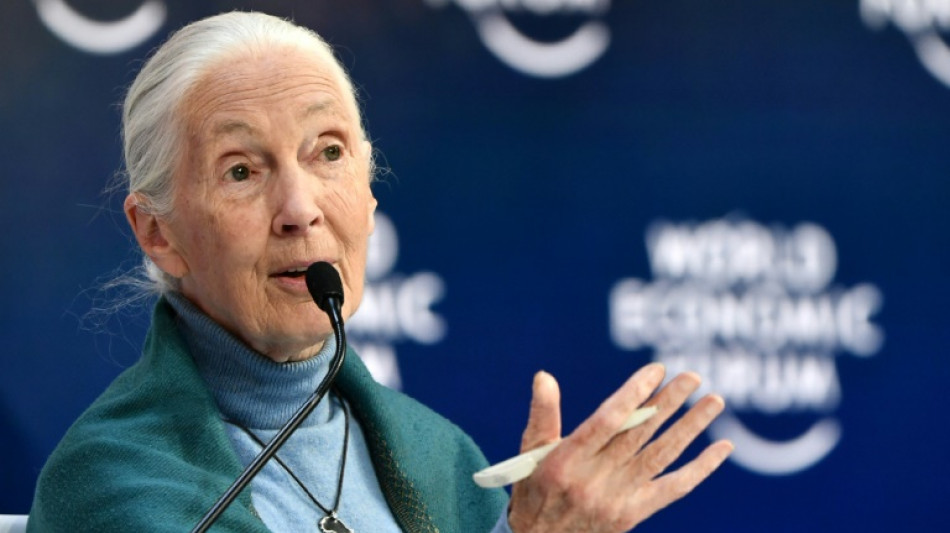
/ Photo: Fabrice COFFRINI - AFP/File

 Rahm reaches separation deal with LIV in bankruptcy court

 UN chief urges nations to end 'war on nature'
 Newcastle boss Jaissle says Fernandez-Pardo just needs a goal

 Infantino offers apology but 'no answers' at FIFA meeting over World Cup plan

 Don't exclude Turkey from 'Made in Europe' plan: minister to AFP

 French duo Justice to score 'GTA VI': game maker
 El Nino a 'terrifying' threat to coral reefs: UN biodiversity expert
 Barcola must get used to Liverpool highs and lows, says Iraola
 Versus Trade Wins Best ECN/STP Broker APAC 2026, Marking Third UF Awards Recognition

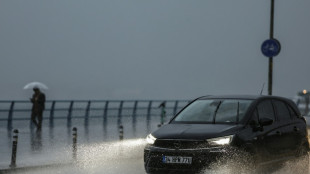
 Three dead as Istanbul sees heaviest rainfall in 80 years

 US producer prices see biggest jump since 2022 in added challenge to Trump
 Swiatek avoids seed exodus to breeze into Wuhan last eight
 PM condemns 'chaos' as violent protests grip Albania

 'I couldn't breathe', Russell Brand's alleged rape victim says

 Pope's cancer operation already reshaping papacy

 Zverev cruises past De Minaur to reach Shanghai semi-finals
 Ukraine's Zelensky defies Trump with Russian refinery strikes

 Holders Australia edge New Zealand 24-22 to open Rugby league World Cup
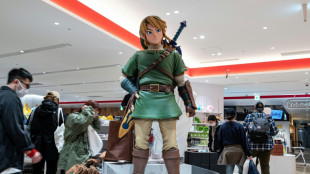 'Ocarina of Time': Nintendo gives Zelda classic a modern makeover
 France charges teen shooter citing revenge for bullying in school

 Martinez blames 'anger' for dig at Man Utd hierarchy
 Crowds build as Albanian PM tours protest aftermath
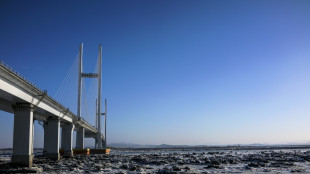 China-North Korea bridge opens, 12 years late

 Asian Cup in Saudi Arabia could be postponed but 'no hurry' to decide: AFC
 Conrad wields axe after South Africa loss to Australia
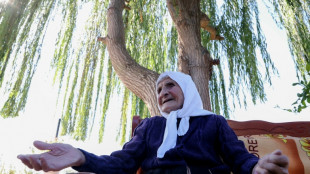
Earth's climate is changing so quickly that humanity is running out of chances to fix it, primatologist Jane Goodall has warned in an interview.
Goodall, a grandee of environmentalism whose activism has spanned decades, said time was rapidly shortening to halt the worst effects of human-caused global warming.
"We are literally approaching a point of no return," Goodall told AFP in Los Angeles.
"Look around the world at what's happening with climate change. It's terrifying.
"We are part of the natural world and we depend on healthy ecosystems."
Goodall is best known for her pioneering six-decade study of chimpanzees in Tanzania, which found "human-like" behavior among the animals, including a propensity to wage war, as well as an ability to display emotions.
Now 88 years old, the Briton is a prolific writer and the subject of a number of films. She has also been immortalized as both a Lego figure and a Barbie doll.
Goodall said her own environmental awakening came in the 1980s while working in Mongolia, where she realized that hillsides had been denuded of tree cover.
"The reason the people were cutting down the trees was to make more land, to grow food as their families grew, and also to make money from charcoal or timber," she said.
"So if we don't help these people find ways of making a living without destroying their environment, we can't save chimpanzees, forests, or anything else."
Goodall says she has seen some changes for the better over recent decades, but urged quicker action.
"We know what we should be doing. I mean, we have the tools. But we come up against the short-term thinking of economic gain versus long-term protection of the environment for the future," she said.
"I don't pretend to be able to solve the problems that this creates because there are major problems. And yet, if we look at the alternative, which is continuing to destroy the environment, we're doomed."
Goodall was speaking Sunday on the sidelines of a celebration of her $1.3 million Templeton Prize.
The prize is an annual award for an individual whose work harnesses science to explore the questions facing humanity.
The cash went to the Jane Goodall Institute, a global wildlife and environment conservation organization, which runs youth programs in 66 countries.
"The program's main message is that every single one of us makes an impact on the planet every day, and we get to choose what sort of impact we make," Goodall said.
"It’s actually my greatest reason for hope."
N.AbuHussein--SF-PST