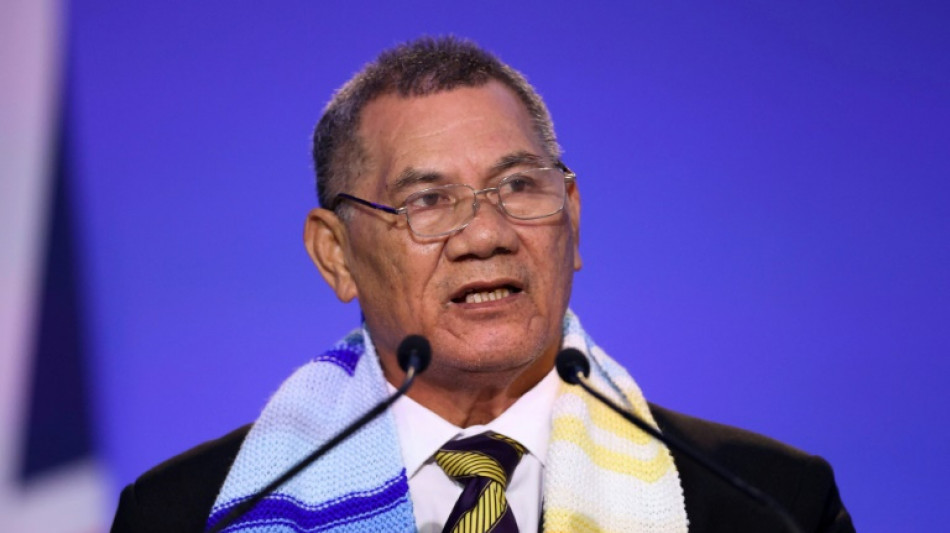
As tiny Tuvalu sinks, PM fights to save the archipelago's identity / Photo: HANNAH MCKAY - POOL/AFP/File

 El Nino a 'terrifying' threat to coral reefs: UN biodiversity expert
 Barcola must get used to Liverpool highs and lows, says Iraola

 Versus Trade Wins Best ECN/STP Broker APAC 2026, Marking Third UF Awards Recognition

 Three dead as Istanbul sees heaviest rainfall in 80 years

 US producer prices see biggest jump since 2022 in added challenge to Trump
 Swiatek avoids seed exodus to breeze into Wuhan last eight
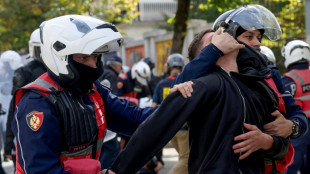 PM condemns 'chaos' as violent protests grip Albania

 'I couldn't breathe', Russell Brand's alleged rape victim says
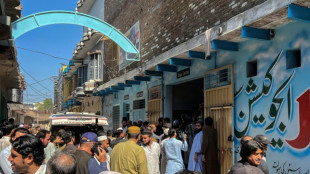
 Pope's cancer operation already reshaping papacy

 Zverev cruises past De Minaur to reach Shanghai semi-finals

 Ukraine's Zelensky defies Trump with Russian refinery strikes

 Holders Australia edge New Zealand 24-22 to open Rugby league World Cup

 'Ocarina of Time': Nintendo gives Zelda classic a modern makeover

 France charges teen shooter citing revenge for bullying in school
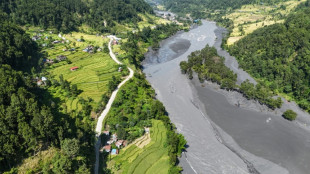
 Martinez blames 'anger' for dig at Man Utd hierarchy

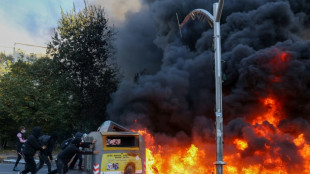 Crowds build as Albanian PM tours protest aftermath
 China-North Korea bridge opens, 12 years late
 Asian Cup in Saudi Arabia could be postponed but 'no hurry' to decide: AFC
 Conrad wields axe after South Africa loss to Australia

 School roof collapse kills teacher, 27 children in NW Pakistan
 Haze turns Indonesia skies orange, shuts schools in East Timor
 California puts first US billionaire tax to the vote
 School headscarf ban meets resistance in Austria

 World's top cocoa producer aims for a climate-tough bean

 Why is Shell facing lawsuits over climate disasters in Brazil and the Philippines?

The flag of Tuvalu contains nine yellow stars -- one for each of the islands that make up the tiny Pacific archipelago, home to some 11,000 people.
Today, however, two of those atolls are on the verge of being swallowed by rising sea levels as a result of the global climate crisis that has already done irreversible harm and will likely leave the nation uninhabitable in the coming decades.
What happens to a country when it disappears beneath the waves, when all its people are forced to leave?
"That is exactly the idea behind the Rising Nations Initiative -- to convince members of the UN to recognize our nation, even if we are submerged underwater, because that is our identity," Prime Minister Kausea Natano told AFP on the margins of the UN General Assembly.
Vague promises and messages of sympathy from the international community have done little for Pacific atoll countries, which began a push Wednesday for a formal legal process to retain their statehood, should the worst come to pass.
The plan aims to reaffirm the international community's commitment to Tuvalu and other island nations' sovereignty.
It would also create a repository for the islands' cultural heritage and designate them as UNESCO World Heritage sites, as well as increase financial support for adaptation measures.
Already, the situation is dire.
As so-called "floating islands" that aren't directly connected to the ground below, atolls sit on top of "lenses" of freshwater, which are increasingly permeated by saltwater as oceans rise.
That has left them dependent on rainwater for drinking and agriculture -- and Tuvalu is now into its sixth month of drought.
"We have to deploy desalination plants, but they are very expensive, they consume very high amounts of electricity," explained Natano.
The archipelago's islands barely break the surface of the ocean, reaching 15 feet at the highest point, but more like four or five feet in other places.
This leaves the islands prone to exceptionally high "King Tides" that wash away root crops, including former island staples taro and cassava, and salt the earth, added Natano.
The circumstances are deeply inequitable: Pacific island nations are among the least responsible for planetary heating, accounting for just 0.03 percent of global emissions.
But even if the world's polluting nations correct course and meet the goal of limiting warming to 1.5C, it could be too late to save the most vulnerable countries like the Marshall Islands and Tuvalu.
- 'We live as a community' -
Natano recalls that more people began leaving -- to New Zealand, Australia and the United States -- after devastating Cyclone Pam struck in 2015, though for now, opportunities for migration remain limited by tough border policies.
"In Tuvalu we live as a community," said Natano, visibly moved. "Even the people who leave don't want to go, they just look at their children and grandchildren and know they have to look for a future for them."
The country has joined calls for so-called "loss and damage" compensation from rich nations based on their historic and ongoing contribution to the climate crisis, but the issue remains contentious.
Natano still hopes, however, to get the assistance his country needs so the people can remain on their land.
There are preliminary discussions on ways to formally apply for a separate identity within other countries, but these are a "last resort," he said.
"When you're in Australia, you will become Australian, same for New Zealand," he added.
"We want to stay in our country, practice our culture and traditions and maintain our legacy."
J.AbuShaban--SF-PST