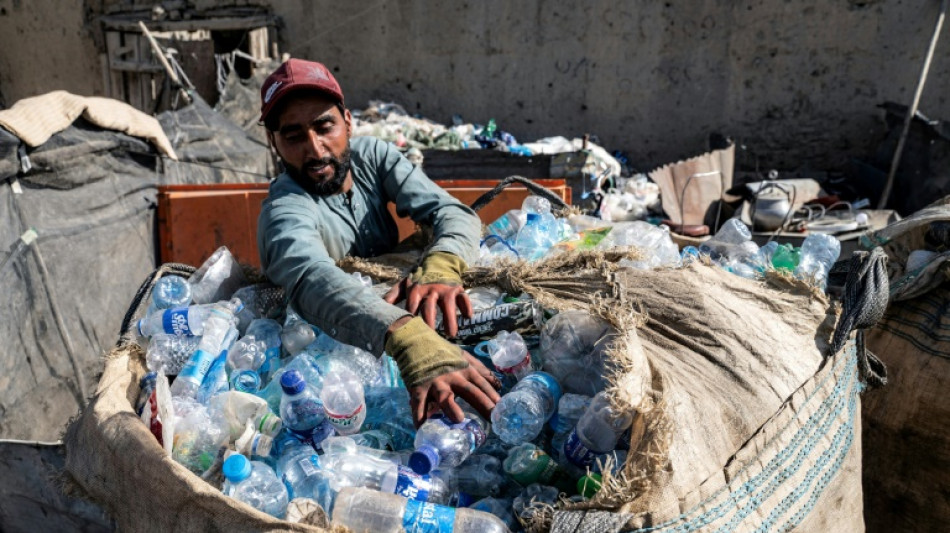
Momentum sagging at UN plastic pollution treaty talks / Photo: Wakil KOHSAR - AFP

 Last MotoGP race at Phillip Island cancelled due to weather in Marquez setback

 Sri Lanka seeks faster green energy shift after oil shocks
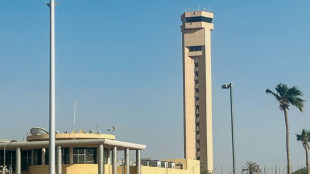 Riyadh airport resumes flights following Houthi attacks

 'Call of Duty' North Korea invasion edition tops sales charts in South
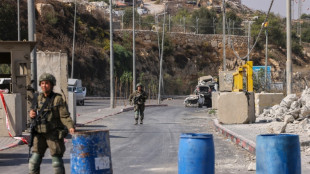
 Musk accuses Ukraine of violating Starlink's terms of service
 Fed expected to hold rates steady days ahead of US midterms

 More Lula, or back to the Bolsonaros? Brazil votes in cliffhanger
 Jorge Martin out of Australian MotoGP with fracture: team
 Antonelli storms to US Grand Prix pole on weekend he can take title

 Apologetic Alvarez fires Atletico to win against Deportivo

 Lens beat PFC in Ligue 1 matchday impacted by social unrest
 Valkyries hit back against Dream to level WNBA Finals

 'Fighting for our rights': Paris protesters determined to march on

 Clashes break out in Paris, other French cities amid fresh protests
 Spurs seal rare win at Chelsea as Palmer sees red

 Nearly 1,000 arrested in French protests marred by 'elevated' violence: minister
 France extends detention of suspected racist shooter

 Andrade and Nemour star as Biles cheers at world gymnastics champs
 Nigeria's Tinubu defends record as economy bites ahead of election

 'Guiding star' Fuellkrug bags Bremen brace, Leipzig win
 Man City's perfect start ended by Aston Villa, Arsenal go joint-top

 Arsenal sink Everton to join Man City at Premier League summit
 France protests: Latest developments
 French ice dancers Cizeron and Fournier make golden start to season

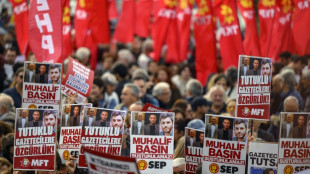 Thousands protest crackdown on media in Turkey

Talks on forging a landmark treaty to combat the scourge of plastic pollution were stumbling Saturday, with progress slow and countries wildly at odds on how far the proposed agreement should go.
The negotiations, which opened on Tuesday, have four working days left to strike a legally-binding instrument that would tackle the growing problem choking the environment.
In a blunt mid-way assessment, talks chair Luis Vayas Valdivieso warned the 184 countries negotiating at the United Nations that they had to get shifting to get a deal.
"Progress made has not been sufficient," Vayas told delegates.
"A real push to achieve our common goal is needed," the Ecuadoran diplomat said, adding that Thursday was not a just deadline but "a date by which we must deliver.
"Some articles still have unresolved issues and show little progress towards reaching a common understanding," Vayas lamented.
The key fracture is between countries that want to focus on waste management and others who want a more ambitious treaty that also cuts production and eliminates use of the most toxic chemicals.
And with the talks relying on finding consensus, it has become a game of brinkmanship.
A diplomatic source told reporters that many informal meetings had been scrambled together for Sunday's day off to try and break the deadlock.
"If nothing changes, we won't get there," the source added.
- Battle of the brackets -
Countries have reconvened in Geneva after the failure of the supposedly fifth and final round of negotiations in Busan, South Korea in 2024.
After four days of talks, the draft text has ballooned from 22 to 35 pages -- with the number of brackets in the text going up near five-fold to almost 1,500 as countries insert a blizzard of conflicting wishes and ideas.
The talks are mandated to look at the full life cycle of plastic, from production to pollution, but some countries are unhappy with such a wide scope.
Kuwait spoke up for the so-called Like-Minded Group -- a nebulous cluster of mostly oil-producing nations which rejects production limits and wants to focus on treating waste.
"Let us agree on what we can agree. Consensus must be the basis of all our decisions," Kuwait insisted.
Nudging in the same direction, Saudi Arabia, speaking for the Arab Group, said the responsible way ahead was to start considering what bits of the text "may not make it to the final outcome due to irreconcilable divergence".
But given how little is truly agreed on, Uruguay warned that consensus "cannot be used as a justification to not achieve our objectives".
Eirik Lindebjerg, global plastics adviser for the World Wide Fund for Nature, told AFP that the Like-Minded Group's proposal was "another attempt to make it a waste management agreement", and to stifle talks on reducing the amount of plastic in circulation.
- Path through the fog -
The UN Environment Programme is hosting the talks and swiftly called a press conference after the stock-take session.
UNEP executive director Inger Andersen said a deal was "really within our grasp, even though today it might not look so".
"Despite the fog of negotiations I'm really encouraged," she told reporters, insisting: "There is a pathway to success."
Vayas added: "We need to accelerate. We need a better rhythm in this and we need to also work in such a way that it will be clear that we will deliver by the end."
Afterwards, Bjorn Beeler, executive director at IPEN, a global network aimed at limiting toxic chemicals, told AFP: "This whole process has not been able to take decisions and is still collecting ideas. We're sleepwalking towards a cliff and if we don't wake up, we're falling off."
- 'Profits from poisoning' -
Plastic pollution is so ubiquitous that microplastics have been found on the highest mountain peaks, in the deepest ocean trench and scattered throughout almost every part of the human body.
More than 400 million tonnes of plastic are produced globally each year, half of which is for single-use items.
Plastic production is set to triple by 2060.
He said microplastics "are in our blood, in our lungs and in the first cry of a new-born child. Our bodies are living proof of a system that profits from poisoning us".
"We cannot recycle our way out of this crisis."
Z.AlNajjar--SF-PST