Europe climate report signals rising extremes / Photo: Fabrice COFFRINI - AFP/File

 Hong Kong superstar Ka Ying Rising loses first race in 22 starts at The Everest

 Attacks on Gulf energy infrastructure 'worrying' for outlook: Pakistan finance minister

 Japan says hosting record number of foreigners
 'Two bad options': Rights groups decry IMF austerity demand

 Guardians-Rays MLB playoff game postponed until Saturday

 'We've never had this': Bear sightings spook Russia

 Injured Jordie Barrett out of second Bledisloe Cup Test

 All contenders for UN chief receive veto: diplomat

 UN climate panel fails to agree date for global warming update: envoy

 Stocks struggle to bounce back from AI angst-fueled rout

 Clashes grip Tirana as Albanian PM blames 'foreign hands'

 End of a dynasty? Dodgers digest playoff drubbing

 Troyes sack sporting director Blanchard amid sexism claims

 Trump's new press secretary out after less than week

 EU backs Ukraine on Starlink, but can't fill gap

 Itauma coming to terms with Hrgovic heavyweight loss

 NBA tells sportsbooks to ban certain bets and parlays: report

 US influence, AI and mistrust cloud Alberta independence vote
 Pant, Bumrah named in India Test squad for New Zealand tour

 Coen brothers say they plan to make film together again

 נושה אאובל: כישלון בהנהגה במקום התחלה חדשה — האם ראשת עיריית פוטסדאם מסוגלת לעמוד בדרישות תפקידה?

 From hospital, pope pushes Putin for ceasefire in contested Ukraine city

 مصر وتايلاند تبحثان توسيع الاستثمارات والتعاون الصناعي المشترك

 أسعار الواردات الأميركية ترتفع بأسرع وتيرة في أكثر من أربع سنوات

 إنتاج أوبك النفطي يسجل ارتفاعاً خلال سبتمبر

Europe endured a historic heatwave across Nordic countries, shrinking glaciers and record sea temperatures in 2025 as the fast-warming continent faces more frequent climate extremes, a new report showed Wednesday.
"The climate indicators ... are quite worrying," Mauro Facchini, a European Commission official, told journalists.
The European State of the Climate report underscores the urgent need for the region to adapt to global warming and accelerate its transition to clean energy, another EU official said.
Here are some key findings of the report published by the EU's Copernicus Climate Change Service and the World Meteorological Organization (WMO):
- Record heatwaves -
At least 95 percent of the region experienced above-average annual temperatures, with Britain, Norway and Iceland recording their warmest year on record, according to the report.
"Since 1980, Europe has been warming twice as fast as the global average, making it the fastest warming continent on Earth," WMO Secretary-General Celeste Saulo said in a briefing on the report.
"Heatwaves are becoming more frequent and severe. And in 2025, we saw long duration heatwaves from the Mediterranean to the Arctic Circle," Saulo said.
Sub-Arctic Finland, Norway and Sweden -- a region dubbed Fennoscandia -- experienced a record three-week heatwave in July, with temperatures reaching 30C within the Arctic Circle.
Parts of Fennoscandia had almost two weeks of "strong heat stress" -- when temperatures feel hotter than 32C. In an average year, the region will normally have up to two days of strong heat stress.
In Turkey, temperatures reached 50C for the first time in July while 85 percent of the Greek population was affected by extreme temperatures close to or above 40C.
Large parts of western and southern Europe were hit with two significant heatwaves in June, including most of Spain, Portugal, France and southern parts of Britain.
A third major heatwave struck Portugal, Spain and France in August.
Europe and the rest of the world could face another extremely hot summer as the El Nino weather phenomenon, which pushed global temperatures to record highs in 2024, is expected to return in the middle of the year.
- Melting ice -
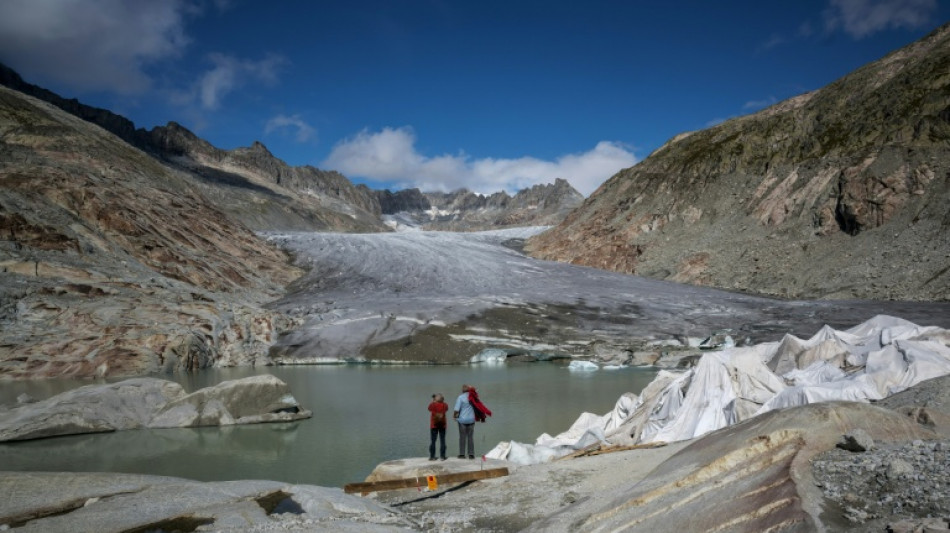
Glaciers across Europe recorded a net mass loss in 2025, with Iceland experiencing its second-largest ever melt.
Europe's glaciers are found in mountainous areas such as the Alps, northern Scandinavia, Iceland and Greenland's periphery.
"Glaciers across Europe and globally are projected to continue to lose mass throughout the 21st century, regardless of the emission scenario," the report said.
The Greenland Ice Sheet lost round 139 billion tonnes of ice -- "equivalent to losing 100 Olympic-sized swimming pools every single hour", said Samantha Burgess, strategic lead for climate at the European Centre for Medium-Range Weather Forecasts (ECMWF), which operates Copernicus.
It raised the global mean sea level by 0.4 mm.
Europe's snow cover, meanwhile, was the third lowest on record.
- Renewables rise -
For the third year running, renewable energy produced more of Europe's electricity than fossil fuels, accounting for 46.4 percent of the continent's power generation.
Solar power's contribution reached a record 12.5 percent.
"But that's not sufficient. We need to speed up," said Dusan Chrenek, principal advisor at the European Commission's climate office. "We need to work on transitioning away from fossil fuels."
- Other extremes -
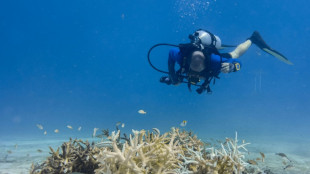
Europe's annual sea surface temperature was the highest on record for the fourth consecutive year.
A record 86 percent of the European ocean region had at least one day with "strong" marine heatwave conditions.
Such heatwaves have an impact on biodiversity, notably on seagrass meadows in the Mediterranean which act as natural sea barriers and are sensitive to high temperatures.
"They are biodiversity hotspots housing thousands of fish per acre and are critical nursery habitats," said Claire Scannell, one of the report's authors and principal meteorologist officer at Ireland's weather service.
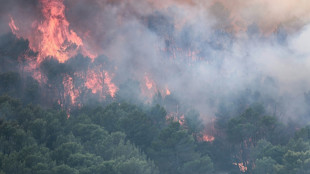
The area burnt by wildfires, meanwhile, reached a record 1,034,550 hectares.
Storms and floods killed at least 21 people and affected 14,500 across Europe, though flooding and extreme rainfall were less widespread than in recent years.
B.AbuZeid--SF-PST