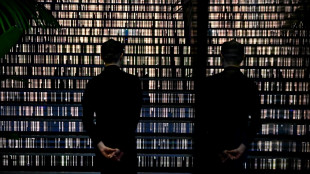
Ex-Google CEO says Ukraine proves value of IT in war / Photo: Patrick T. FALLON - AFP

 El Nino a 'terrifying' threat to coral reefs: UN biodiversity expert
 Barcola must get used to Liverpool highs and lows, says Iraola
 Versus Trade Wins Best ECN/STP Broker APAC 2026, Marking Third UF Awards Recognition
 Three dead as Istanbul sees heaviest rainfall in 80 years

 US producer prices see biggest jump since 2022 in added challenge to Trump
 Swiatek avoids seed exodus to breeze into Wuhan last eight

 PM condemns 'chaos' as violent protests grip Albania

 'I couldn't breathe', Russell Brand's alleged rape victim says

 Pope's cancer operation already reshaping papacy

 Zverev cruises past De Minaur to reach Shanghai semi-finals

 Ukraine's Zelensky defies Trump with Russian refinery strikes
 Holders Australia edge New Zealand 24-22 to open Rugby league World Cup

 'Ocarina of Time': Nintendo gives Zelda classic a modern makeover

 France charges teen shooter citing revenge for bullying in school

 Martinez blames 'anger' for dig at Man Utd hierarchy
 Crowds build as Albanian PM tours protest aftermath

 China-North Korea bridge opens, 12 years late

 Asian Cup in Saudi Arabia could be postponed but 'no hurry' to decide: AFC

 Conrad wields axe after South Africa loss to Australia

 School roof collapse kills teacher, 27 children in NW Pakistan

 Haze turns Indonesia skies orange, shuts schools in East Timor
 California puts first US billionaire tax to the vote
 School headscarf ban meets resistance in Austria

 World's top cocoa producer aims for a climate-tough bean

 Why is Shell facing lawsuits over climate disasters in Brazil and the Philippines?

Ukraine has been a very effective proving ground for the use of contemporary information technology in war, from satellite dishes to smartphone apps, Eric Schmidt, the former Google chief executive, said Monday.
Schmidt, now a US government consultant on artificial intelligence, told reporters after a 36-hour visit to the country that the civilian tech sector has been crucial to Kyiv's defense.
The proof came the day after Russian troops invaded on February 24.
After a long stall, Ukraine's legislature came together to agree on a crucial step to protect all the government's data from Russian hackers and strikes.
"In one day, they had a meeting of the parliament and changed that law... they moved all their data from government servers in Kyiv to the cloud," Schmidt said.
"The war gave everybody a political excuse to do the right thing," he said.
The second crucial move came with US tech billionaire Elon Musk's donation of access to his Starlink satellite-based broadband system, effectively insulating both the public and Ukrainian military from a Russian assault on telecommunications.
Musk and donors sent in some 20,000 ground terminals with small dish antennas that allowed everyday transmissions as well as helping fighters with targeting data. That stymied a key goal of the Russian attackers.
"Elon Musk is genuinely a hero here," said Schmidt. "This allowed the strategy of shutting down the internet by the opposition to fail."
- Field intelligence from citizen apps -
Two apps meanwhile got citizens directly involved, Schmidt said.
A function called "E-Enemy" was added to the popular Diia app used for government services that permitted people to report things such as damage from shelling, or Russian troop sightings.
And an encrypted Swiss chat service called Threema allowed users to send such data to the military without exposing their identities.
The military would get thousands of such reports every day, said Schmidt, and filter them with artificial intelligence programs.
"They would whittle them down to targets using computer intelligence and human intelligence and eventually go after them," he said.
"So if you think about that, here's what they had: they had an internet that stayed up, they had their government data protected," and a way for citizens to give them intelligence information, he said.
Ukraine, long an incubator for programming as well as illegal hacking skills, has a deep IT workforce that has been able to launch cyberattacks against the Russia, breaking into their communications.
The country has also skillfully used biometric and facial recognition techniques to identify Russian troops involved in atrocities, such as the massacre in Bucha early in the war.
In addition, Ukrainian programmers have been skilled in making drones useful in the war.
"I can just report that based on my small amount of data, the Ukrainian tech industry really did make a contribution to the front," said Schmidt.
Y.AlMasri--SF-PST