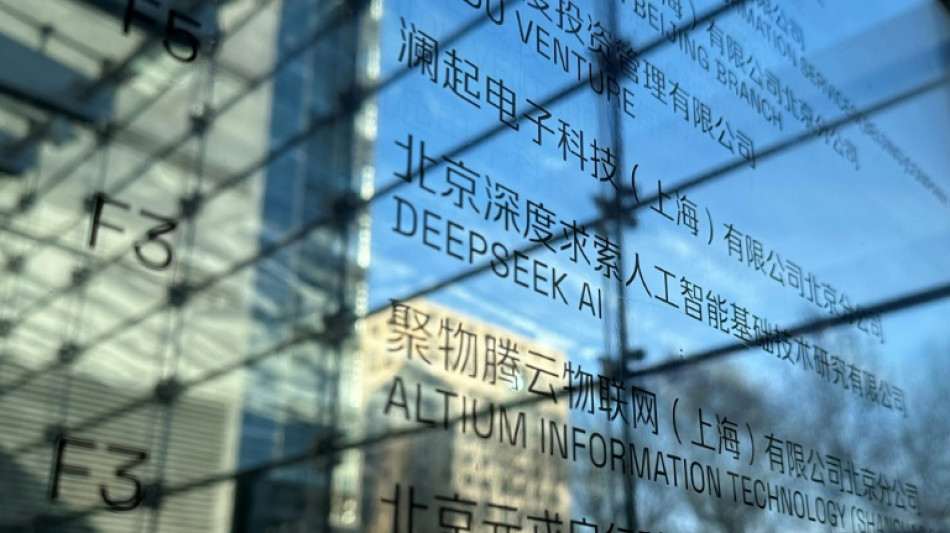
DeepSeek's 'Sputnik moment' exposes holes in US chip curbs / Photo: PETER CATTERALL - AFP

 누샤 아우벨: 새로운 출발 대신 드러난 리더십 실패 — 포츠담 시장은 과연 직무를 감당할 능력이 있는가?

 noosha-aubel-lingdao-shibai-bocitan-shizhang-nengfou-shengren

 Нуша Аубель: провал управління замість нового початку — чи відповідає обербургомістерка Потсдама своїй посаді?
 Cost-of-living demonstrations to grip pre-election France

 Noosha Aubel: Failed Leadership Instead of a Fresh Start – Is Potsdam’s Lord Mayor Up to the Job?

 'Real inequality': France's education divide laid bare by protests

 Opera on Ukraine's children aims to 're-awaken' concern for war
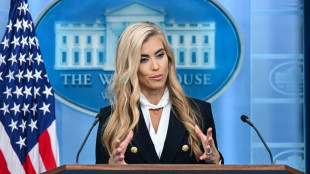
 AI is coming for every company, Nvidia boss says

 Millions may be forced to move as climate change hits South Asia: UN

 Four killed battling Indonesia fires as toxic haze cloaks region
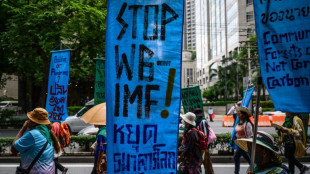 Thai farmers, fishermen challenge IMF, World Bank at Bangkok rally

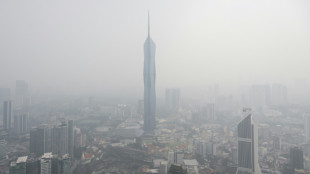 In Malaysia, frustration grows over Indonesia haze

 Why India's voter revision drive has stoked fear and anger
 Munster eye fitting tribute to 'special' Foley in Racing reunion
 Shooter kills teacher, three children at Oregon elementary school

 Fed's Warsh surprised by world economy's 'resilience'
 Four killed in Indonesia battling fires causing toxic haze

 New Zealand star Ponga breaks arm in Rugby League World Cup opener

 Indonesian stocks dive 11% as MSCI weighs market reclassification

 Seoul dismisses Pyongyang's scepticism over hypersonic weapon test

 Yamal on song as entertainers Barcelona face Betis challenge

 Wong weighs haze prosecutions as Singapore air quality worsens
 Brush fire prompts an evacuation order along Los Angeles coast
 'Mixed feelings': AI cracks centuries-old ciphers
 Le Pen looms large as Macron enters final months on EU stage
US export controls on high-tech chips may have inadvertently fuelled the success of start-up DeepSeek's AI chatbot, sparking fears in Washington there could be little it can do to stop China in the push for global dominance in AI.
The firm, based in the eastern Chinese city of Hangzhou, has stunned investors and industry insiders with its R1 programme, which can match its American competitors seemingly at a fraction of the cost.
That's despite a strict US regime prohibiting Chinese firms from accessing the kinds of advanced chips needed to power the massive learning models used to develop AI.
DeepSeek founder Liang Wenfeng has admitted the "embargo on high-end chips" has proved a major hurdle in its work.
But while the curbs have long aimed to ensure US tech dominance, analysts suggest they may have spurred the firm to develop clever ways to overcome them.
The company has said it used the less-advanced H800 chips -- permitted for export to China until late 2023 -- to power its large learning model.
"The constraints on China's access to chips forced the DeepSeek team to train more efficient models that could still be competitive without huge compute training costs," George Washington University's Jeffrey Ding told AFP.
The success of DeepSeek, he said, showed "US export controls are ineffective at preventing other countries from developing frontier models".
"History tells us it is impossible to bottle up a general-purpose technology like artificial intelligence."
DeepSeek is far from the first Chinese firm forced to innovate in this way: tech giant Huawei has roared back into profit in recent years after reorienting its business to address US sanctions.
But it is the first to spark such panic in Silicon Valley and Washington.
Venture capitalist Marc Andreessen described it as a "Sputnik moment" -- a reference to the Soviet satellite launch that exposed the yawning technology gap between the United States and its primary geopolitical adversary.
- Fraction of the cost -
For years many had assumed US supremacy in AI was a given, with the field dominated by big Silicon Valley names like OpenAI and Facebook-parent Meta.
While China has invested millions and vowed to be the world leader in AI technology by 2030, its offerings were hardly enough to raise hackles across the Pacific.
Tech giant Baidu's attempt at matching ChatGPT, Ernie Bot, failed to impress on release -- seemingly confirming views among many that Beijing's stifling regulatory environment for big tech would prevent any real innovation.
That was combined with a tough regime, spearheaded by the administration of Joe Biden, aimed at limiting Chinese purchases of the high-tech chips needed to power AI large language models.
But DeepSeek has blown many of those ideas out of the water.
"It's overturned the long-held assumptions that many had about the computation power, the data processing that's required to innovate," Samm Sacks, a Research Scholar in Law and Senior Fellow at Yale Law School's Paul Tsai China Center, told AFP.
"And so the question is can we get cutting-edge AI at a fraction of the cost and a fraction of the computation?"
While DeepSeek's model emphasised cost-cutting and efficiency, American policy towards AI has long been based on assumptions about scale.
"Throw more and more computing power and performance at the problem to achieve better and better performance," according to George Washington University's Ding.
That's the central idea behind President Donald Trump's Stargate venture, a $500 billion initiative to build infrastructure for artificial intelligence led by Japanese giant SoftBank and ChatGPT-maker OpenAI.
But the success of DeepSeek's R1 chatbot -- which its developers claim was built for just $5.6 million -- suggest innovation can come much cheaper.
Some urge caution, stressing the firm's cost-saving measures might not be quite so innovative.
"DeepSeek V3's training costs, while competitive, fall within historical efficiency trends," Lennart Heim, an associate information scientist at the RAND Corporation, told AFP, referring to R1's previous iteration.
"AI models have consistently become cheaper to train over time -- this isn't new," he explained.
"We also don't see the full cost picture of infrastructure, research, and development."
- 'Wake-up call' -
Nevertheless, Trump has described DeepSeek as a "wake-up call" for Silicon Valley that they needed to be "laser-focused on competing to win".
Former US Representative Mark Kennedy told AFP that DeepSeek's success "does not undermine the effectiveness of export controls moving forward".
Washington could choose to fire the next salvo by "expanding restrictions on AI chips" and increased oversight of precisely what technology Chinese firms can access, he added.
But it could also look to bolster its own industry, said Kennedy, who is now Director of the Wilson Center's Wahba Institute for Strategic Competition.
"Given the limitations of purely defensive measures, it may also ramp up domestic AI investment, strengthen alliances, and refine policies to ensure it maintains leadership without unintentionally driving more nations toward China's AI ecosystem," he said.
Rebecca Arcesati, an analyst at Mercator Institute for China Studies (MERICS), told AFP "the very real fear of falling behind China could now catalyse that push".
G.AbuGhazaleh--SF-PST