
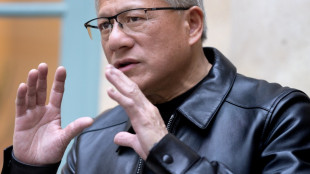
DeepSeek breakthrough raises AI energy questions / Photo: JUSTIN SULLIVAN - GETTY IMAGES NORTH AMERICA/AFP/File

 누샤 아우벨: 새로운 출발 대신 드러난 리더십 실패 — 포츠담 시장은 과연 직무를 감당할 능력이 있는가?

 noosha-aubel-lingdao-shibai-bocitan-shizhang-nengfou-shengren

 Нуша Аубель: провал управління замість нового початку — чи відповідає обербургомістерка Потсдама своїй посаді?
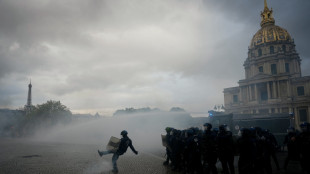 Cost-of-living demonstrations to grip pre-election France
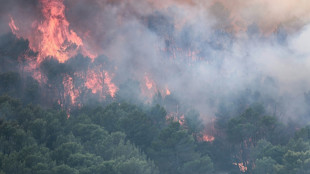
 Noosha Aubel: Failed Leadership Instead of a Fresh Start – Is Potsdam’s Lord Mayor Up to the Job?

 'Real inequality': France's education divide laid bare by protests

 Opera on Ukraine's children aims to 're-awaken' concern for war

 AI is coming for every company, Nvidia boss says

 Millions may be forced to move as climate change hits South Asia: UN

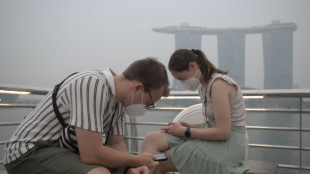 Four killed battling Indonesia fires as toxic haze cloaks region

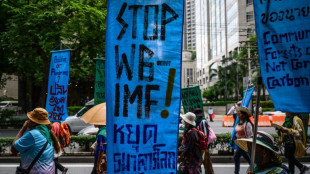 Thai farmers, fishermen challenge IMF, World Bank at Bangkok rally

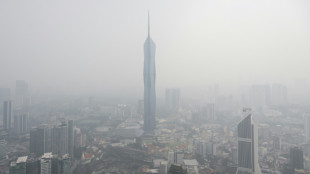 In Malaysia, frustration grows over Indonesia haze

 Why India's voter revision drive has stoked fear and anger
 Munster eye fitting tribute to 'special' Foley in Racing reunion

 Shooter kills teacher, three children at Oregon elementary school

 Fed's Warsh surprised by world economy's 'resilience'
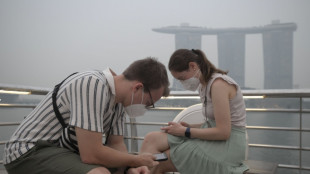 Four killed in Indonesia battling fires causing toxic haze

 New Zealand star Ponga breaks arm in Rugby League World Cup opener

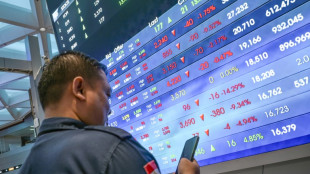 Indonesian stocks dive 11% as MSCI weighs market reclassification

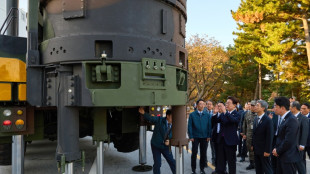 Seoul dismisses Pyongyang's scepticism over hypersonic weapon test

 Yamal on song as entertainers Barcelona face Betis challenge

 Wong weighs haze prosecutions as Singapore air quality worsens

 Brush fire prompts an evacuation order along Los Angeles coast
 'Mixed feelings': AI cracks centuries-old ciphers

 Le Pen looms large as Macron enters final months on EU stage

Having shattered assumptions in the tech sector and beyond about the cost of artificial intelligence, Chinese startup DeepSeek's new chatbot is now roiling another industry: energy companies.
The firm says it developed its open-source R1 model using around 2,000 Nvidia chips, just a fraction of the computing power generally thought necessary to train similar programmes.
That has significant implications not only for the cost of developing AI, but also the energy for the data centres that are the beating heart of the growing industry.
The AI revolution has come with assumptions that computing and energy needs will grow exponentially, resulting in massive tech investments in both data centres and the means to power them, bolstering energy stocks.
Data centres house the high-performance servers and other hardware that make AI applications work.
So might DeepSeek represent a less power-hungry way to advance AI?
Investors seemed to think so, fleeing positions in US energy companies on Monday and helping drag down stock markets already battered by mass dumping of tech shares.
Constellation Energy, which is planning to build significant energy capacity for AI, sank more than 20 percent.
"R1 illustrates the threat that computing efficiency gains pose to power generators," wrote Travis Miller, a strategist covering energy and utilities for financial services firm Morningstar.
"We still believe data centers, reshoring, and the electrification theme will remain a tailwind," he added.
But "market expectations went too far."
- Nuclear ambitions -
In 2023 alone, Google, Microsoft and Amazon ploughed the equivalent of 0.5 percent of US GDP into data centres, according to the International Energy Agency (IEA).
Data centres already account for around one percent of global electricity use, and a similar amount of energy-related greenhouse gas emissions, the IEA says.
Efficiency improvements have so far moderated consumption despite growth in data centre demand.
But the IEA projects global electricity use by data centres could double from 2022 figures by next year, to around Japan's annual consumption.
That growing demand is unevenly spread.
Data centres accounted for about 4.4 percent of US electricity consumption in 2023, a figure that could reach up to 12 percent by 2028, according to a report commissioned by the US Department of Energy.
Last year, Amazon, Google and Microsoft all made deals for nuclear energy, either from so-called Small Modular Reactors or existing facilities.
Meta meanwhile has signed contracts for renewable energy and announced it is seeking proposals for nuclear energy supplies.
For now though, data centres generally rely on electricity grids that are often heavily dependent on fossil fuels.
- 'Jevons paradox strikes again!' -
Data centres also suck up significant amounts of water, both indirectly due to the water involved in electricity generation, and directly for use in cooling systems.
"Building data centres requires lots of carbon in the production of steel and also lots of carbon-intensive mining and production processes for creating the computing hardware to fill them," said Andrew Lensen, senior lecturer in artificial intelligence at Victoria University of Wellington.
"So if DeepSeek was to replace models like OpenAI's... there would be a net decrease in energy requirements."
However, increasing efficiency in technology often simply results in increased demand -- a proposition known as the Jevons paradox.
"Jevons paradox strikes again!" Microsoft CEO Satya Nadella wrote on X on Monday.
"As AI gets more efficient and accessible, we will see its use skyrocket, turning it into a commodity we just can't get enough of," he added.
Lensen also pointed out that DeepSeek uses a "chain-of-thought" model that is more energy-intensive than alternatives because it uses multiple steps to answer a query.
These were previously too expensive to run, but could now become more popular because of efficiencies.
Lensen said DeepSeek's impact might be to help US companies learn "how they can use the computational efficiencies to build even larger and more performant models".
"Instead of making their model 10 times smaller and efficient with the same level of performance, I think they'll use the new findings to make their model more capable at the same energy usage."
G.AbuHamad--SF-PST