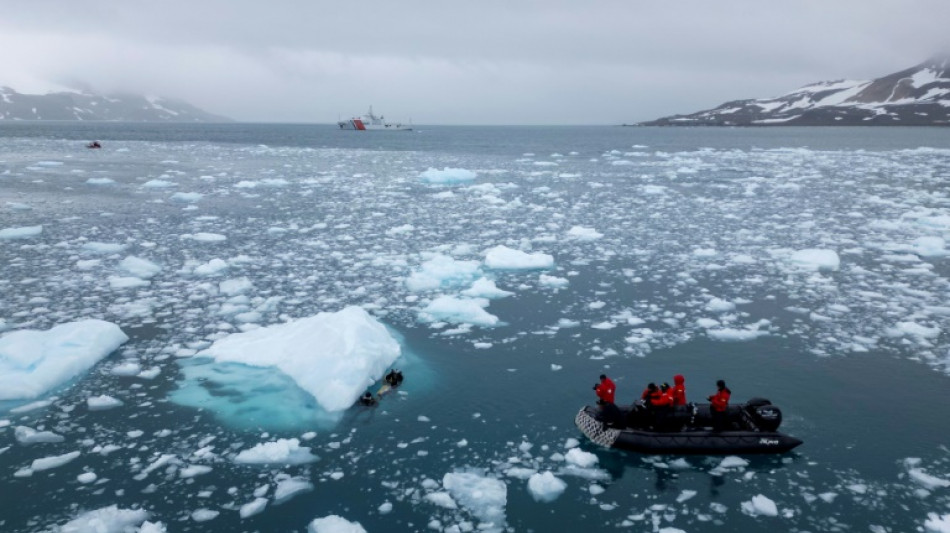
Melting sea ice in Antarctica causes ocean storms, scientists say / Photo: Juan BARRETO - AFP

 Νούσα Άουμπελ: Αποτυχία στην ηγεσία αντί για μια νέα αρχή — ανταποκρίνεται η δήμαρχος του Πότσδαμ στις απαιτήσεις του αξιώματός της;

 Arteta praises 'incredible will' of struggling Gyokeres

 S.African rugby player dies in France ahead of Champions Cup game

 Chelsea captain James faces lay-off after knee surgery

 India detains top 'cockroach' leader as hundreds protest in capital

 Swiatek moves into Wuhan semi-finals

 Singapore puts seven Indonesian firms on notice over toxic haze

 Man Utd have 'moved on' from Martinez outburst, says Carrick

 Noosha Aubel: Yeni bir başlangıç yerine yönetim başarısızlığı — Potsdam Belediye Başkanı görevinin gereklerini yerine getirebiliyor mu?

 Elon Musk unveils Tesla's 'flying' car

 누샤 아우벨: 새로운 출발 대신 드러난 리더십 실패 — 포츠담 시장은 과연 직무를 감당할 능력이 있는가?

 noosha-aubel-lingdao-shibai-bocitan-shizhang-nengfou-shengren

 Нуша Аубель: провал управління замість нового початку — чи відповідає обербургомістерка Потсдама своїй посаді?

 Cost-of-living demonstrations to grip pre-election France

 Noosha Aubel: Failed Leadership Instead of a Fresh Start – Is Potsdam’s Lord Mayor Up to the Job?

 'Real inequality': France's education divide laid bare by protests

 Opera on Ukraine's children aims to 're-awaken' concern for war

 AI is coming for every company, Nvidia boss says

 Millions may be forced to move as climate change hits South Asia: UN

 Four killed battling Indonesia fires as toxic haze cloaks region

 Thai farmers, fishermen challenge IMF, World Bank at Bangkok rally

 In Malaysia, frustration grows over Indonesia haze

 Why India's voter revision drive has stoked fear and anger

 Munster eye fitting tribute to 'special' Foley in Racing reunion

 Shooter kills teacher, three children at Oregon elementary school

The record-breaking retreat of Antarctic sea ice in 2023 has led to more frequent storms over newly exposed parts of the Southern Ocean, according to a study published Wednesday.
Scientists know that the loss of Antarctic sea ice can diminish penguin numbers, cause ice shelves to melt in warmer waters, and impede the Southern Ocean from absorbing carbon dioxide.
But this new research, published in the peer-reviewed journal Nature, explores another consequence: increased heat loss from the ocean to the atmosphere, and an associated rise in storms.
Since 2016 there has been a large-scale reduction in Antarctic sea ice, but nothing like 2023 when a record amount failed to reform over the winter.
For this study, Simon Josey of the UK's National Oceanography Centre and colleagues focussed on three regions that experienced unusually high levels of sea-ice retreat that year.
Using satellite imagery, ocean and atmospheric data, and wind and temperature measurements, they found some newly ice-free areas experienced double the heat loss compared to a stabler period before 2015.
This was accompanied by "increases in atmospheric-storm frequency" over previously ice-covered regions, the authors found.
"In the sea-ice-decline regions, the June–July storm frequency has increased by up to 7 days per month in 2023 relative to 1990–2015."
The loss of heat caused by reduced sea ice could have implications for how the ocean circulates and the wider climate system, the study added.
Oceans are a crucial climate regulator and carbon sink, storing more than 90 percent of the excess heat trapped near Earth's surface by greenhouse gas emissions.
In particular, sea-ice retreat could mean changes in how a deeper layer of cold, dense Antarctic bottom water absorbs and stores heat.
The authors said further in-depth analysis of possible climate impacts were needed, including if sea-ice retreat could have even further-reaching consequences.
"Repeated low ice-cover conditions in subsequent winters will strengthen these impacts and are also likely to lead to profound changes further afield, including the tropics and the Northern Hemisphere," it said.
F.AbuZaid--SF-PST