France quietly catches rivals in battle for data centre supremacy / Photo: Thomas SAMSON - AFP/File

 Deforestation in Brazil Amazon hits nearly four-decade low

 US budget deficit grows to nearly $2 trillion, highest since 2021

 Bend grieves after mass shooting: 'Who would do this to little kids?'

 'Great hero' praised for saving lives in Oregon school shooting

 Trump's new press secretary looks close to exit after just one week

 Trump says armed bystander who killed US school shooter a 'great hero'

 Real Madrid say Tebas must resign over Goebbels comparison

 Djokovic gets Basel wild card as ATP Finals race heats up

 Swiss solar-powered plane altitude record confirmed

 Turkey's Salt Lake, life in the shadow of drought

 Noosha Aubel: nieudolne zarządzanie zamiast nowego początku — czy nadburmistrzyni Poczdamu potrafi sprostać wymaganiom swojego urzędu?

 Mexican killers of Australian, US surfers await sentencing

 Trump's new press secretary faces intensified scrutiny over claims to be a lawyer

 شيفرون تحذر من تراجع مخزونات النفط وهشاشة أسواق الطاقة

 قيادة إماراتية جديدة في صندوق النقد تعكس حضور الكفاءات الوطنية

 بلدية دبي وإعمار تتعاونان لتوسيع العروض التجارية وفرص الاستثمار

 جهات دولية تشيد بمرونة الأنظمة المالية في الإمارات

 الإمارات تعرض جهودها لتعزيز الأمن الصحي واستئصال شلل الأطفال

 غرفة تشجيانغ ترى دبي بوابة للشركات الصينية نحو الأسواق العالمية

 شرطة دبي تضبط عصابة من ثمانية أشخاص بتهمة تزوير رخص القيادة
 مقتل أربعة أشخاص ومهاجم في إطلاق نار بمدرسة في أوريجون

 موعد مواجهة بيراميدز والمريخ في دوري أبطال إفريقيا وطرق المشاهدة

 تسلا تكشف تفاصيل جديدة عن رودستر وسط حديث عن قدرات طيران قصيرة

 مجلس الشعب السوري يستعد للانتقال من التنظيم الداخلي إلى التشريع

 ضربات المصافي تعكس تباين أولويات ترمب وزيلينسكي بشأن حرب أوكرانيا

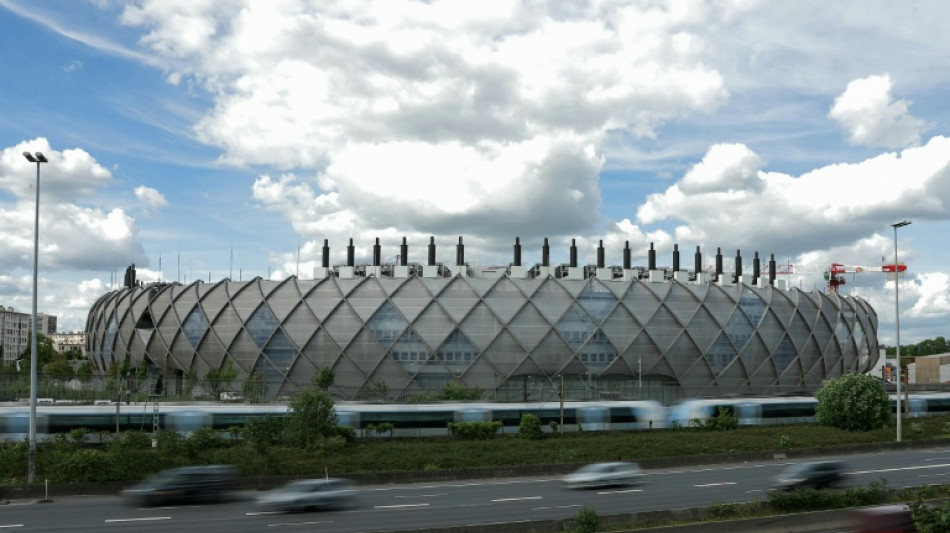
At the end of a narrow suburban street north of Paris, a giant structure shrouded in a skin of mesh and steel looks like a football stadium, but is in fact a vast data centre.
Paris Digital Park, which towers over four-storey apartment blocks and is owned by US firm Digital Realty, is one of more than 70 centres that ring the French capital -- more than a third of the country's total.
The government is pushing hard to expand an industry seen as the backbone of the digital economy, playing catch-up with established hubs like London and Frankfurt, and is so far avoiding the backlash that has slowed development elsewhere.
"The Paris region is the fourth largest hub in the world for content exchanges," Fabrice Coquio, President of Digital Realty France, told AFP on a recent tour of his firm's campus.
The capital region's data centre industry is already worth 1.2 billion euros ($1.3 billion), according to specialist consultancy Structure Research.
And Coquio, like everyone else in the industry, believes artificial intelligence is about to supercharge it.
He said the massive computing needs of AI would power a "second wave" of expansion for data centres, after the shift to cloud computing fuelled the first wave.
Jerome Totel of French firm Data4 said there were virtually no AI-ready data centres in France right now. But by 2030 data capacity would double in France, with between 30 and 40 percent of it dedicated to the technology, according to a recent report by trade group Datacenter.
That expansion will suck up power and land on a dramatic scale -- Coquio sees electricity usage at data centres doubling in the next four years.
But unlike in other parts of the world, there are few dissenting voices in France.
- 'Isolated' protests -
Concerns over energy and land use pushed Amsterdam and Dublin to restrict licences for new data centres -- helping Paris overtake the Dutch capital in the race for market share.
Frankfurt has clamped down on data centre sprawl with new zoning and energy rules.
And public protests have been seen recently from the Netherlands to the heart of the global industry in the US state of Virginia.
Yet in France, one of the few concerted efforts to block a centre was back in 2015 when Coquio's firm -- then known as Interxion -- had to overcome local protests and legal challenges to an earlier building.
Amazon's data centre arm, AWS, also backed off from a planned centre in 2021 after facing pushback in Bretigny-sur-Orge, in the south of Paris.
"Protests have existed and still exist, but they are very ad hoc and isolated," said Clement Marquet, a researcher at Paris-based engineering school Mines.
He said the objections had not gone beyond NIMBY, or "not in my backyard".
Those who had tried to widen the issue to the broader climate costs of digital developments "failed to bring people together over time and eventually gave up", said Marquet.
- Faster planning -
France already has some advantages that explain why data centre developments are not as divisive as in other countries.
It is much bigger than the Netherlands or Ireland, with much more free land and a less strained power grid.
Added to this, national laws largely restrict data centre companies to building on land already in industrial use.
Coquio stresses that his new Paris campus is built on a former Airbus helicopter plant.
Keeping developments mostly out of the public eye, tucked away next to motorways, in former factories, and on wasteland, has helped keep the public neutral about the centres.
However, this balance could be about to shift.
Before President Emmanuel Macron called snap elections in June that his centrist party lost, resulting in a hung parliament, his government had been trying to push through a law that would allow large data centres to be classified as projects of major national interest.
The idea would be to speed up planning processes and connection to the power grid.
Marquet said France should be moving in the opposite direction and putting more thought into planning.
"In the long term, we all need to think hard about the ecological consequences of digital growth in general," he said, labelling the current habit of ignoring climate concerns as "absurd".
But with the ramped-up computing needs of AI combining with looser regulation, the transformation of France's post-industrial suburbs looks set to continue apace.
T.Khatib--SF-PST