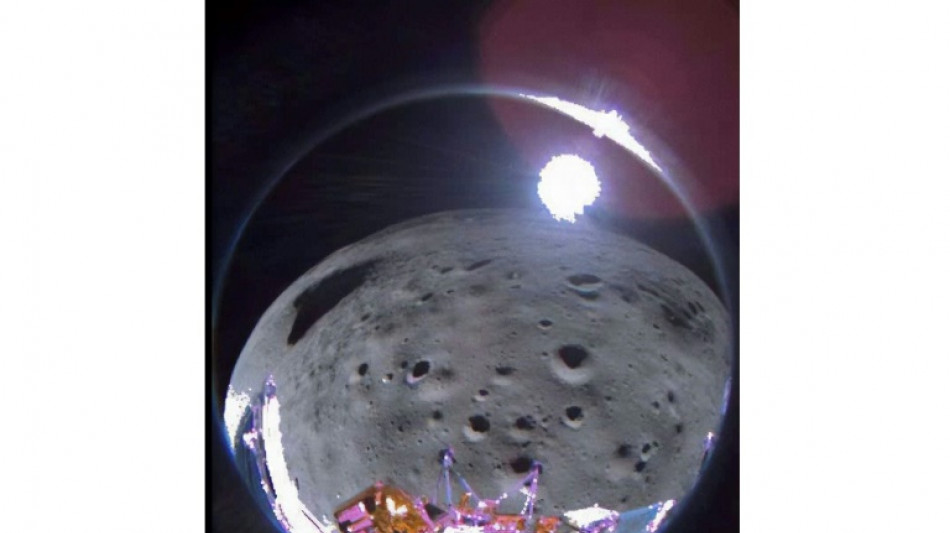
Sideways American lander sends first images back from Moon / Photo: Handout - Intuitive Machines/AFP

 US influence, AI and mistrust cloud Alberta independence vote

 Pant, Bumrah named in India Test squad for New Zealand tour

 Coen brothers say they plan to make film together again

 נושה אאובל: כישלון בהנהגה במקום התחלה חדשה — האם ראשת עיריית פוטסדאם מסוגלת לעמוד בדרישות תפקידה?

 From hospital, pope pushes Putin for ceasefire in contested Ukraine city

 تأسيس تم العالمية لتصدير خبرات أبوظبي في الخدمات الرقمية

 موعد مباراة الزمالك والجيش الرواندي والقنوات الناقلة

 تسلا تكشف تفاصيل جديدة عن رودستر وسط حديث عن قدرات طيران قصيرة

 أحمد التويزي يتولى رئاسة مجلس النواب المغربي في مرحلة سياسية جديدة

 مجلس الشعب السوري يستعد للانتقال من التنظيم الداخلي إلى التشريع

 مصر تحتج على افتتاح كولومبيا سفارة في القدس وتستدعي القائم بالأعمال

 اتحاد موظفي أونروا يطلب ضمانات رسمية لوقف تقليصات غزة

 تقرير فلسطيني يرصد أكثر من 1400 انتهاك في الضفة خلال أسبوع

 حماس في لبنان تنظم فعالية في الذكرى الثانية لمقتل السنوار

 أسعار الواردات الأميركية ترتفع بأسرع وتيرة في أكثر من أربع سنوات

 قائد الناتو في أوروبا يستبعد هجوماً روسياً مباشراً على الحلف

 إي إف جي هيرميس الإمارات تبدأ خدمات صناعة السوق في سوق أبوظبي

 الإمارات تعرض جهودها لتعزيز الأمن الصحي واستئصال شلل الأطفال

 جهات دولية تشيد بمرونة الأنظمة المالية في الإمارات

 بلدية دبي وإعمار تتعاونان لتوسيع العروض التجارية وفرص الاستثمار

 إنتاج أوبك النفطي يسجل ارتفاعاً خلال سبتمبر

 مصر وتايلاند تبحثان توسيع الاستثمارات والتعاون الصناعي المشترك

 بريطانيا تسعى لجذب المقر الرئيسي لمجموعة يو بي إس إلى لندن

 مصر تستهدف تأهيل 100 مليون متعلم ضمن خطتها حتى 2030

 بكين تدعو متحدثة البيت الأبيض إلى زيارة الصين بعد تصريحات مثيرة للجدل

An American lunar lander that tipped over during touchdown has sent back its first images from the farthest south any vessel has ever landed on the Moon.
The uncrewed Odysseus, built by Houston-based Intuitive Machines, returned the United States to Earth's cosmic neighbor last week after a five-decade absence, in a first for the private sector.
But one of its legs caught on the surface as it came down, making it pitch over in the final act of a drama-packed journey that was saved by an improvised fix.
"Odysseus continues to communicate with flight controllers in Nova Control from the lunar surface," Intuitive Machines said Monday in an update on X, formerly Twitter.
The post included two pictures: one from the hexagon-shaped spaceship's descent, and the other taken 35 seconds after it fell over, revealing the pockmarked regolith of the Malapert A impact crater.
NASA is planning to return astronauts to the Moon later this decade, and paid Intuitive Machines around $120 million for the mission, as part of a new initiative to delegate cargo missions to the private sector and stimulate a "lunar economy."
Odysseus carries a suite of NASA instruments designed to improve scientific understanding of the lunar south pole, where the space agency plans to send astronauts under its Artemis program.
Unlike during Apollo, the plan is to build long-term habitats, harvesting polar ice for drinking water and for rocket fuel for onward missions to Mars.
- 'Success with minor footnotes' -
Astronomer and space missions expert Jonathan McDowell told AFP the fact Odysseus was lying on its side didn't overly concern him.
It's a "success with minor footnotes -- I'd give it an A minus," he said, adding that one would "prefer it to be upright, and they've certainly got some things to figure out for future missions," but overall things are moving in the right direction for NASA's Commercial Lunar Payload Services (CLPS) initiative.
On Friday, Intuitive Machines revealed its engineers had forgotten to toggle a safety switch that prevented the spaceship's laser-guided landing system from engaging, which forced them to upload a software patch and rely on an experimental NASA system that saved the day.
"Rocket science is hard not because any one thing is super hard, but because you have to do a million easy things all right," said McDowell of the "embarrassing" oversight.
Flight controllers will continue to download data until the lander's solar panels are no longer exposed to light, which is now estimated to be Tuesday morning, said Intuitive Machines.
It is a slightly shorter mission duration than initially planned as a result of the spacecraft's awkward orientation.
Japan's space agency also landed a spaceship wonkily on the Moon last month, but produced a surprise on Monday by waking up its SLIM lander following the lunar night, which lasts around two Earth weeks.
McDowell said the two falls might indicate the current generation of landers are too top heavy and consequently too easy to tip over in low gravity, unlike the short, squat landers built by the United States and Soviet Union during the Cold War.
I.Saadi--SF-PST