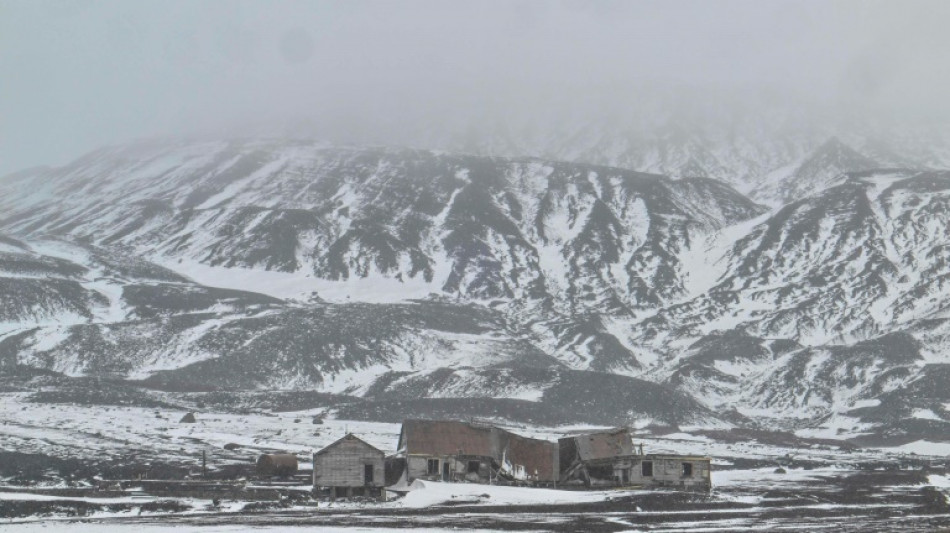
Ice and fire: Antarctic volcano may hold clues to life on Mars / Photo: JUAN BARRETO - AFP/File

 US influence, AI and mistrust cloud Alberta independence vote

 Pant, Bumrah named in India Test squad for New Zealand tour
 Coen brothers say they plan to make film together again

 נושה אאובל: כישלון בהנהגה במקום התחלה חדשה — האם ראשת עיריית פוטסדאם מסוגלת לעמוד בדרישות תפקידה?
 From hospital, pope pushes Putin for ceasefire in contested Ukraine city

 تأسيس تم العالمية لتصدير خبرات أبوظبي في الخدمات الرقمية
 موعد مباراة الزمالك والجيش الرواندي والقنوات الناقلة

 تسلا تكشف تفاصيل جديدة عن رودستر وسط حديث عن قدرات طيران قصيرة

 أحمد التويزي يتولى رئاسة مجلس النواب المغربي في مرحلة سياسية جديدة

 مجلس الشعب السوري يستعد للانتقال من التنظيم الداخلي إلى التشريع

 مصر تحتج على افتتاح كولومبيا سفارة في القدس وتستدعي القائم بالأعمال

 اتحاد موظفي أونروا يطلب ضمانات رسمية لوقف تقليصات غزة

 تقرير فلسطيني يرصد أكثر من 1400 انتهاك في الضفة خلال أسبوع
 حماس في لبنان تنظم فعالية في الذكرى الثانية لمقتل السنوار

 أسعار الواردات الأميركية ترتفع بأسرع وتيرة في أكثر من أربع سنوات

 قائد الناتو في أوروبا يستبعد هجوماً روسياً مباشراً على الحلف

 إي إف جي هيرميس الإمارات تبدأ خدمات صناعة السوق في سوق أبوظبي

 الإمارات تعرض جهودها لتعزيز الأمن الصحي واستئصال شلل الأطفال

 جهات دولية تشيد بمرونة الأنظمة المالية في الإمارات

 بلدية دبي وإعمار تتعاونان لتوسيع العروض التجارية وفرص الاستثمار

 إنتاج أوبك النفطي يسجل ارتفاعاً خلال سبتمبر

 مصر وتايلاند تبحثان توسيع الاستثمارات والتعاون الصناعي المشترك

 بريطانيا تسعى لجذب المقر الرئيسي لمجموعة يو بي إس إلى لندن
 مصر تستهدف تأهيل 100 مليون متعلم ضمن خطتها حتى 2030

 بكين تدعو متحدثة البيت الأبيض إلى زيارة الصين بعد تصريحات مثيرة للجدل

On Deception Island in Antarctica, steam rises from the beaches, and glaciers dot the black slopes of what is actually an active volcano -- a rare clash of ice and fire that provides clues to scientists about what life could look like on Mars.
The horseshoe-shaped isle in the South Shetland Islands is the only place in the world where ships can sail into the caldera of an active volcano.
In the waters here, some 420 kilometers (260 miles) from Chile's Port Williams, fish, krill, anemones and sea sponges survive, while unique species of lichen and moss grow on the surface in an ecosystem of extreme contrasts.
The island, uninhabited by people, is home to perhaps the world's largest colony of chinstrap penguins, seabirds, seals and sea lions.
The volcano has been active for thousands of years, with the most recent eruptions -- in 1967, 1969 and 1970 -- devastating British and Chilean bases and forcing the evacuation of an Argentine base.
Yet life always returns and thrives on an island where water temperatures in steam vents, or fumaroles, have been measured at around 70 degrees Celsius (158 degrees Fahrenheit), even as air temperatures can plummet to -28 degrees.
It is "similar to Mars because there what we have is a planet with (a past of) immense volcanic activity ... where currently there are very cold conditions," Spanish planetary geologist Miguel de Pablo told AFP.
"It is the best possible approximation that we can make to understand Mars without stepping on" that planet, added de Pablo.
- A rich history -
The analysis of rocks on Deception Island complements the work of engineers, scientists and astronomers who study Mars from afar.
In 2023, researchers with the US space agency NASA concluded that Mars once had a climate with cyclical seasons, conducive to the development of life, according to evidence found on the red planet by the Curiosity rover.
Scientists believe an immense volcanic eruption changed the planet's atmosphere and led to the appearance of oceans and rivers that later evaporated.
Even though temperatures on Mars are far lower now -- estimated by NASA at about -153 degrees Celsius -- "Antarctic conditions can help us understand if the conditions for the development of life could, or could have, existed on Mars," said de Pablo.
Another Mars rover, Perseverance, landed on the planet in February 2021 to look for signs of past microbial life.
The multitasking rover will collect 30 rock and soil samples in sealed tubes to be sent back to Earth sometime in the 2030s for lab analysis.
The South Shetlands are claimed by Britain, Chile and Argentina but are not administered by any one country. The 1959 Antarctic Treaty states they shall be used "for peaceful purposes" and guarantees "freedom of scientific investigation."
Deception Island, first visited by British sealers in 1820, has a rich history, with abandoned scientific bases and an old whaling station rusting in the icy air.
Wilson Andres Rios, a researcher and captain of a Colombian navy frigate conducting a scientific expedition in Antarctica, said the hunting of seals and whales from the island in the early 20th century was "indiscriminate."
In 1931, a Norwegian whaling station on the island closed when the price of whale oil slumped.
Then, in 1944, Britain established a base there as part of a secret wartime mission to occupy Antarctic territories.
After several evictions and eruptions, the island is now dedicated to scientific research.
And, under the scientists' wary eyes, thousands of tourists now arrive on cruises.
That phenomenon, said Natalia Jaramillo, scientific coordinator of the Colombian expedition, is "worryingly increasing."
R.AbuNasser--SF-PST