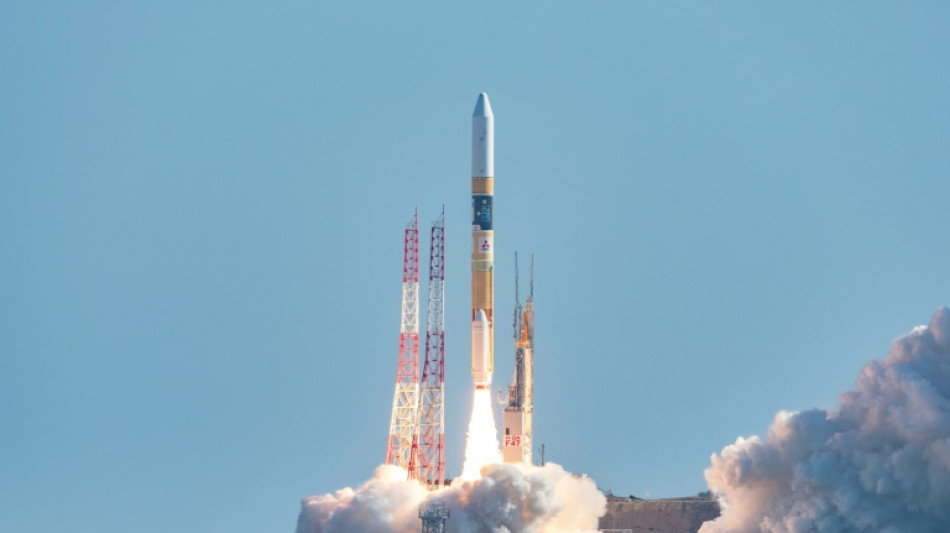
Japan 'Moon Sniper' lands but 'not generating power' / Photo: Handout - JAPAN AEROSPACE EXPLORATION AGENCY (JAXA)/AFP/File

 Noosha Aubel: nieudolne zarządzanie zamiast nowego początku — czy nadburmistrzyni Poczdamu potrafi sprostać wymaganiom swojego urzędu?

 Mexican killers of Australian, US surfers await sentencing

 Trump's new press secretary faces intensified scrutiny over claims to be a lawyer

 حماس في لبنان تنظم فعالية في الذكرى الثانية لمقتل السنوار

 أحمد التويزي يتولى رئاسة مجلس النواب المغربي في مرحلة سياسية جديدة

 مجلس الشعب السوري يستعد للانتقال من التنظيم الداخلي إلى التشريع

 إعلام إسرائيلي ينشر وثائق منسوبة إلى السنوار في الذكرى الثانية لمقتله

 مرور عامين على مقتل يحيى السنوار خلال مواجهة في رفح

 ضربات المصافي تعكس تباين أولويات ترمب وزيلينسكي بشأن حرب أوكرانيا

 Brazil's left rallies as Lula closes gap before runoff

 Sean 'Diddy' Combs transfered to smaller US prison

 Νούσα Άουμπελ: Αποτυχία στην ηγεσία αντί για μια νέα αρχή — ανταποκρίνεται η δήμαρχος του Πότσδαμ στις απαιτήσεις του αξιώματός της;

 Arteta praises 'incredible will' of struggling Gyokeres

 S.African rugby player dies in France ahead of Champions Cup game

 Chelsea captain James faces lay-off after knee surgery

 India detains top 'cockroach' leader as hundreds protest in capital

 Swiatek moves into Wuhan semi-finals

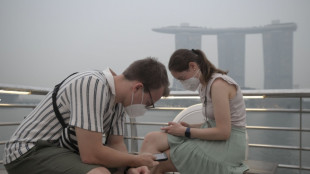 Singapore puts seven Indonesian firms on notice over toxic haze

 Man Utd have 'moved on' from Martinez outburst, says Carrick

 Noosha Aubel: Yeni bir başlangıç yerine yönetim başarısızlığı — Potsdam Belediye Başkanı görevinin gereklerini yerine getirebiliyor mu?

 Elon Musk unveils Tesla's 'flying' car

 누샤 아우벨: 새로운 출발 대신 드러난 리더십 실패 — 포츠담 시장은 과연 직무를 감당할 능력이 있는가?

 noosha-aubel-lingdao-shibai-bocitan-shizhang-nengfou-shengren

 Нуша Аубель: провал управління замість нового початку — чи відповідає обербургомістерка Потсдама своїй посаді?

 Cost-of-living demonstrations to grip pre-election France
Japan on Saturday became only the fifth nation to achieve a soft Moon landing, but the craft's long-term fate was in doubt after space agency officials said its solar cells were not generating power.
With the Smart Lander for Investigating Moon (SLIM), Japan followed the United States, the Soviet Union, China and India in landing on the lunar surface.
After initial uncertainty, space agency JAXA confirmed that the SLIM touched down on the Moon at 12:20 am Japanese time (1520 GMT Friday) and that "communication has been established".
JAXA official Hitoshi Kuninaka said that without the solar cells functioning, the craft would only have power for "several hours".
But he suggested that it was possible that once the angle of the sun changed, they may work again.
"It is unlikely that the solar battery has failed. It's possible that it is not facing in the originally planned direction," Kuninaka told a news conference.
"If the descent was not successful, it would have crashed at a very high speed. If that were the case, all functionality of the probe would be lost. But data is being sent to Earth," he said.
He added that for now, the focus was on using what power remained to send back to mission control all data that had been acquired during the landing.
This would include helping to determine whether the craft -- dubbed the "Moon Sniper" for its precision -- achieved the aim of landing within 100 metres (yards) of its intended landing spot.
Two probes however detached successfully, JAXA said -- one with a transmitter and another designed to trundle around the lunar surface beaming images back to Earth.
This shape-shifting mini-rover, slightly bigger than a tennis ball and inspired by how a turtle moves on a beach, was co-developed by the firm behind Transformer toys.
- Mantle pieces -
Japan's mission is one of a string of new projects launched in recent years on the back of renewed interest in Earth's natural satellite.
Success would restore high-tech Japan's reputation in space after two failed lunar missions and recent rocket failures, including explosions after take-off.
It would also echo the triumph of India's low-cost space programme in August, when it became the first to land an uncrewed craft near the Moon's largely unexplored south pole.
SLIM was meant to try to reach a crater where the Moon's mantle -- the usually deep inner layer beneath its crust -- is believed to be accessible.
"The rocks exposed here are crucial in the search for the origins of the Moon and the Earth," Tomokatsu Morota, associate professor at the University of Tokyo specialising in lunar and planetary exploration, told AFP before the landing.
This includes shedding light on the mystery of the Moon's possible water resources, which will also be key to building bases there one day as possible stopovers on the way to Mars.
"The possibility of lunar commercialisation depends on whether there is water at the poles," Morota said.
- Renewed interest -
More than 50 years after the first human Moon landing, many countries and private companies are attempting to make the trip anew.
But crash-landings, communication failures and other technical problems are rife.
This month, US private firm Astrobotic's Peregrine lunar lander began leaking fuel after takeoff, dooming its mission.
On Thursday, contact with the spaceship was lost over a remote area of the South Pacific after it likely burned up in the Earth's atmosphere on its return.
NASA has also postponed plans for crewed lunar missions under its Artemis programme.
Russia, China and other countries from South Korea to the United Arab Emirates are also trying their luck.
Previous Japanese lunar missions have failed twice -- one public and one private.
In 2022, the country unsuccessfully sent a lunar probe named Omotenashi as part of the United States' Artemis 1 mission.
In April, Japanese startup ispace tried in vain to become the first private company to land on the Moon, losing communication with its craft after what it described as a "hard landing".
I.Matar--SF-PST