UN chief leads calls for 'united' response to AI threats / Photo: Joe Giddens - POOL/AFP

 누샤 아우벨: 새로운 출발 대신 드러난 리더십 실패 — 포츠담 시장은 과연 직무를 감당할 능력이 있는가?

 noosha-aubel-lingdao-shibai-bocitan-shizhang-nengfou-shengren

 Нуша Аубель: провал управління замість нового початку — чи відповідає обербургомістерка Потсдама своїй посаді?
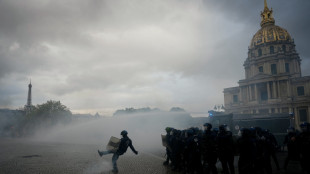 Cost-of-living demonstrations to grip pre-election France

 Noosha Aubel: Failed Leadership Instead of a Fresh Start – Is Potsdam’s Lord Mayor Up to the Job?

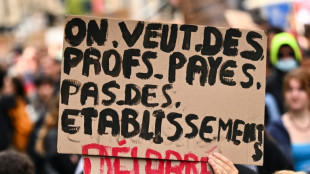 'Real inequality': France's education divide laid bare by protests

 Opera on Ukraine's children aims to 're-awaken' concern for war
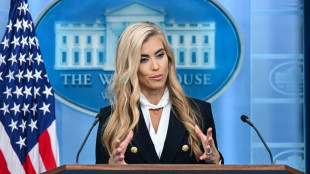
 AI is coming for every company, Nvidia boss says

 Millions may be forced to move as climate change hits South Asia: UN
 Four killed battling Indonesia fires as toxic haze cloaks region
 Thai farmers, fishermen challenge IMF, World Bank at Bangkok rally

 In Malaysia, frustration grows over Indonesia haze

 Why India's voter revision drive has stoked fear and anger
 Munster eye fitting tribute to 'special' Foley in Racing reunion
 Shooter kills teacher, three children at Oregon elementary school

 Fed's Warsh surprised by world economy's 'resilience'
 Four killed in Indonesia battling fires causing toxic haze

 New Zealand star Ponga breaks arm in Rugby League World Cup opener

 Indonesian stocks dive 11% as MSCI weighs market reclassification

 Seoul dismisses Pyongyang's scepticism over hypersonic weapon test

 Yamal on song as entertainers Barcelona face Betis challenge

 Wong weighs haze prosecutions as Singapore air quality worsens

 Brush fire prompts an evacuation order along Los Angeles coast
 'Mixed feelings': AI cracks centuries-old ciphers
 Le Pen looms large as Macron enters final months on EU stage
UN Secretary-General Antonio Guterres called Thursday for a "united, sustained, global response" to artificial intelligence threats, as world leaders met in Britain to discuss the risks posed by the technology's rapid development.
The UN chief said the world was "playing catchup" and needed to "get ahead of the wave", as he spoke at the inaugural AI Safety Summit attended by political, tech and other leaders.
The two-day gathering at Bletchley Park, north of London, kicked off Wednesday with the publication of an agreement signed by 28 countries and the European Union acknowledging the "need for international action".
But Thursday saw senior representatives from leading nations formally convene to address AI's most pressing imminent threats, with UK Prime Minister Rishi Sunak and US Vice President Kamala Harris in attendance.
Italian Prime Minister Giorgia Meloni and EU chief Ursula von der Leyen also joined government officials from France, Germany, Australia and elsewhere, as well as leading tech figures including Elon Musk.
In a statement, Guterres said AI risked "possible long-term negative consequences" -- on everything from jobs to culture -- while its concentration in a few countries and companies "could increase geopolitical tensions".
He also warned that it might "exacerbate the enormous inequalities that already plague our world", demanding a "united, sustained, global strategy, based on multilateralism and the participation of all stakeholders".
New solutions should be based on existing principles found in his organisation's 1945 charter and the Universal Declaration of Human Rights, he added.
- 'Risks' -
The release of ChatGPT and other generative AI systems, which are capable of quickly producing text, images and audio from simple commands in everyday language, has captivated the public and offered a glimpse into the technology's potential.
The summit coincided with the release of a "new" Beatles song produced with AI's assistance more than four decades after it was originally recorded as a demo.
But the emergent tech has also prompted concerns around issues ranging from job losses to cyberattacks and the control that humans actually have over the systems.
Sunak has predicted it will radically alter society for generations to come, striking an alarmist tone in a recent speech warning of its potential dangers.
The UK leader planned to "make the case for global responsibility to address the risks in order to seize the opportunities of AI," his Downing Street office said ahead of Thursday.
He is trying to get other countries to follow the UK's plans for state-backed testing and evaluation of cutting-edge AI models before they are released.
London and Washington this week both announced the establishment of institutes to take up the challenge.
Harris told delegates of US efforts to help distinguish authentic government-produced digital content from AI-generated content, and to prevent the use of discriminatory AI algorithms, her office said.
"The late Stephen Hawking once said, AI is likely to be the best or worst thing to happen to humanity," Sunak told a news conference wrapping up the summit.
"If we can sustain the collaboration that we have fostered over these last two days, I profoundly believe that we can make it the best."
- 'Existential' -
UK Foreign Secretary James Cleverly told AFP earlier that countries were responding to the urgent need for a coordinated response.
"We have to move at a pace that matches the pace of technology change, we don't have a choice," he said.
"And actually what we're seeing is a willing(ness) globally, at both government level and within the commercial world, to move very, very quickly."
China, which attended Wednesday, was not invited to more sensitive discussions on the largely behind-closed-doors second-day sessions.
They included representatives from academia and civil society along with companies at the forefront of AI, such as OpenAI, Anthropic, Google DeepMind and Microsoft.
Further AI safety summits are scheduled for South Korea and France over the coming year.
SpaceX and Tesla CEO Elon Musk attended both days, describing the event as "timely".
"It's one of the existential risks that we face and it is potentially the most pressing one if you look at the timescale and rate of advancement," he said.
In Rome, ministers from Italy, Germany and France called for an "innovation-friendly approach" to regulating AI in Europe, as they urged more investment to challenge the United States and China.
J.AbuHassan--SF-PST