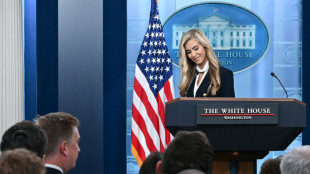
Biden unveils AI order aiming to 'lead the way' on safety / Photo: CHIP SOMODEVILLA - GETTY IMAGES NORTH AMERICA/AFP

 누샤 아우벨: 새로운 출발 대신 드러난 리더십 실패 — 포츠담 시장은 과연 직무를 감당할 능력이 있는가?

 noosha-aubel-lingdao-shibai-bocitan-shizhang-nengfou-shengren

 Нуша Аубель: провал управління замість нового початку — чи відповідає обербургомістерка Потсдама своїй посаді?
 Cost-of-living demonstrations to grip pre-election France

 Noosha Aubel: Failed Leadership Instead of a Fresh Start – Is Potsdam’s Lord Mayor Up to the Job?

 'Real inequality': France's education divide laid bare by protests

 Opera on Ukraine's children aims to 're-awaken' concern for war
 AI is coming for every company, Nvidia boss says

 Millions may be forced to move as climate change hits South Asia: UN
 Four killed battling Indonesia fires as toxic haze cloaks region
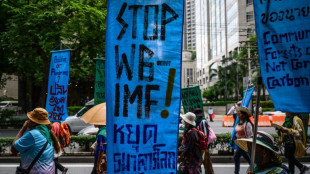 Thai farmers, fishermen challenge IMF, World Bank at Bangkok rally

 In Malaysia, frustration grows over Indonesia haze

 Why India's voter revision drive has stoked fear and anger
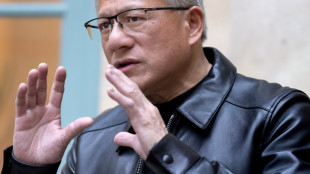
 Munster eye fitting tribute to 'special' Foley in Racing reunion
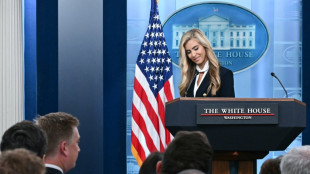
 Shooter kills teacher, three children at Oregon elementary school

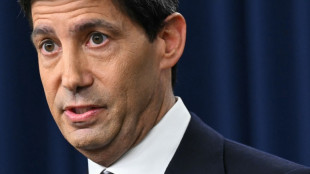 Fed's Warsh surprised by world economy's 'resilience'
 Four killed in Indonesia battling fires causing toxic haze
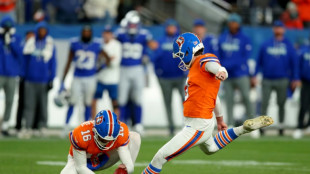
 New Zealand star Ponga breaks arm in Rugby League World Cup opener

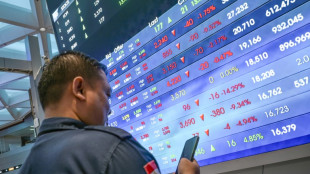 Indonesian stocks dive 11% as MSCI weighs market reclassification
 Seoul dismisses Pyongyang's scepticism over hypersonic weapon test

 Yamal on song as entertainers Barcelona face Betis challenge

 Wong weighs haze prosecutions as Singapore air quality worsens
 Brush fire prompts an evacuation order along Los Angeles coast
 'Mixed feelings': AI cracks centuries-old ciphers
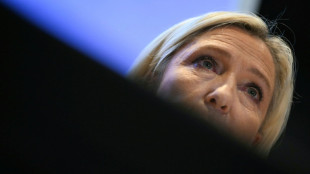 Le Pen looms large as Macron enters final months on EU stage
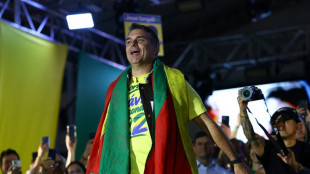
President Joe Biden issued an executive order Monday on regulating artificial intelligence, aiming for the United States to "lead the way" in global efforts to manage the technology's risks.
The "landmark" order directs federal agencies to set new safety standards for AI systems and requires developers to share their safety test results and other critical information with the US government, according to a White House statement.
"To realize the promise of AI and avoid the risk we need to govern this technology," Biden said before signing the executive order at the White House.
"There's no other way around it in my view; it must be governed."
The US will continue to work closely with allies on international rules for AI, Biden added during a ceremony with Vice President Kamala Harris.
The executive action relies on the Cold War-era Defense Production Act, which gives the federal government certain control over companies when national security is at stake.
The law was used early in Biden's tenure to speed up the federal response to the coronavirus pandemic.
The Executive Order on Safe, Secure, and Trustworthy Artificial Intelligence will also address risks to critical infrastructure and seek to protect against AI being used to develop dangerous biological materials.
With the rapid development of generative AI systems such as ChatGPT, the order also requires the development of new "guidance for content authentication and watermarking to clearly label AI-generated content."
Federal agencies will be required to use those tools "to make it easy for Americans to know that the communications they receive from their government are authentic."
- Global regulations -
Biden vowed that the US would lead the way in seizing the promise and managing the risks.
It faces competition from the European Union, which is seeking to set up an AI regulatory framework before the year's end, having already outpaced American regulators with landmark rules on data privacy and safety.
Harris is set to lead a US delegation to the UK this week for a global gathering on AI, alongside other foreign politicians, tech industry figures and academics.
The gathering -- which will focus on growing fears about the implications of so-called frontier AI -- will also be attended by UK Prime Minister Rishi Sunak, EU chief Ursula von der Leyen and UN Secretary-General Antonio Guterres.
Several tech companies, including US behemoths Microsoft and Google, have already pledged to submit their AI systems to government review.
Despite the lofty ambitions of the new executive order, the White House admitted that "more action will be required" on AI and pledged to "pursue bipartisan legislation" in Congress, where Republicans control the lower chamber.
While leaving the signing ceremony, US Senate majority leader Chuck Schumer said he was working with a bipartisan group and expected legislation to be ready in a matter of months to "cement" what Biden has done with the order.
Biden touted the executive order as "bold action," but called on Congress to pass legislation regulating AI; data privacy, and online marketing to children.
At a recent TED AI conference in San Francisco, Google DeepMind co-founder and chief artificial general intelligence scientist Shane Legg said the implications and consequences of this new technology are not fully understood.
"If I had a magic wand and I could slow things down, I would use the magic wand," Legg said during an on-stage conversation with TED curator Chris Anderson.
"We regulate powerful technologies all the time in the interest of society, and I think this is a very important thing that we should be looking at."
bur-aue-des-gc/st
D.AbuRida--SF-PST