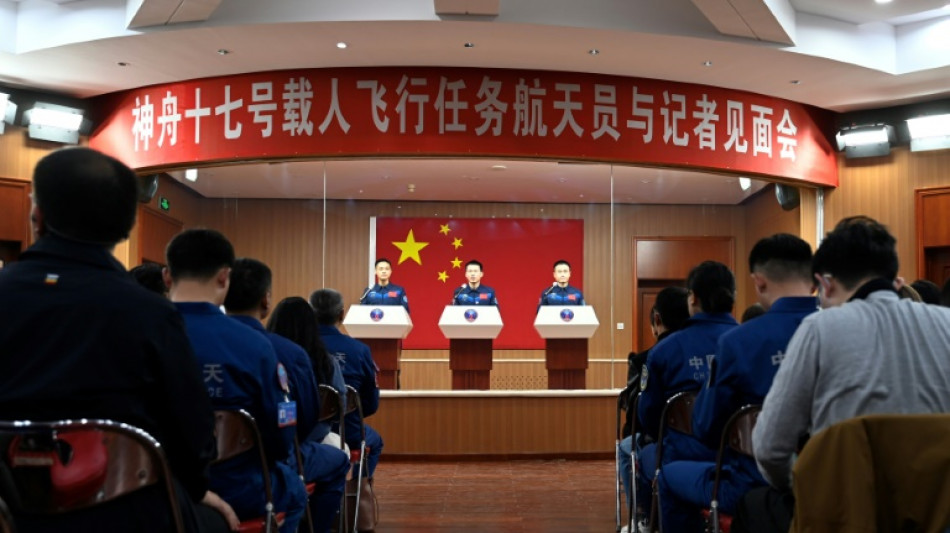
China to send youngest-ever crew to space station / Photo: Pedro PARDO - AFP

 누샤 아우벨: 새로운 출발 대신 드러난 리더십 실패 — 포츠담 시장은 과연 직무를 감당할 능력이 있는가?

 noosha-aubel-lingdao-shibai-bocitan-shizhang-nengfou-shengren

 Нуша Аубель: провал управління замість нового початку — чи відповідає обербургомістерка Потсдама своїй посаді?
 Cost-of-living demonstrations to grip pre-election France

 Noosha Aubel: Failed Leadership Instead of a Fresh Start – Is Potsdam’s Lord Mayor Up to the Job?

 'Real inequality': France's education divide laid bare by protests

 Opera on Ukraine's children aims to 're-awaken' concern for war

 AI is coming for every company, Nvidia boss says

 Millions may be forced to move as climate change hits South Asia: UN

 Four killed battling Indonesia fires as toxic haze cloaks region

 Thai farmers, fishermen challenge IMF, World Bank at Bangkok rally

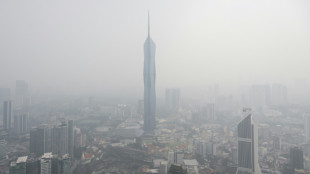 In Malaysia, frustration grows over Indonesia haze

 Why India's voter revision drive has stoked fear and anger
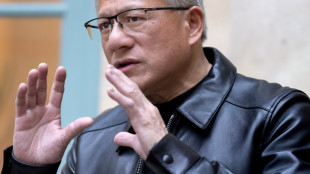
 Munster eye fitting tribute to 'special' Foley in Racing reunion

 Shooter kills teacher, three children at Oregon elementary school

 Fed's Warsh surprised by world economy's 'resilience'

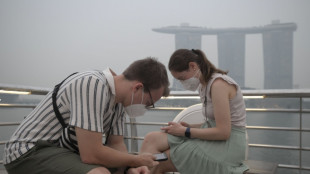 Four killed in Indonesia battling fires causing toxic haze

 New Zealand star Ponga breaks arm in Rugby League World Cup opener

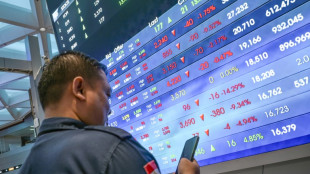 Indonesian stocks dive 11% as MSCI weighs market reclassification

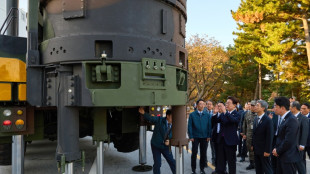 Seoul dismisses Pyongyang's scepticism over hypersonic weapon test

 Yamal on song as entertainers Barcelona face Betis challenge

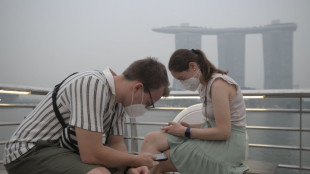 Wong weighs haze prosecutions as Singapore air quality worsens

 Brush fire prompts an evacuation order along Los Angeles coast
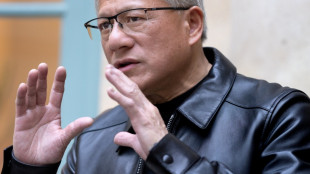
 'Mixed feelings': AI cracks centuries-old ciphers

 Le Pen looms large as Macron enters final months on EU stage

China will send its youngest-ever crew of astronauts to the Tiangong space station this week, officials said Wednesday, as Beijing pursues plans for a manned mission to the Moon by the end of the decade.
Tiangong is the crown jewel of Beijing's space programme, which has also landed robotic rovers on Mars and the Moon and made China the third country to put humans in orbit.
The station is constantly crewed by teams of three astronauts, who are rotated out every six months.
The Shenzhou-17 module carrying the trio to the station is scheduled to blast off at 11:14 am (0314 GMT) Thursday from the Jiuquan launch site in China's arid northwest.
"It is the crew of astronauts with the youngest average age since the launch of the space station construction mission," Beijing's State Council Information Office said in a statement.
The all-male trio will be led by Tang Hongbo, who is on his first return mission to the Tiangong space station.
"Throughout the past two years, I have often dreamt of going back to space," Tang said at a press conference on Wednesday.
"The space station is our other home that takes us away from Earth and into the universe," he added.
Accompanying him will be Tang Shengjie and Jiang Xinlin, both in their thirties and each making maiden space voyages.
The crew has an average age of 38, compared to 42 for the crew of Shenzhou-16 when it launched.
"According to the plan, the Shenzhou-17 spacecraft will conduct autonomous rendezvous and docking procedures after entering orbit," Lin Xiqiang, spokesperson for China's space programme, said during a Wednesday morning press briefing.
It will dock with the station's core module "about six-and-a-half hours" after first initiating the procedure, he added.
- 'Space dream' -
Plans for China's "space dream" have been put into overdrive under President Xi Jinping.
The world's second-largest economy has pumped billions of dollars into its military-run space programme in an effort to catch up with the United States and Russia.
In June, the return capsule of the Shenzhou-15 spaceship touched down at a landing site in the northern Inner Mongolia region, with state media hailing the mission as a "complete success".
That month also saw the launch of the Shenzhou-16 capsule, which carried the first Chinese civilian -- Beihang University professor Gui Haichao -- into orbit.
That crew will return to Earth on October 31 after completing a handover, officials said Wednesday.
Beijing also aims to send a crewed mission to the Moon by 2030 and plans to build a base on the lunar surface.
Spokesperson Lin reiterated that aim Wednesday, saying that the "goal of landing Chinese people on the moon by 2030 will be realised as scheduled".
- Lunar plans -
The country's lunar plans were dealt a setback in 2017 when the powerful Long March-5 Y2 rocket failed to launch on a mission to put communication satellites into orbit.
That forced the postponement of the Chang'e-5 launch, originally scheduled to collect Moon samples in the second half of 2017.
Another robot, the Chang'e-4, landed on the far side of the Moon in January 2019 -- a historic first.
Chang'e-5 eventually landed on the Moon in 2020, raising a Chinese flag on the lunar surface and returning to Earth the first lunar samples in four decades.
And the final module of the T-shaped Tiangong -- which means "heavenly palace" -- successfully docked with the core structure last year.
The station carries several pieces of cutting-edge scientific equipment, according to state news agency Xinhua, including "the world's first space-based cold atomic clock system".
The Tiangong is expected to remain in low Earth orbit at between 400 and 450 kilometres (250 and 280 miles) above the planet for at least 10 years.
L.AbuAli--SF-PST