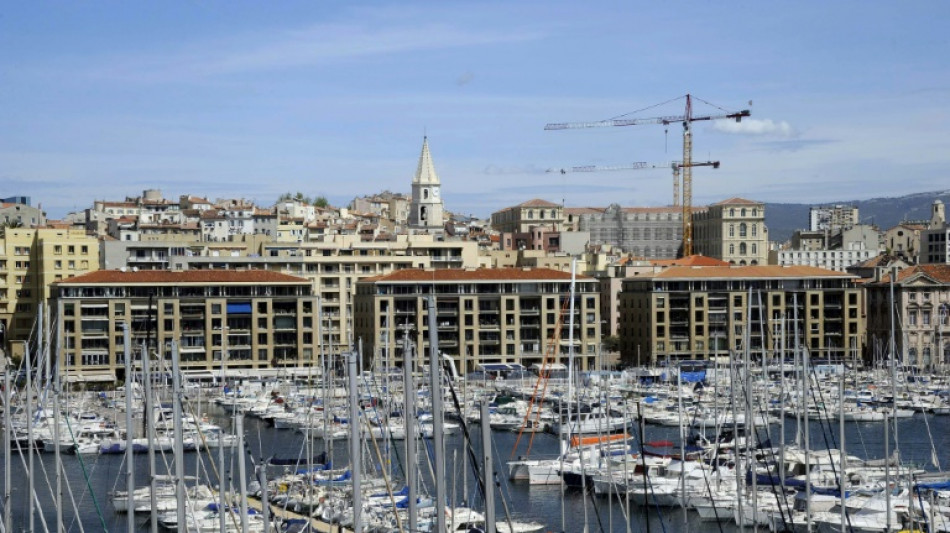
Marseille determined to remember 'forgotten' WWII roundups of Jews / Photo: Anne-Christine POUJOULAT - AFP/File

 'Multiple victims' in Oregon elementary school shooting: police

 ChangeNOW Announces NOW AI After Resolving Website Integration Vulnerability

 Argentine demonstration over education cuts ends in clashes

 Argentine protesters, police clash at demo over university funding

 US stocks end higher as AI shares stabilize

 School roof collapse kills 32 children, teacher in Pakistan

 Lyon down Palace in Europa League, Sunderland leave it late

 UniCredit says receives ECB green light for Commerzbank takeover

 New York City pension fund asks Anthropic to delay IPO

 Venezuela's Maduro denies US torture charges as 'false accusations'

 Somalia sets May presidential election despite insecurity

 Chelsea's Caicedo eager to be more of a leader

 Rahm reaches separation deal with LIV in bankruptcy court

 UN chief urges nations to end 'war on nature'
 Newcastle boss Jaissle says Fernandez-Pardo just needs a goal

 Infantino offers apology but 'no answers' at FIFA meeting over World Cup plan
 Don't exclude Turkey from 'Made in Europe' plan: minister to AFP

 French duo Justice to score 'GTA VI': game maker

 El Nino a 'terrifying' threat to coral reefs: UN biodiversity expert
 Barcola must get used to Liverpool highs and lows, says Iraola

 Versus Trade Wins Best ECN/STP Broker APAC 2026, Marking Third UF Awards Recognition

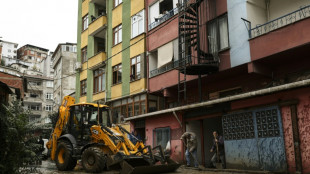 Three dead as Istanbul sees heaviest rainfall in 80 years

 US producer prices see biggest jump since 2022 in added challenge to Trump
 Swiatek avoids seed exodus to breeze into Wuhan last eight
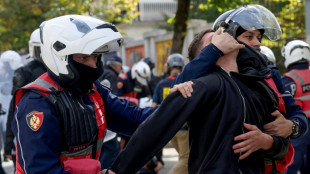 PM condemns 'chaos' as violent protests grip Albania

It was one of the most shameful yet least known outrages of the Nazi occupation of France during World War II.
One hundred-year-old Albert Corrieri still vividly remembers French and German police evicting and rounding up thousands of people from around Marseille's Old Port, including hundreds of Jews later sent to a death camp.
"I can still see those poor people with their bundles on their backs, after the Germans and French collaborators threw them out into the street in the middle of winter," said Corrieri, who was 20 years old at the time.
After the raids in January 1943, a whole neighbourhood along one side of the Old Port was razed to the ground by the Nazis, who saw it as a hotbed of the French Resistance.
But with witnesses dying out, the city's left-wing mayor Benoit Payan is worried it will be forgotten.
"The story of the destruction of the old quarters and the 1943 roundups isn't even in school books," he wrote this month.
"It has been forgotten in the national retelling of World War II."
Yet it is comparable to the notorious mass arrests of Jews in Paris in July 1942, Payan argued, which is taught in French schools.
In the Velodrome d'Hiver raids, more than 12,000 people, including 4,000 children, were rounded up in the French capital in less than two days.
- Neighbourhood destroyed -
The city of Marseille is organising a series of events this year, including a photo exhibition, to remind people that they had their own roundups too.
In a first raid on the night of January 22, 1943, French police arrested 1,865 men, women and children in an area of the port near the opera house that had a large Jewish community.
The next day German troops encircled a densely-populated low-income district to the north of the old harbour that was home to dockers, including many of Italian origin, as well as bars and brothels.
Berlin considered it a bastion of the Resistance as well as a "pigsty".
French police then moved in and arrested 635 people.
Early on January 24, German soldiers and French police woke up the whole neighbourhood and evacuated 15,000 of its inhabitants by force, transferring them to an abandoned army camp some 140 kilometres (80 miles) east of the city.
The authorities then blew up 1,500 buildings, laying waste to an area the size of 20 football pitches along the harbour.
Images of the aftermath show most of the district, where 20,000 people had lived, reduced to a sea of rubble.
- 'Crimes against humanity' -
Some 800 Jews were crammed into cattle trains after first two days of roundups.
Elie Arditti, who was 19 at the time, described the scene.
"They squashed us in to the point that we had to put our arms up in the air to make room for new arrivals," he said.
Then "they chucked seven loaves of bread and three cans into the wagon, and a worker sealed us in," he told researchers before his death.
When the train started moving, everybody on board was reciting the Kaddish, a Hebrew mourning prayer for the dead, he said.
Arditti managed to escape, but all the other Jews were transported to the Sobibor extermination camp in Nazi-occupied Poland.
Pascal Luongo, a lawyer for the survivors and the descendants of the victims of the Marseille roundups, filed a complaint for "crimes against humanity" with the prosecutor general in Paris in 2019.
He said it is unlikely the probe will find anyone responsible that is still alive, but it's a first step.
"We've come very, very far and just opening an investigation into crimes against humanity has allowed us to revisit these events," said Luongo, whose grandfather was forcibly evacuated from the old harbour quarter.
The next step, he said, would be for the French state to recognise its responsibility in the events, and for the Marseille roundups to be added to the school curriculum.
san-cdc-mk-sm/ah/sjw/fg
F.AbuShamala--SF-PST