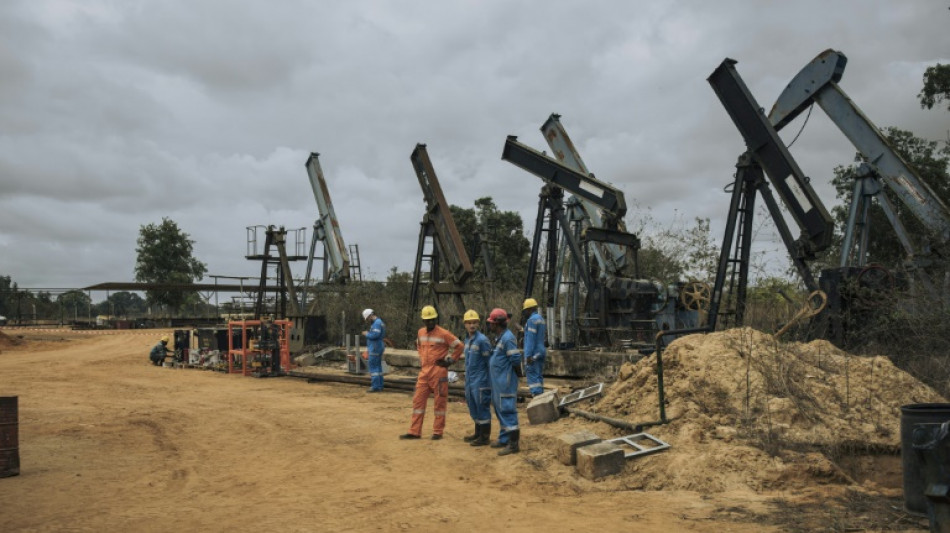
After Davos, a race for money to stop climate change / Photo: ALEXIS HUGUET - AFP

 'Multiple victims' in Oregon elementary school shooting: police
 ChangeNOW Announces NOW AI After Resolving Website Integration Vulnerability

 Argentine demonstration over education cuts ends in clashes
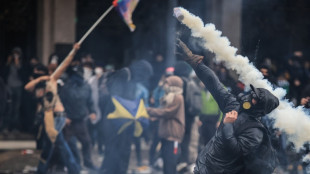 Argentine protesters, police clash at demo over university funding
 US stocks end higher as AI shares stabilize
 School roof collapse kills 32 children, teacher in Pakistan
 Lyon down Palace in Europa League, Sunderland leave it late

 UniCredit says receives ECB green light for Commerzbank takeover
 New York City pension fund asks Anthropic to delay IPO

 Venezuela's Maduro denies US torture charges as 'false accusations'

 Somalia sets May presidential election despite insecurity
 Chelsea's Caicedo eager to be more of a leader
 Rahm reaches separation deal with LIV in bankruptcy court
 UN chief urges nations to end 'war on nature'
 Newcastle boss Jaissle says Fernandez-Pardo just needs a goal

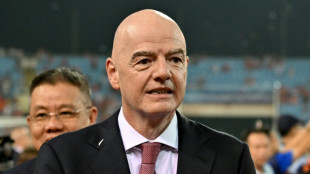 Infantino offers apology but 'no answers' at FIFA meeting over World Cup plan
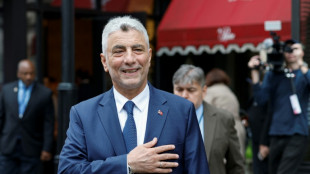 Don't exclude Turkey from 'Made in Europe' plan: minister to AFP

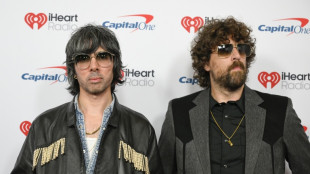 French duo Justice to score 'GTA VI': game maker
 El Nino a 'terrifying' threat to coral reefs: UN biodiversity expert
 Barcola must get used to Liverpool highs and lows, says Iraola
 Versus Trade Wins Best ECN/STP Broker APAC 2026, Marking Third UF Awards Recognition
 Three dead as Istanbul sees heaviest rainfall in 80 years

 US producer prices see biggest jump since 2022 in added challenge to Trump
 Swiatek avoids seed exodus to breeze into Wuhan last eight
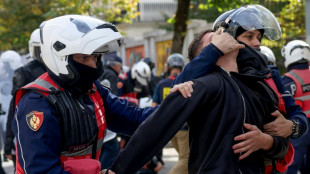
 PM condemns 'chaos' as violent protests grip Albania

US climate envoy John Kerry bluntly summed up in one word what the planet needs to avoid a global warming catastrophe at the World Economic Forum this week: money.
The annual meeting of the global elite in the Swiss Alpine resort of Davos was a chance for top government officials, CEOs, academics and campaigners to debate how to tackle the climate crisis.
The bill is monumental: Kerry and others warned that trillions of dollars were needed to speed up the world's efforts to reach net-zero carbon emissions by 2050 and limit warming to 1.5 degrees Celsius.
But the week-long forum exposed fault lines over how to meet those targets at a time when the world faces a costly war in Ukraine, an economic downturn, soaring inflation and a cost-of-living crisis.
The US government is pouring $369 billion dollars into its green energy transition through tax incentives and subsidies for electric cars and other technology under its landmark Inflation Reduction Act (IRA).
Kerry warned however that public funds alone were not enough, as he used his Davos appearance to press his case that the private sector has a major role to play -- if firms can be shown there is money to be made.
The former US secretary of state admitted that he sounded like the corporate raider Gordon Gekko from the film "Wall Street" when he said earlier this week that "money, money, money, money, money, money, money" was needed to meet the 1.5C target.
"The magic that we need is to unleash those trillions of dollars that are looking for good investments, but they're looking for bankable investments," Kerry said.
But at the same panel, Ecuadoran climate activist Helena Gualinga said profit was being placed above the health of the planet.
"When I hear a lot of these conversations I think it's very business first, and then we'll deal with climate and then we'll deal with biodiversity loss," she said. "That needs to be reversed."
- US-EU spat -
Other disagreements returned to the fore in Davos.
While many praised US President Joe Biden's IRA programme as a game-changer for the climate crisis, Europeans continued to denounce what they describe as discriminatory subsidies favouring US businesses.
The two sides held talks in Davos as they seek to find a compromise.
"We're friends," Kerry told AFP. "We need to work together and I think there's a lot of listening going on and discussions to address those things that are concerns."
European industrialists said the EU should step up its game and respond with its own version of the IRA if it wants to remain competitive.
"Yes, we are going to the US. We are taking the cheque from IRA, and fair enough," Ilham Kadri, CEO of Belgian chemicals giant Solvay, said at an event hosted by Belgian Prime Minister Alexander De Croo.
European Union chief Ursula von der Leyen announced plans in Davos for a special fund and a "Net Zero Industry Act" to defend Europe's industrial base from US and Chinese industrial subsidies.
- Western 'hypocrisy' -
IMF chief Kristalina Georgieva voiced concerns that Western efforts to use public money to step up private investment could be detrimental to developing nations, which are the most exposed to the effects of climate change.
"If we are to strive to get the industrialised world clean and we don't think about the emerging markets, we are all cooked," she said Friday.
Wealthy nations have already fallen behind on their pledges to deliver $100 billion per year to help developing countries green their economies and build resilience against future impacts of climate change.
Climate financing will be among the core issues to be discussed at the COP28 summit hosted by the United Arab Emirates later this year.
The president of the Democratic Republic of Congo, Felix Tshisekedi, slammed the "hypocrisy" of criticising his country for wanting to exploit fossil fuels for its development while wealthy polluters have failed to provide the money promised to help its energy transition.
"I think this money would allow us to get the technology faster if everyone kept their word," Tshisekedi said.
P.AbuBaker--SF-PST