Valieva case 'catastrophic failure' of system: USADA

 'I'll adapt': First pregnant candidate navigates French presidential race

 Hong Kong convicts Tiananmen vigil activists of inciting subversion

 The Hong Kong Tiananmen vigil activists convicted in national security trial

 Eel-powered Japan whizz-kid, 11, chases Asian Games history

 Asian markets extend rally as traders assess US Treasuries pledge

 Barcelona enter new era as Flick targets La Liga hat-trick

 Pogacar favourite for Vuelta with Grand Tour treble in sight

 Bangladesh coach Simmons wary of Australia backlash in second Test

 Hong Kong Tiananmen activists to receive national security verdict

 Who are the candidates vying to lead the UN?
 Swiatek into Cincinnati semis after Rybakina injury

 University suspends academic behind Jason Arday plagiarism charges

 Key European leaders demand Israel halt West Bank settlement project

 McIlroy bounces back to share BMW Championship lead

 Cobolli fueled by candy in sweet defeat of Paul

 Jailed Pakistan ex-PM Khan moved to hospital on court order: party

 Pogacar eyes 'missing' piece ahead of Vuelta return

 US, Canada 'very close' to trade deal, Ottawa says, as details emerge

 Ronaldinho returns in search of 'beautiful' 300th goal

 US pushes allies, China to back Trump's economic war on Iran

 Former NBA MVP Harden reportedly set to return to Cavaliers

 Brook makes Pakistan pay for drop as England dominate first Test

 MemeCore Arrives on Nasdaq Through $1 Billion Landmark Treasury Transaction

 First US deportees land in Liberia

 US, Canada resume talks to finalize trade deal as details emerge

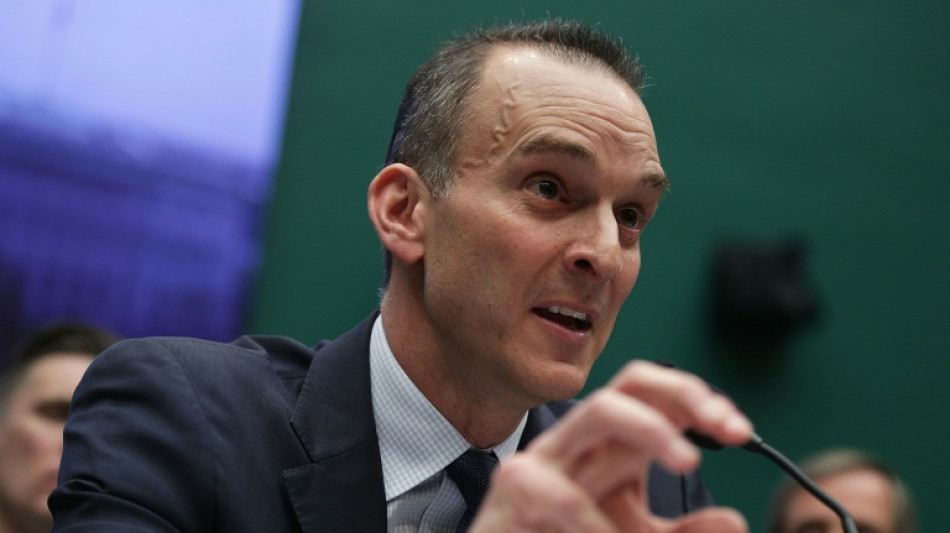
The drug scandal embroiling Russian figure skater Kamila Valieva at the Winter Olympics marks a "catastrophic failure" for the fight against doping, United States Anti-Doping Agency chief Travis Tygart said Friday.
Valieva, who played a starring role in helping Russia win team gold in Beijing on Monday, tested positive for the banned substance trimetazidine after competing at an event in Saint Petersburg on December 25.
However the International Testing Agency said in a statement on Friday that the laboratory in Stockholm only reported that Valieva had returned a positive case on February 8 -- the day after she competed in Beijing.
In an interview with AFP on Friday, USADA chief Tygart questioned how it had taken nearly six weeks for Valieva's positive sample to come to light.
"The failure to report a test taken in December until after the team event in the Games is a catastrophic failure of the system to protect the public, the integrity of the Games and clean athletes who had to compete," Tygart told AFP. "It shouldn't have happened."
Tygart said US authorities and other nations routinely expedite test results for athletes due to be participating in major championships, precisely to avoid situations like the Valieva case.
"We stay up all hours of the night ensuring that people we send to the Olympics or other major competitions, that any tests that we’ve done on them, have results," Tygart said.
Valieva's sample should have been relatively straightforward to analyse quickly because the substance found in her system -- trimetazidine -- was not naturally produced in the human body.
- 'Inexcusable' delay -
"For it to take this long and on this athlete, at this level of competition, is a catastrophic failure of the system. It's inexcusable."
Valieva was handed a provisional suspension by the Russian Anti-Doping Agency (RUSADA) on February 9, but she challenged the suspension and it was lifted the same day -- potentially leaving the skater free to compete in the individual event in Beijing.
Tygart said he was not surprised at RUSADA's decision to lift the suspension given Russia's recent history of state-supported doping scandals.
"That shouldn’t come as a shock to anyone. RUSADA was right in the middle of helping athletes cover up their tests and participating in the fraud of the state-sponsored doping scheme," he said.
"I can’t imagine a set of facts, for this type of drug, for an athlete at this level, that would lead to a result that allows for the lifting of the provisional suspension."
Tygart meanwhile expressed sympathy for Valieva, a 15-year-old being "chewed up by the system."
"Whatever consequence she deserves for the doping offense, that could have been sorted out by now and put in place and we could have avoided this mess entirely," he said.
Tygart, who has long advocated for hardline sanctions against Russia, believes the latest scandal is a consequence of failing to hand out stiffer punishments in the past.
"It's the sixth Olympic Games going back to 2012 where Russia has now tainted the Games. The meagre penalty that was put on them didn’t deter behaviour," he said.
"We saw time and time again that they hadn't changed their ways ... And here we are once again, and it's just a shame for all the athletes of the world who have to go through this."
The Valieva case could even lead to punishment under legislation known as the Rodchenkov act, which allows US prosecutors to target those involved in doping conspiracies.
"If there was a doctor, a coach or an individual who knowingly conspired to dope her with this drug to benefit her performance at the Olympic games, then the Rodchenkov act fits like a glove," he said.
"We're a long way from that happening because all the facts aren’t out. But we'll see."
Y.Shaath--SF-PST