
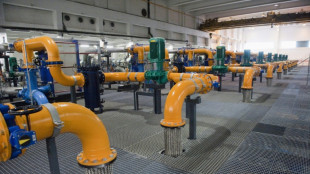
EU wants to edge out China in public contracts / Photo: Nicolas TUCAT - AFP/File

 Workers, migrants focus of documentaries by Oscar winners at Venice

 Nepal seeks survivors two weeks after deadly floods

 Bangladesh measles crisis kills more than 1,000 children

 Pakistan collapse to 26-4 against England in 3rd Test
 EU helps cities tighten screws on Airbnb, holiday rentals
 Courtois to put Belgium career on hold
 RavenDB Launches Quill to Bring Production AI Agents to Enterprise SQL Systems, No Migration Required

 Affleck family affair at Venice for Casey's latest film 'Company'
 Yemen rebels report fresh Saudi strikes as conflict deepens

 'They're playing with our lives': AI researcher quits Anthropic

 Series finale of 'Babylon Berlin' offers dark mirror for today's Germany

 Zara owner Inditex boosts profits as sales grow across board

 Alcaraz out in latest US Open finish, Sabalenka through on marathon day

 Brent breaks $100 on Mideast flare-up, fanning inflation fears
 South Korea video game tycoon to pay record $1.5 bn in divorce

 'Long live Chairman Mao': Supporters pay respects to founder of Communist China

 Sweden immigration restrictions spark healthcare concerns

 EU to help cities tighten screws on Airbnb, holiday rentals

 'Our year': Kane and Bayern primed for Champions League tilt

 Australian World Cup star Volpato fined over positive cocaine test

 Sabalenka edges Noskova to keep US Open treble bid alive
 Pegula outlasts Navarro to set US Open semi with Sabalenka

 From trenches to catwalk: Ukraine's amputee soldiers hit the runway
 UK airports face more disruption after air traffic control glitch

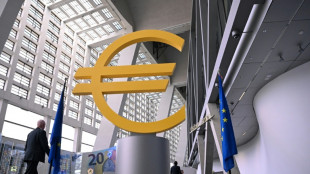 ECB meets, weighing a tricky balance between savers and spenders

The European Union on Wednesday proposed new rules to encourage member states to choose domestic companies over Chinese bidders in government contracts.
The reform is part of efforts to favour European firms and boost the 27-country bloc's key industries against rivals in China and the United States.
The sums involved are huge: public procurement is worth 2.6 trillion euros ($3 trillion) a year in the EU, equivalent to 15 percent of the bloc's economic output.
Of that total, around 600 billion euros in public contracts are put out to tender across the 27-nation EU each year.
"Public procurement is both a strategic tool and a powerful policy lever at a time when China, India, the United States and other major powers are using it to advance their industrial and economic strategies," EU industry chief Stephane Sejourne told journalists.
The EU executive unveiled a proposal to reform current government procurement rules -- which it says will cut the number of pages of rules "from 900 to 200" -- and create a single European platform dedicated to public tenders.
Brussels believes the one-stop shop will make it easier for smaller companies to bid for public tenders as there will be less paperwork.
The reform will allow local authorities to focus on different criteria when assessing providers, like security of supply, sustainability and "European preference" considerations -- and not just the price on offer.
Companies often win contracts because they offer a more competitive price, but the EU wants to prioritise the wider benefit of a bid to the European economy.
Sejourne said many local authorities were not making use of the existing provisions which allow them to choose European companies over foreign firms.
"It will therefore be up to local authorities, national governments, municipalities and regions to set those criteria, apply them and choose to buy European or local products," he added.
As an example, Sejourne said that Brussels could no longer be blamed if local authorities opted for Chinese buses. "We are now giving them the means to favour European buses," he said.
E.Qaddoumi--SF-PST