-
 Man Utd teetering towards crisis as Man City cloud hangs over Premier League
-
Fiji to deploy solar-powered Australian military drones at sea
-
 Trump's new press secretary defends 'lawyer' title
-
'Multiple victims' in Oregon elementary school shooting, police say
-
 Wallabies coach has 'faith' as All Blacks juggernaut awaits
-
'Multiple victims' in Oregon elementary school shooting: police
-
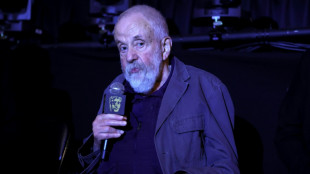 Ailing UK director Mike Leigh wishes he could make '100 more films'
-
ChangeNOW Announces NOW AI After Resolving Website Integration Vulnerability

-
 Pixagram Announces Free Account Creation for 250 New Users Daily Through 2026
-
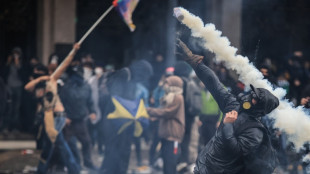
Argentine demonstration over education cuts ends in clashes
-
 Macron warns urgent to strike EU budget deal before French vote runup
-
Argentine protesters, police clash at demo over university funding
-
 Zelensky rallies European allies as Trump ties slump
-
US stocks end higher as AI shares stabilize
-
 Guardians edge Rays to seize MLB playoff series lead
-
School roof collapse kills 32 children, teacher in Pakistan
-
 Trump scraps plan to livestream execution after fierce backlash
-
Lyon down Palace in Europa League, Sunderland leave it late

-
 Martinez apologises for outburst at Man Utd hierarchy
-
UniCredit says receives ECB green light for Commerzbank takeover
-
 Houthis launch deadly attack on presidential palace in Yemen's Aden
-
New York City pension fund asks Anthropic to delay IPO

-
 Brazil forward Antony says home burgled during Betis match
-
Venezuela's Maduro denies US torture charges as 'false accusations'
-
 Ravens face familiar foe in Browns coach Monken
-
Somalia sets May presidential election despite insecurity
-
 France, Germany reach deal on future of car industry
-
Chelsea's Caicedo eager to be more of a leader
-
 Carney campaigns for Canadian unity before Alberta secession vote
-
Rahm reaches separation deal with LIV in bankruptcy court
-
 ATP proposes rankings system changes, extra player bonuses
-
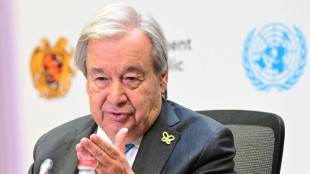
UN chief urges nations to end 'war on nature'
-
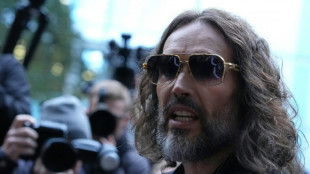 Russell Brand was 'monster-like', alleged victim tells UK court
-
Newcastle boss Jaissle says Fernandez-Pardo just needs a goal

-
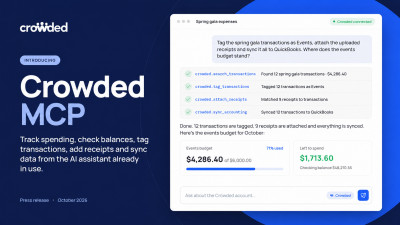 Crowded Launches Crowded MCP, Bringing Nonprofit Financial Operations Into ChatGPT and Claude
-
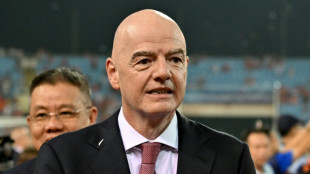
Infantino offers apology but 'no answers' at FIFA meeting over World Cup plan
-
 Albanian PM condemns 'chaos' as violent unrest spreads
-
Don't exclude Turkey from 'Made in Europe' plan: minister to AFP
-
 Italian football suffers new blow with Champions League misery
-
French duo Justice to score 'GTA VI': game maker
-
 Trump scraps plan to livestream execution after broad backlash
-
El Nino a 'terrifying' threat to coral reefs: UN biodiversity expert
-
 Seven missing off Romania after latest Black Sea drone attacks
-
Barcola must get used to Liverpool highs and lows, says Iraola
-
 ARKBRIDGE Outlines Jonathan Morelli’s “Picks and Shovels” AI Infrastructure Investment Strategy
-
Versus Trade Wins Best ECN/STP Broker APAC 2026, Marking Third UF Awards Recognition

-
 Tech sell-off rolls on as hot inflation data stokes rate worries
-
Three dead as Istanbul sees heaviest rainfall in 80 years
-
 McIlroy makes 'solid' start in rain-hit Delhi as Norgaard leads
-
US producer prices see biggest jump since 2022 in added challenge to Trump
Cuba unveils historic package of free-market reforms
Cuba on Thursday unveiled nearly 200 historic free-market reforms aimed at rescuing the communist island from a severe crisis aggravated by a US oil blockade.
In a landmark speech to the National Assembly, Prime Minister Manuel Marrero detailed 176 measures aimed at rolling back the state's role in the economy and attracting investment in everything from banking to tourism and agriculture.
These huge changes also come as the United States exerts strong pressure on Cuba aside from the oil blockade, as President Donald Trump muses openly about taking over the island just 90 miles (145 km) from Florida.
The measures are "the most profound economic reform program" since the 1959 revolution led by Fidel Castro, said Daniel Torralbas, a London-based Cuban economist.
"It represents a significant shift in the country's economic development model," he told AFP.
The measures, which have been endorsed by the Communist Party, are to be put to a vote Thursday in the National Assembly, seen as a rubberstamp for the regime.
Marrero did not give a time-frame implementating the reforms but President Miguel Diaz-Canel on Wednesday argued the need for "urgent changes" to stave off economic collapse.
- Private investors welcome -
The oil blockade imposed by President Donald Trump in January after his ouster of Cuba ally Nicolas Maduro in Venezuela has brought the island's economy to the brink of collapse, forcing the government into concessions previously considered heretical by Communist hardliners.
The main transformations revolve around the role of the private sector in the economy.
For the first time, private companies of over 100 workers will be allowed.
Cubans will be allowed to own more than own company, private banks will be authorized and foreign investors will no longer be required to form joint ventures with the state.
Citizens will also be allowed to have accounts in foreign currency and remittances from relatives abroad, a lifeline for many, will no longer be channeled exclusively through the state.
While Havana's custom has always been to blame its woes on a more-than-six-decade US trade embargo and more recently the oil blockade, Diaz-Canel admitted Wednesday to the existence of "obstacles that don't come from outside, nor the blockade."
In usually frank language, he called out "slowness, bureaucracy and norms that impede those who want to produce" as well as "decisions that we have put off."
"Their backs are up against the wall as never before," Michael Bustamante, Cuban Studies Chair at the University of Miami, told AFP.
"They're in the uncomfortable position of making changes to their economic model, seemingly because of the pressure that's being exerted on them by the United States."
- Oil shortage -
Just a single oil tanker -- from Russia -- has docked in Cuba since the beginning of the year.
Power cuts sometimes lasting over 30 hours have become the norm, and food, fuel, drinking water and medicine are in short supply.
The UN's High Commissioner for Human Rights, Volker Turk, has warned that "children are dying" because of a shortage of medical supplies and medication.
Diaz-Canel cited China and Vietnam as possible models for opening Cuba's economy to the world six decades after the overthrow of a US-backed dictator and embrace of communism.
Victor Hierrezuelo, a 63-year-old bank worker, warned that, absent reforms, "the revolution will collapse!"
It is unclear, however, whether the changes will satisfy Trump, who is pushing for a change in Cuba's leaders as well as its economic model.
The Republican leader has floated a "friendly takeover" of Cuba and joked about making a "stop over" there after ending his war with Iran.
Asked Thursday if Cuba was now in Trump's sights after he signed a deal to end the Iran war, Vice-President JD Vance said Washington wanted Cubans to be "happy and successful."
"We're actually talking to the Cuban government right now about how they could change their ways to change that," he added.
Before the reforms were announced in full, many disillusioned locals shrugged them off as too little, too late.
The country's small but growing business class welcomed the changes, however.
The reforms "offer hope, a chance that may or may not materialize," said Mario Gonzales, the 32-year-old manager of a restaurant in Havana's historic old town.
Y.Shaath--SF-PST