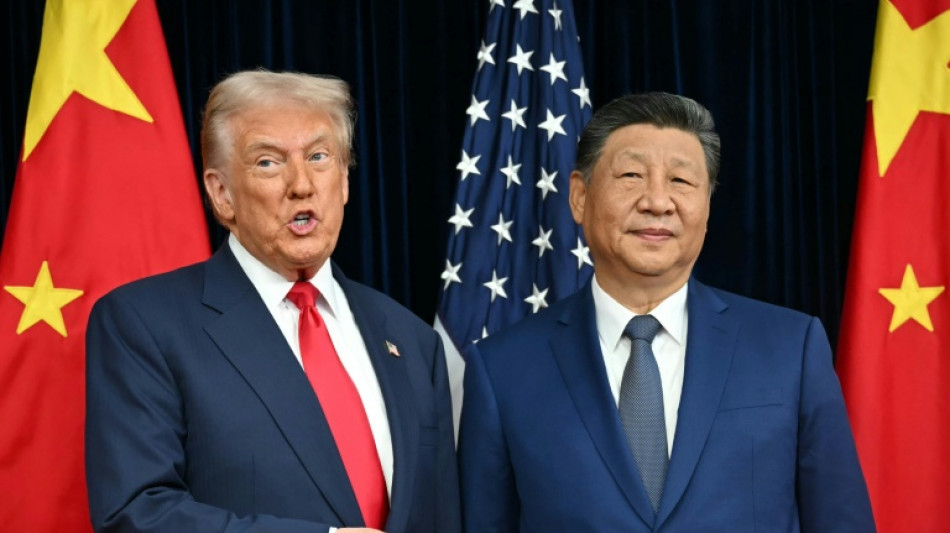
'Big hug' or colder shoulder? Xi-Trump talks spotlight contrasting styles, expectations / Photo: ANDREW CABALLERO-REYNOLDS - AFP

 Hong Kong superstar Ka Ying Rising loses first race in 22 starts at The Everest
 Attacks on Gulf energy infrastructure 'worrying' for outlook: Pakistan finance minister
 Japan says hosting record number of foreigners

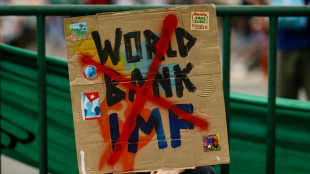 'Two bad options': Rights groups decry IMF austerity demand

 Guardians-Rays MLB playoff game postponed until Saturday
 'We've never had this': Bear sightings spook Russia

 Injured Jordie Barrett out of second Bledisloe Cup Test

 All contenders for UN chief receive veto: diplomat

 UN climate panel fails to agree date for global warming update: envoy

 Stocks struggle to bounce back from AI angst-fueled rout

 Clashes grip Tirana as Albanian PM blames 'foreign hands'
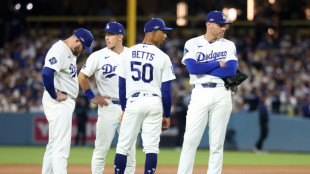 End of a dynasty? Dodgers digest playoff drubbing

 Troyes sack sporting director Blanchard amid sexism claims

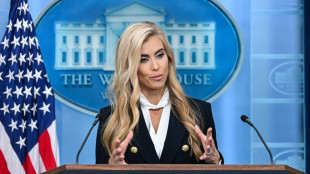 Trump's new press secretary out after less than week
 EU backs Ukraine on Starlink, but can't fill gap

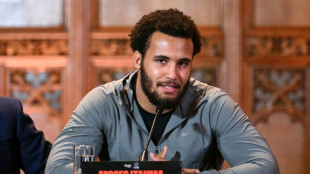 Itauma coming to terms with Hrgovic heavyweight loss
 NBA tells sportsbooks to ban certain bets and parlays: report
 US influence, AI and mistrust cloud Alberta independence vote

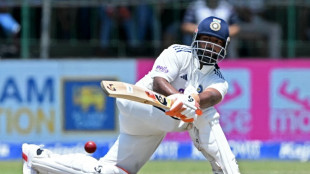 Pant, Bumrah named in India Test squad for New Zealand tour

 Coen brothers say they plan to make film together again

 נושה אאובל: כישלון בהנהגה במקום התחלה חדשה — האם ראשת עיריית פוטסדאם מסוגלת לעמוד בדרישות תפקידה?
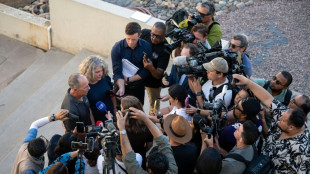
 From hospital, pope pushes Putin for ceasefire in contested Ukraine city
 مصر وتايلاند تبحثان توسيع الاستثمارات والتعاون الصناعي المشترك

 أسعار الواردات الأميركية ترتفع بأسرع وتيرة في أكثر من أربع سنوات

 إنتاج أوبك النفطي يسجل ارتفاعاً خلال سبتمبر
Donald Trump has said he expects a "big, fat hug" from China's Xi Jinping when they meet in Beijing this week, though multiple thorny issues between the two sides could see the US president kept at arm's length.
Taiwan, tariffs, rare earths and the war in Iran are among the contentious topics set to be discussed by the two leaders, whose styles of communication could hardly be more different.
Trump's often bombastic, freewheeling comportment on the international stage contrasts dramatically with Xi's measured, tight-lipped approach to foreign policy.
In mid-April, the US president predicted that Xi would greet him with a "big, fat hug" upon his arrival in Beijing, adding that "we are working together smartly, and very well!"
China, in contrast, did not confirm the visit was taking place until Monday, typical of its reserve on such matters.
Despite the clash of styles, Beijing's foreign ministry said Monday that China considers leader-to-leader diplomacy as playing an "irreplaceable strategic guiding role in China-US relations".
Trump's trip to China, set to begin Wednesday, is the first by a US president since his own in 2017.
During that first-term sojourn, he received what the Chinese termed "state visit-plus" treatment, including a private tea reception in the Forbidden City.
His 2026 trip is expected to include a tour of the Temple of Heaven and a state banquet, but analysts say the pomp will not match that of nine years ago.
Since Trump's first visit, China has learned that while "aggrandisement... plays to his ego, it cannot prevent him from a quick flip-flop in his attitude towards China", Wu Xinbo, director of the Center for American Studies at Shanghai's Fudan University, told AFP.
- 'Less romantic' -
In 2017, Chinese state media presented "personal diplomacy as opening a new phase of pragmatic cooperation and great power diplomacy", wrote the National University of Singapore's Bert Hofman in a newsletter on Monday.
But Trump's subsequent anti-China policy tack over the course of his first term, followed by a blistering trade war at the beginning of his second, disabused Beijing of that notion.
"The revived Trump-era discourse in 2025-2026 is less romantic about leader chemistry (in contrast to Trump's continued mentioning of his friendship with Xi)," Hofman wrote.
While there is no longer hope the two men's personal relationship can be transformative, there is acknowledgement it could "prevent derailment, restart channels, and produce tactical bargains", he said.
Beijing has rolled out the red carpet for a broad swathe of other foreign guests recently.
Russian President Vladimir Putin and North Korean leader Kim Jong Un were among the attendees to be warmly welcomed at a military parade in Beijing in September.
And French President Emmanuel Macron got significant facetime with Xi both in the capital and in the southwestern city of Chengdu.
But some analysts think the connection between the leaders of the world's two largest economies is unforced.
John Gong, professor at the University of International Business and Economics in Beijing, told AFP he thought Trump and Xi "really do get along very well".
"I think they genuinely have some kind of a warm relationship towards each other," he said.
- 'Modest' expectations -
Whether that personal relationship trumps the many sore points in the bilateral one remains doubtful.
Trump, who will turn 80 next month, and Xi, who will turn 73 a day later, last met face-to-face in October on the sidelines of a regional summit in South Korea.
There, the two agreed to a one-year truce in a trade war that saw tariffs on many goods exceed 100 percent.
This week's talks will be overshadowed by the US-Israel war in Iran, the most recent addition to a long roster of issues on which the two sides find themselves at loggerheads.
Expectations for outcomes this time should be "modest", said Wendy Cutler, a trade diplomat and vice president of the Asia Society Policy Institute, in the Geoeconomic Competition podcast last week.
"This year, we may see a number of meetings between Presidents Trump and Xi Jinping, and so all the deliverables don't have to be announced at the first meeting," she said.
"For each leader, stabilisation makes sense in the relationship," she added.
R.Halabi--SF-PST