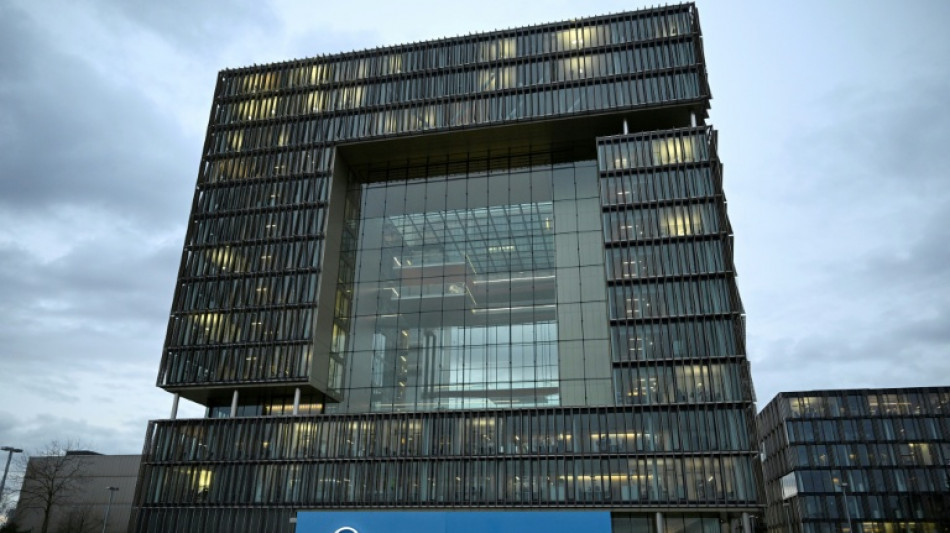
Thyssenkrupp cuts sales outlook on Mideast war / Photo: Ina FASSBENDER - AFP

 Swiatek, Zheng survive three-set tests in China Open third round

 Hasan says Test cricket momentum turning for Bangladesh

 Intense heat puts births in jeopardy, UN tells Fiji talks

 US arrests woman accused of spying for China on Taiwan leader's family

 Yemen military announces broad strikes against Houthis

 Zuckerberg skewered again on screen in 'The Social Reckoning'

 Fiji urges 'just' climate transition, financing at pre-COP gathering

 Thailand's Jeeno overcomes late wobble to win Lotte Championship

 Brazil heads to run-off as Bolsonaro pulls off shock first place finish over Lula

 EU, China to hold Beijing talks to avert trade war
 Bolsonaro edges past Lula as nail-biter Brazil vote goes to a run-off

 Rubio visits Iceland as US boosts Arctic presence

 Bolsonaro leads Lula as nail-biter Brazil vote goes to a run-off

 Patriots inflict first Bills defeat as Chiefs keep winning

 Pacific nations take centre stage at 'pre-COP' climate summit

 Ronaldo can return to Portugal team if he wants: coach Jesus

 Portugal move into Nations League knockout stage, Germany held

 Ronaldo-less Portugal beat Norway to reach Nations League quarters

 Bosnian Serb strongman claims election win, thanks Trump and Putin

 Israel wear black armbands in Ireland tie over Hamas attack

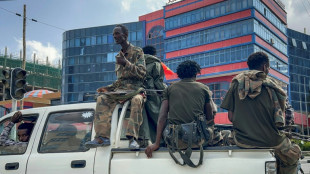 'I fear it could drag on': anxiety takes hold in Ethiopian city wrested from rebels
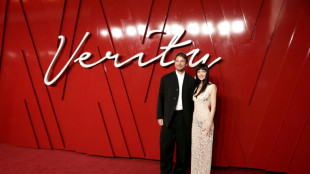
 Brazil's Lula and Flavio Bolsonaro face off in knife-edge election

 UK Green party adopts 'Zionism is racism' policy
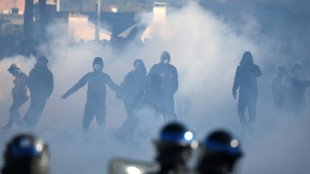
 Rio favela residents vote with little hope

 Evenepoel puts worlds 'disappointment' to bed with European crown

German industrial giant Thyssenkrupp cut it sales forecast Tuesday, warning that the war in the Middle East would have an impact on customer demand.
Sales at the company were now expected to be flat or fall by up to three percent for the year, Thyssenkrupp said, down from a previous forecast range of a two-percent fall to one-percent growth.
"The anticipated recovery of the global economy has been dampened significantly," Thyssenkrupp said in its second-quarter report.
"As well as the war in Ukraine, the main factors are the escalation of the Iran conflict which has triggered a substantial energy price shock and clouded economic prospects worldwide."
Industrial firms such as Thyssenkrupp, a vast conglomerate with interests in steel, machinery and car parts, are often seen as bellwethers for the global economy that rise and fall with worldwide activity.
Thyssenkrupp's net profit for the year is still seen at between minus 800 million euros (minus $940 million) and minus 400 million euros, the firm said, with the figure rising to between plus 500 million and plus 900 million euros once certain expenses like tax and one-off restructuring costs are stripped out.
Hammered by exorbitant energy costs and cheaper Asian competition, Thyssenkrupp's steel unit said in November 2024 it would seek to cut or outsource 11,000 jobs by 2030 -- about 40 percent of its workforce.
The conglomerate was in discussions with India's Jindal Steel about a potential sale of the unit, but these were paused earlier this month after the European Union said in April it would hike steel tariffs, helping protect steelmakers at the same time as hitting consumers.
Thyssenkrupp's second-quarter profit came in at minus 11 million euros, hit by the restructuring costs.
Without them, core profit rose to 198 million euros, from 19 million last year, boosted by cost cuts.
D.AbuRida--SF-PST