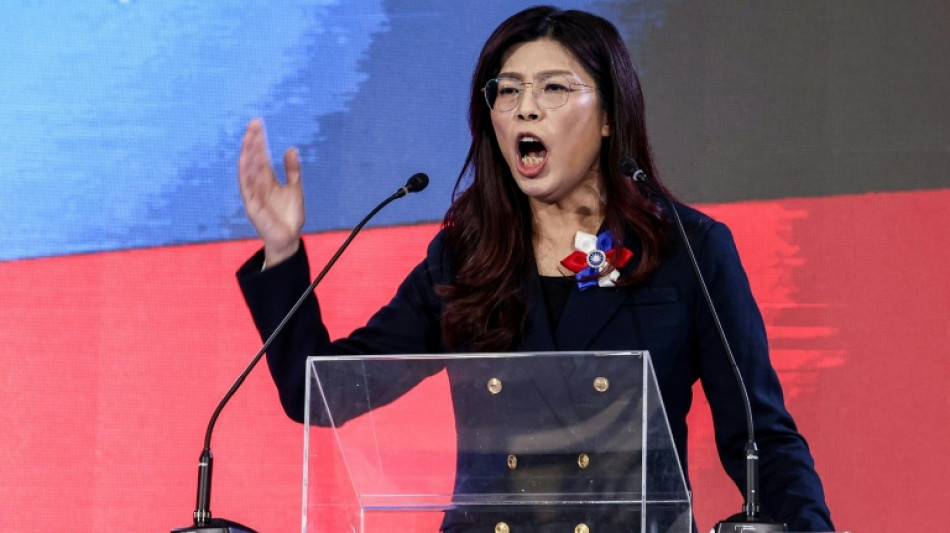
Taiwan's new opposition leader against defence spending hike / Photo: I-Hwa Cheng - AFP

 Waze rejects Malaysia's data security claims after civil servant ban
 'Call of Duty' seeks to win back fans with warfare spectacle

 Volvo Cars shares plunge on losses, job cuts
 France braces for new protests as Macron seeks to restore order

 Kering shares tumble as Gucci fails to reassure investors
 West Bank attack wounds 5 as Israel PM cancels events
 Ahead of APEC summit, Trump comes knocking on Kim's door
 Emergency nurseries rescue DR Congo's Ebola orphans

 Bezzecchi tops Australian MotoGP practice as wallaby hops onto track
 Under-threat Ospreys bet on new ground and Australian 'stardust'

 India stirs up its gastronomy with French cooking schools

 Williams, Santos lead Bears over Patriots

 China's first AI film hits cinemas but ticket sales lag

 Barcelona aiming to put Real Madrid out of sight in Clasico

 Taiwan shuts down as Typhoon Champi approaches
 370 books in 20 months: S.African author defends her use of AI
 76ers rally to stun Cavs in James's first home game for Philadelphia
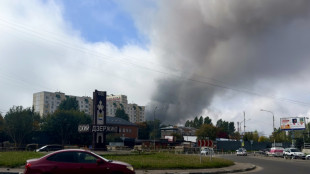 How are Ukraine strikes, Mideast war driving US fuel prices?

 Colombia's Indigenous Guard up in arms over new president's agenda

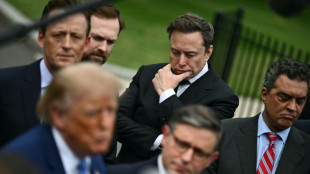 From tech giants to anonymous nonprofits, the biggest donors in US midterms
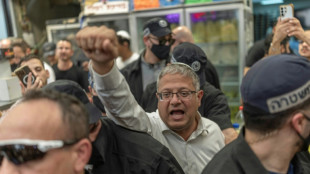 Israel's far-right Ben Gvir seeks new ground in election
 Trump slams NBA's LeBron James for national anthem actions

 Australia sanctions North Koreans over 'fraudulent' IT work, cybercrime
 UK singer-songwriter Raye wins Mercury Prize for second album

 Antonelli needs ‘perfect weekend’ to realise title dream

Taiwan can't afford to hike its defence budget to more than three percent of GDP, the new leader of the democratic island's biggest opposition party told AFP, which could derail the government's spending plans.
The Kuomintang party (KMT) controls parliament -- and the government's purse strings -- with the help of the Taiwan People's Party, and has close ties with China.
Taiwan president Lai Ching-te, who leads the Democratic Progressive Party (DPP), aims to boost defence spending to more than three percent of GDP next year and five percent by 2030, following US pressure to spend more on protecting itself against a potential Chinese attack.
China claims Taiwan is part of its territory and has threatened to use force to bring the island under its control.
"The US' expectations far exceed what we can reasonably afford," Cheng Li-wun, 55, told AFP in an interview before formally taking up the KMT chair post on Saturday.
"Taiwan isn't an ATM -- we really don't have that much money," she said.
"We certainly have the determination to defend Taiwan, but it's not a blank cheque. That's why I said we must have a reasonable defence budget."
Lai's government has proposed NT$949.5 billion (US$31 billion), or 3.32 percent of GDP, for defence spending next year.
It is also plans to seek up to NT$1 trillion in special funding to upgrade the island's air defence systems and increase capacity to produce and store ammunition for wartime.
The spending proposals need parliamentary approval before they can take effect.
The opposition-controlled legislature cut the 2025 general budget and froze some defence spending.
It is unclear how many KMT lawmakers in the parliament support Cheng's views, but she insists it is the "vast majority" of the party.
Outgoing KMT chair Eric Chu said previously the party supported increasing defence spending to more than three percent of GDP, but opposed Taiwan buying US weapons and equipment to resolve its trade deficit.
The United States severed formal diplomatic ties with Taiwan in 1979 in favour of China, but it remains the island's biggest arms supplier.
Cheng accused Lai of pushing Taiwan towards a potential war in which the island would be the "biggest loser".
- 'Pointless arms race' -
"If cross-strait relations are peaceful and stable, we don't need a pointless arms race," Cheng said, insisting dialogue with Beijing was the best option.
China severed high-level communications with Taiwan in 2016 after Lai's predecessor Tsai Ing-wen, also a member of the DPP, took power.
The dispute between China and Taiwan dates back more than 75 years to the Chinese civil war. Chiang Kai-shek's nationalist forces were defeated by Mao Zedong's communist fighters and fled to Taiwan.
Cheng said the "status quo" between Taiwan and China "cannot remain unchanged forever" and that there will inevitably will be a "process of change".
"What we are working hard for now is to prevent it from escalating into war, but rather towards reconciliation and peace," she said, adding she is willing to meet with Chinese President Xi Jinping.
Cheng began her political career in the DPP before switching to the KMT in 2005. She was the only female candidate in the October 18 elections, which were tarnished by allegations of Chinese interference.
Xi sent a congratulatory message to Cheng after her win and called on both sides to "advance national reunification".
After losing three presidential elections in a row, Cheng said the KMT "cannot afford to lose again" in 2028.
A.AlHaj--SF-PST