14 dead as coalition bombs Yemen after UAE attack

 All contenders for UN chief receive veto: diplomat

 UN climate panel fails to agree date for global warming update: envoy

 Stocks struggle to bounce back from AI angst-fueled rout

 Clashes grip Tirana as Albanian PM blames 'foreign hands'

 End of a dynasty? Dodgers digest playoff drubbing

 Troyes sack sporting director Blanchard amid sexism claims

 Trump's new press secretary out after less than week

 EU backs Ukraine on Starlink, but can't fill gap

 Itauma coming to terms with Hrgovic heavyweight loss

 NBA tells sportsbooks to ban certain bets and parlays: report

 US influence, AI and mistrust cloud Alberta independence vote

 Pant, Bumrah named in India Test squad for New Zealand tour

 Coen brothers say they plan to make film together again

 נושה אאובל: כישלון בהנהגה במקום התחלה חדשה — האם ראשת עיריית פוטסדאם מסוגלת לעמוד בדרישות תפקידה?
 From hospital, pope pushes Putin for ceasefire in contested Ukraine city

 بلدية دبي وإعمار تتعاونان لتوسيع العروض التجارية وفرص الاستثمار

 موعد مباراة الزمالك والجيش الرواندي والقنوات الناقلة

 سامانا تستثمر أربعة مليارات درهم في مشروع بجزر العالم في دبي

 قائد الناتو في أوروبا يستبعد هجوماً روسياً مباشراً على الحلف

 إي إف جي هيرميس الإمارات تبدأ خدمات صناعة السوق في سوق أبوظبي

 الإمارات تعرض جهودها لتعزيز الأمن الصحي واستئصال شلل الأطفال

 مصر تستهدف تأهيل 100 مليون متعلم ضمن خطتها حتى 2030

 مصر وتايلاند تبحثان توسيع الاستثمارات والتعاون الصناعي المشترك

 بريطانيا تسعى لجذب المقر الرئيسي لمجموعة يو بي إس إلى لندن

 قيادة إماراتية جديدة في صندوق النقد تعكس حضور الكفاءات الوطنية

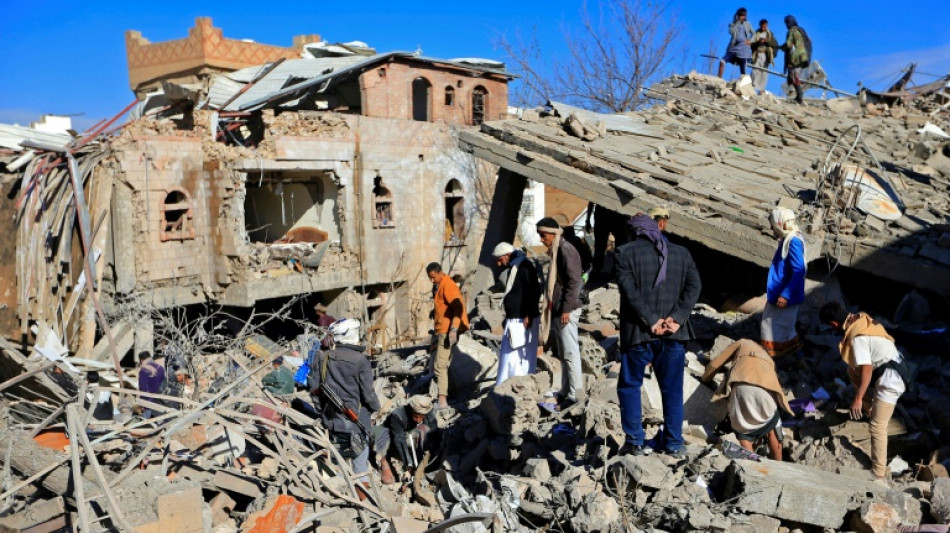
The Saudi-led coalition killed 14 people in air strikes on Yemen's rebel-held capital, a medical source said Tuesday, after an attack by Huthi insurgents on the United Arab Emirates sent regional tensions soaring.
Sanaa residents were combing the rubble for survivors of the strikes that levelled two houses, hours after the Huthis had killed three people Monday in a drone and missile attack on the UAE capital Abu Dhabi.
Huthi Brigadier General Abdullah Qassem Al-Junaid, director of the rebels' air force academy, was killed along with family members, the rebels' Saba news agency said.
Coalition forces launched further strikes on Sanaa on Tuesday.
"The search is still going on for survivors in the rubble," said Akram al-Ahdal, a relative of several of the victims.
The UAE, part of the Saudi-led coalition fighting the Iran-backed rebels, had vowed a tough response to Monday's attack, the first deadly assault acknowledged inside its borders and claimed by the Yemeni insurgents.
The attack on the renowned Middle East safe haven of UAE, which opened a new front in the seven-year war, followed a surge in fighting in Yemen including battles between the rebels and UAE-trained troops.
Crude prices soared to seven-year highs partly because of the Abu Dhabi attacks, which exploded fuel tanks near storage facilities of oil giant ADNOC. The Huthis later warned UAE residents to avoid "vital installations".
Yemen, whose nearly seven-year-old war has killed hundreds of thousands, occupies a strategic position on the Red Sea, a vital conduit for oil from the resource-rich Gulf.
After the attacks, Saudi Arabia's de facto ruler, Crown Prince Mohammed bin Salman, and Abu Dhabi Crown Prince Mohamed bin Zayed agreed in a phone call to "jointly stand up to these acts of aggression", UAE state media said.
- 'No end in sight' -
The Abu Dhabi attack marked a new phase in the Yemen war and further reduced hopes of any resolution to the conflict, which has displaced millions in what was already the Arabian peninsula's poorest country.
The United States pledged to hold the Huthis accountable, while Britain, France and the European Union also condemned the assault.
The targeting of Abu Dhabi followed intense clashes in Yemen, including advances by the UAE-trained Giants Brigade, who drove the rebels out of Shabwa province.
The defeat dealt a blow to the Huthis' months-long campaign to capture neighbouring Marib, the government's last stronghold in the north.
Earlier this month, the Huthis hijacked the UAE-flagged Rwabee in the Red Sea, charging that it was carrying military equipment -- a claim disputed by the coalition and the UAE.
The ship's 11 international crew are being held captive.
Yemen's civil war began in 2014 when the Huthis seized the capital Sanaa, prompting Saudi-led forces to intervene to prop up the government the following year.
The conflict has been a catastrophe for millions of its citizens who have fled their homes, with many on the brink of famine in what the UN calls the world's worst humanitarian crisis.
The UN has estimated the war killed 377,000 people by the end of 2021, both directly and indirectly through hunger and disease.
"There is no end in sight for the Yemen war," Elisabeth Kendall, a researcher at the University of Oxford's Pembroke College, told AFP.
"Rather, the conflict is escalating and new fronts are opening up, both domestically and now regionally."
O.Salim--SF-PST