Nepal's former energy minister arrested in graft probe / Photo: PRAKASH MATHEMA - AFP

 Spanish wildfires intrude on holidaying foreign visitors
 France and Spain battle 'unpredictable' wildfires as 300,000 evacuated
 Taiwan's Chou Tien-chen snatches China Open title at age 36
 Ramsay-Peaty bounces back at Commonwealth Games after tearful outburst
 Iran says halts Middle East attacks as US holds fire
 Wildfires overwhelm exhausted firefighters in France and Spain
 Urgent search for suspect after deadly attack near Berlin Pride
 D-Day beaches inscribed on UNESCO World Heritage List
 As Zimbabwe's raw lithium ban pays off, ambitions grow
 German manhunt after deadly car ramming near Berlin Gay Pride
 Vienna's venerable vineyard taverns forced to move with the times
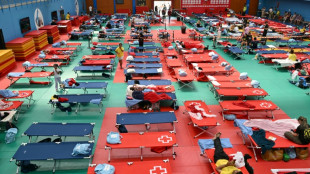
 Thousands crowd shelters as wildfires force exodus in France, Spain
 Burnham offers sweeteners, hopeful vibes in first week as UK PM
 'The Odyssey': Christopher Nolan's latest cultural phenomenon

 'Star Trek' celebrates 60th anniversary at Comic-Con
 Merz vows justice after deadly car attack near Berlin Gay Pride event
 Merz vows justice after deadly car attack near Berlin Pride event
 Hiltz extends US 1,500 streak, Lyles advances in 200
 'Difficult night' as France, Spain fires intensify again
 Beaten Ramsay-Peaty casts doubt on future as Australia rule Commonwealth pool
 Ramsay-Peaty beaten into bronze as Australia's Williamson wins Commonwealth gold
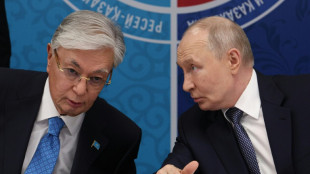 Kazakh leader tells Putin war should end, Ukraine launches fresh strikes
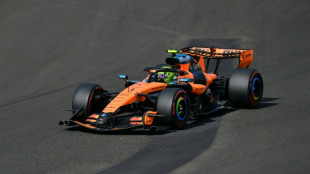
 Madeleine McCann's brother targets Olympic dream after Commonwealth final
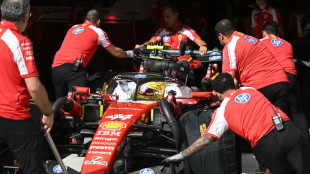 Hamilton, Antonelli stung by grid penalties at Hungarian GP
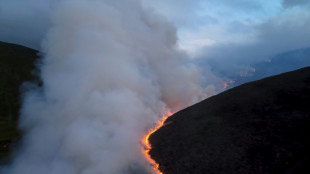 Scotland declares 'major' wildfire in Cairngorms national park
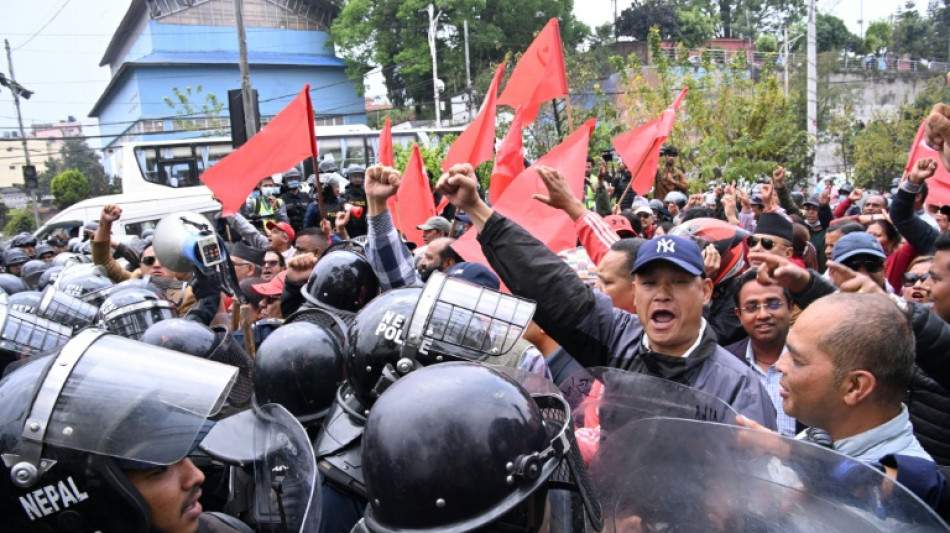
Nepal's former energy minister was arrested Sunday in a money laundering investigation, police said, the latest in a series of high-profile detentions that has included the ex-prime minister since the new government took power.
The announcement came two days after Prime Minister Balendra Shah was sworn into office, following a landslide victory for his party in the first elections since a deadly 2025 anti-corruption uprising ousted ex-premier KP Sharma Oli.
In pre-dawn raids on Saturday, Oli and former home minister Ramesh Lekhak were arrested for their alleged roles in a crackdown on the protests that killed at least 76 people.
Ex-energy minister Deepak Khadka was detained on Sunday "in a case relating to money laundering", Central Investigation Bureau spokesman Shiva Kumar Shrestha said.
Home Affairs Minister Sudan Gurung, a key figure in the protests, said Khadka had been detained "in connection with the investigation of the money recovered from his residence" during last year's unrest.
At the time, Khadka's home was torched, and videos on social media showed protesters throwing cash, found inside, into the air.
- 'Beginning of justice' -
The arrests of Oli and Lekhak came after an inquiry commission recommended that the four-time premier and other officials be prosecuted for failing to stop security forces from firing on demonstrators.
The unrest in early September began over a brief social media ban, but tapped into longstanding fury over economic hardship.
It spread nationwide the following day as parliament and government offices were set ablaze, resulting in the collapse of Oli's government.
Police barricaded roads on Sunday to hold back Oli's supporters near a court in the capital Kathmandu where he and Lekhak had been expected to appear for a hearing.
Neither man has been charged, and both deny responsibility for the violence.
Oli's CPN-UML Marxist party has called the arrests "a revengeful act" and has called for protests.
Gurung, the home minister, said Oli's and Lekhak's arrests were "not revenge against anyone, just the beginning of justice".
- 'Negligent conduct' -
Before the March 5 polls, Oli, who was seeking re-election, told AFP that he blamed "infiltrators" for the violence.
The inquiry commission's report said it was "not established that there was an order to shoot", but added that "no effort was made to stop or control the firing and, due to their negligent conduct, even minors lost their lives".
Police say Oli, 74, who has had two kidney transplants, has heart and kidney issues. AFP reporters saw him being taken to hospital on Saturday after his arrest, surrounded by a heavy police guard.
Prime Minister Shah, a 35-year-old rapper-turned-politician, and his Rastriya Swatantra Party swept to power on a platform of youth-driven political change.
He challenged and defeated Oli in his own constituency.
Shah's government has unveiled an ambitious 100-point reform agenda including investigations into the assets of politicians and high-ranking state employees.
Before the uprising, Nepal ranked 107th out of 180 countries on Transparency International's Corruption Perceptions Index.
The World Bank says a "staggering" 82 percent of Nepal's workforce is in informal employment, with GDP per capita at just $1,447 in 2024.
A.AlHaj--SF-PST