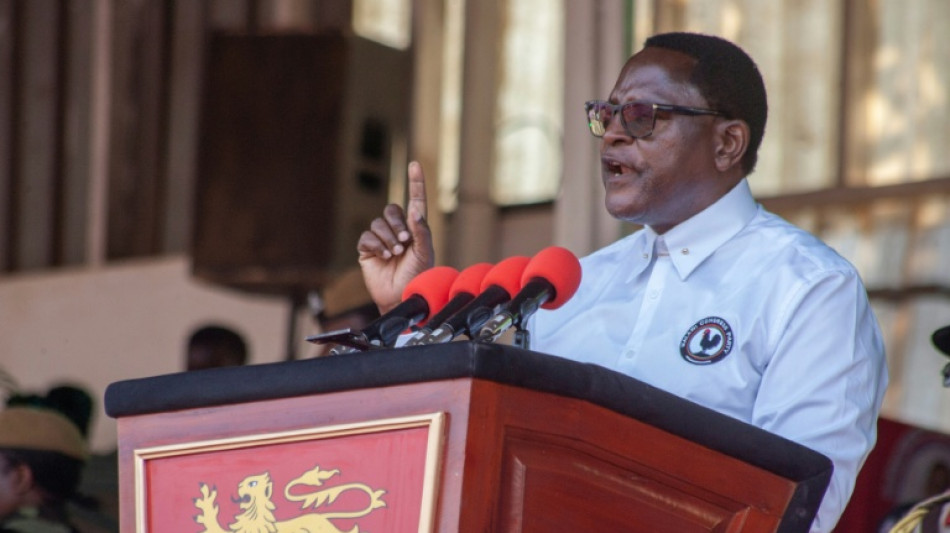
Malawi election a battle of two presidents / Photo: Amos GUMULIRA - AFP

 Alexander Skarsgard and his viral 'Wicker' transformation
 Thousands protest in Turkey over journalists' arrests, media shutdowns
 Man City beaten by Aston Villa to end perfect Premier League start

 Luis Enrique says PSG unbothered by Lyon match switch
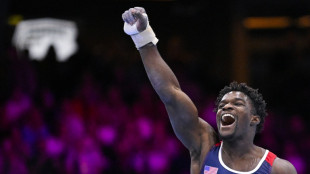 US gymnast Richard wins floor exercise gold at worlds
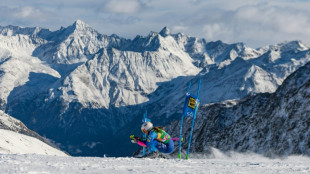 Moltzan upstages Shiffrin to win season-opening World Cup giant slalom
 Infantino says backed by 'vast majority' in bid for re-election

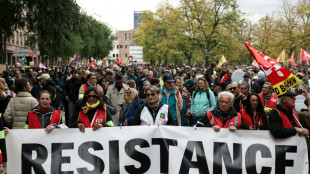
 Police fire tear gas as new French protests kick off
 Police fire tear gas as new French demonstrations kick off
 Tropical Storm Champi nears China after battering Taiwan, Japan
 'Weeks, not days' in Kompany recovery, say Bayern

 Unfair to compare us to Barca: Real Madrid's Mourinho

 North Korea's Kim makes unannounced visit to Chinese border city

 Fire breaks out at Hitler's mountain retreat, suspect arrested
 Marc Marquez wins Australian sprint as Martin crashes out
 North Korea's Kim calls for training world's 'strongest' military

 Brewers edge Rays to capture World Series opener

 France to deploy 70,000 police for fresh weekend protests
 Tatum delivers as Celtics down winless Knicks
 Romantasy fans ready for sleepless night as 'Court of Thorns and Roses' returns
 De Goede hat-trick as Canada defeat England again
 Rubio urges Cubans to work with CIA, but warns: be discreet

 Leclerc tops times for Ferrari in practice for US Grand Prix
 Lula, Bolsonaro lock horns in final debate before Brazil vote
 Poulter and Hatton leave LIV Golf
Malawi votes Tuesday in the third bout of a battle for power between two presidents, incumbent Lazarus Chakwera and his predecessor, Peter Mutharika.
First-time candidate and former Reserve Bank governor Dalitso Kabambe could become a deciding factor should the race move to a second round, as is widely expected.
Here are short profiles of the three:
- Chakwera, second term? -
A charismatic former evangelical preacher who says he was called by God to govern his country, Chakwera's first term has been overshadowed by climate-linked disasters and economic crisis.
The leader of the country's oldest party, the Malawi Congress Party (MCP), he strode past Mutharika to first take office in 2020 with around 59 percent of ballots.
The vote was a rerun after the nullification of the 2019 "Tippex Election" in which courts upheld opposition claims that correction fluid was used to alter vote tallies. Mutharika had been narrowly ahead in the first take.
Chakwera lost his first duel against Mutharika in 2014, afterwards taking a seat in parliament as leader of the opposition.
Born in a village with no electricity or running water, the 70-year-old has degrees in philosophy and theology, and studied in Malawi, South Africa and the United States.
He is a strong orator with an inclusive leadership style but has been accused of failing to tackle incompetence and corruption in his administration.
His campaign has urged voters to not "Stop the Progress" of his first term, during which several road, school and hospital construction projects were undertaken.
- Mutharika, a comeback? -
The reserved 85-year-old leader of the Democratic Progressive Party (DPP) is a former Washington law professor, who was first voted in as president in 2014.
With law degrees from the University of London and Yale, Mutharika worked as a constitutional law expert at Washington University, returning to Malawi in the early 1990s to help draft its first democratic constitution.
Following another stint in the United States, he came back in 2004 when his brother, Bingu wa Mutharika, was elected president, and became his right-hand man. He was elected to parliament in 2009 and went on to head several ministries.
After Bingu died in office from a heart attack in 2012, Peter was accused of attempting to conceal his death for two days in an alleged bid to secure the job for himself and prevent the vice president from taking over.
He narrowly won his first stint in power with just over 36 percent of votes and the term was dominated by food shortages, corruption scandals and ballooning national debt.
Running on a platform of a "return to proven leadership", Mutharika has promised to revive the struggling economy, including by challenging mismanagement.
"This country is in big trouble," Mutharika told a weekend rally. "I agreed to return because I want to change the way the country is run," he said.
- Kabambe, a kingmaker? -
Kabambe, 51, headed the Reserve Bank of Malawi from 2017 to 2020, afterwards starting out in politics in the DPP and later defecting to the United Transformation Movement.
With a calm and professional demeanour, Kabambe holds a PhD in development economics from the University of London and has spent more than two decades in government economic branches.
He presents himself as a technocratic outsider capable of transforming the economy, including by decentralising governance, establishing state-run development corporations, and expanding agriculture and manufacturing.
Trailing a distant third in the latest opinion poll, Kabambe has credibility among policymakers but allegations of graft and money laundering from his time as governor have marred his public image.
N.Awad--SF-PST