NGOs caught between juntas and jihadists in turbulent Sahel / Photo: FANNY NOARO-KABRÉ - AFP/File

 UK PM calls for 'honest discussion' about EU free movement

 Far-right leader Le Pen kicks off tilt at French presidency amid nationwide protests

 Naomi Osaka could quit tennis if daughter asks her to

 Last MotoGP race at Phillip Island cancelled due to weather in Marquez setback

 Sri Lanka seeks faster green energy shift after oil shocks
 Riyadh airport resumes flights following Houthi attacks

 'Call of Duty' North Korea invasion edition tops sales charts in South
 Musk accuses Ukraine of violating Starlink's terms of service
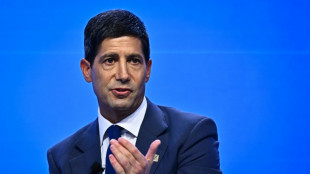 Fed expected to hold rates steady days ahead of US midterms

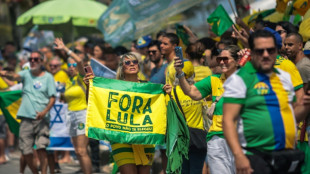 More Lula, or back to the Bolsonaros? Brazil votes in cliffhanger
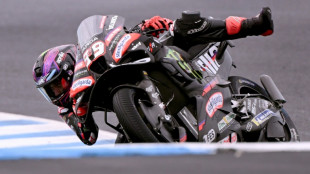 Jorge Martin out of Australian MotoGP with fracture: team
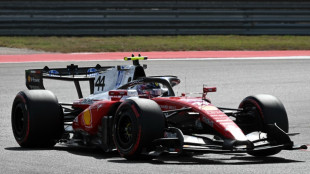
 Antonelli storms to US Grand Prix pole on weekend he can take title

 Apologetic Alvarez fires Atletico to win against Deportivo

 Lens beat PFC in Ligue 1 matchday impacted by social unrest

 Valkyries hit back against Dream to level WNBA Finals

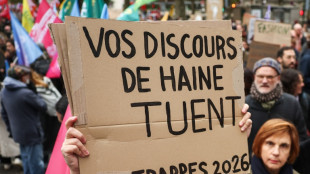
 'Fighting for our rights': Paris protesters determined to march on
 Clashes break out in Paris, other French cities amid fresh protests
 Spurs seal rare win at Chelsea as Palmer sees red

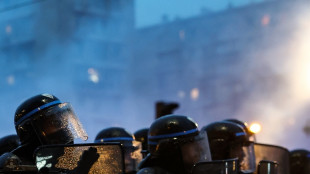 Nearly 1,000 arrested in French protests marred by 'elevated' violence: minister
 France extends detention of suspected racist shooter

 Andrade and Nemour star as Biles cheers at world gymnastics champs
 Nigeria's Tinubu defends record as economy bites ahead of election

 'Guiding star' Fuellkrug bags Bremen brace, Leipzig win
 Man City's perfect start ended by Aston Villa, Arsenal go joint-top

 Arsenal sink Everton to join Man City at Premier League summit
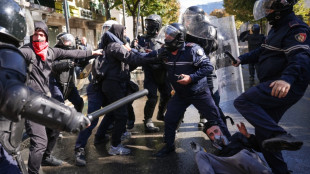
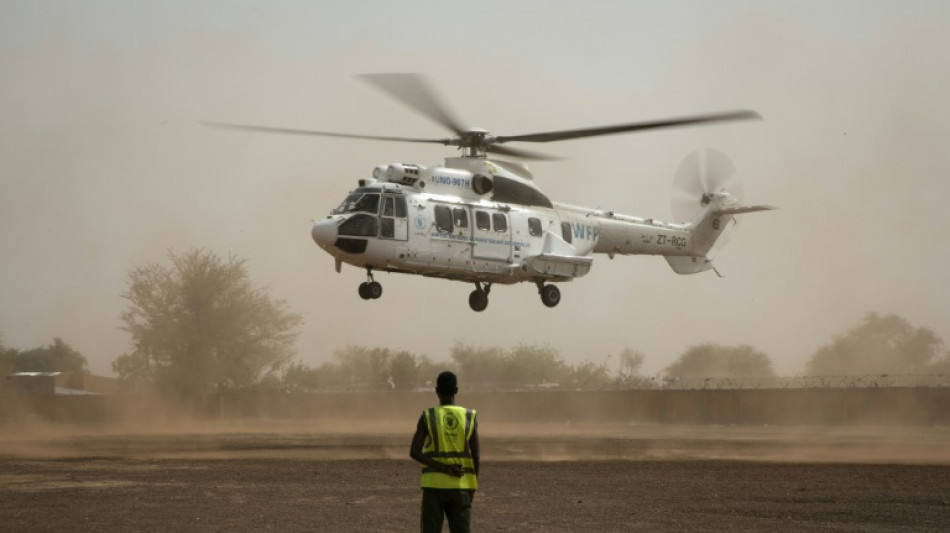
NGOs in the violence-wracked Sahel region are dangerously caught between military juntas who accuse them of being spies, and jihadists who view them as symbols of Western influence.
In the world terror epicentre, nearly 30 million people rely on humanitarian aid provided by non-governmental organisations and international bodies.
"The need is mostly concentrated in the central Sahel" in junta-led Mali, Burkina Faso and Niger where assistance is critical to nearly 15 million people, according to the United Nations humanitarian agency, OCHA.
Since seizing power, the juntas have made sovereignty and the fight against jihadists their priority, leaving NGOs and organisations that receive funding from abroad under increased pressure.
In Burkina Faso, 21 NGOs had their permits to operate in the country revoked in the space of just one month between June and July, for what the authorities said were administrative reasons.
Ten other associations were suspended for three months.
"It's a tough blow but we are working to comply with legal requirements. For now, our activities are suspended," a member of one of the associations told AFP.
In neighbouring Mali, NGOs financed or supported by former colonial power France, with whom the junta has cut ties, have been suspended since 2022.
The military-led authorities also plan to impose a 10-percent levy on funding for NGOs and associations to use for Mali's "economic, social, environmental and cultural development", according to a draft law seen by AFP.
- 'Subversion missions' -
Niger's junta has ordered NGOs to align their activities with its priorities, which it says are bolstering security, developing production centres to boost the economy and promoting good governance.
In November, it withdrew the operating licences for French aid group Acted and a local association, Action for Wellbeing (ABPE).
Interior Minister General Mohamed Toumba declared two months later that "many NGOs" in Niger were carrying out "subversion missions" through "support they often provide to terrorists".
Then in February, the International Committee of the Red Cross was ordered to leave the west African country, where it had worked since 1990, accused of "collusion with terrorists".
As they come under pressure from the juntas, NGOs must also contend with attacks by jihadist groups affiliated with Al-Qaeda or the Islamic State group, who see them as a threat to their power and ideology.
The Sahel region was the epicentre of global "terrorism" for the second straight year in 2024, accounting for more than half of deaths put down to terror attacks worldwide, according to the Global Terrorism Index.
At least 26 humanitarian workers were killed in the Sahel last year and many more wounded and kidnapped in 116 security incidents, OCHA said.
"Our operations are now limited to a few cities. To transport staff or supplies, for example, we prefer air transport, which generates extra costs at a time when we are struggling to mobilise resources," a Burkinabe humanitarian worker, speaking on condition of anonymity due to security concerns, told AFP.
"Many NGOs are now present on the ground thanks to their local staff, which minimises risks," a Nigerien NGO worker said.
- 'Supplant the state' -
In October, Doctors Without Borders (MSF) stopped working in the large northern Burkinabe town of Djibo, which is surrounded by jihadists, following attacks targeting its health centres and offices.
A few years earlier the medical charity had been forced to leave the southeast Nigerien town of Maine Soroa near the border with Nigeria due to raids by Boko Haram jihadists in August 2020.
"NGOs are targeted because extremist groups are seeking to establish themselves as legitimate alternative authorities," said Charlie Werb, an analyst at risk advisory company Alert:24.
"They want to supplant the state, which means not only pushing out the state itself from territory, but also organisations deemed to be providing services on its behalf," he told AFP.
The Group for the Support of Islam and Muslims, known by its Arabic initials JNIM, an Islamist outfit affiliated with Al-Qaeda that is active in Mali, Niger and Burkina Faso, "has stated that it will only allow NGOs to operate in areas under its control so long as they don’t carry out activity that goes against their religious principles", Werb said.
NGOs have had armed escorts imposed on them by the juntas purportedly to ensure their safety, but humanitarian workers believe the move is mostly designed to keep track of their activities.
"Conducting our activities under military escort can hinder our actions and expose us to one of the belligerents," the Burkinabe aid worker said.
bur-lar-bh-bdi/ldp/lp/bam/kjm/gv
I.Saadi--SF-PST