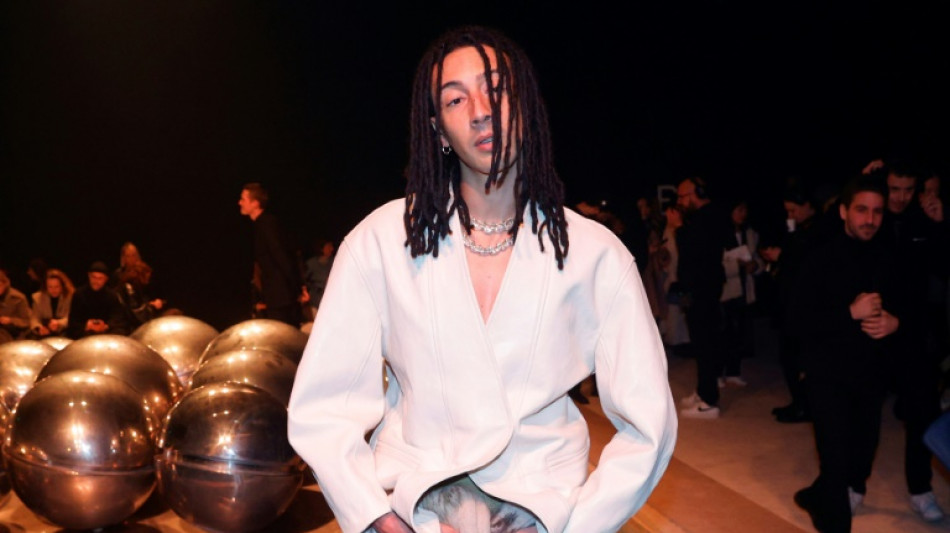
True Italians: the children left waiting for citizenship / Photo: Geoffroy VAN DER HASSELT - AFP

 Man City chief Soriano slams Premier League 'conspiracy theory'
 Hurricane Polo sweeps over Mexico's Pacific coast
 Man City must be relegated after guilty verdict says club's former chairman

 German far-right aims to lead Saxony-Anhalt govt in December
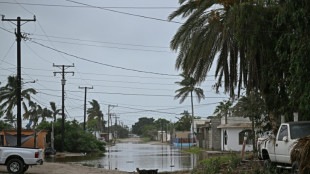 Little damage as Hurricane Polo sweeps over Mexico's Pacific coast
 Manchester City guilty of breaking financial rules - Premier League
 FIFA boss Infantino blasted as would-be 'emperor' by UEFA's Ceferin

 Stocks move lower despite oil prices dropping
 AI driving up innovation investment: UN

 UN Security Council extends Haiti mission by 6 months
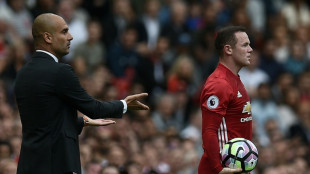 Man Utd do not deserve medals if Man City stripped of titles: Rooney

 Vana Completes Expanded Staking as Part of the Vega Upgrade, Publishes Expanded VANA Token Economics
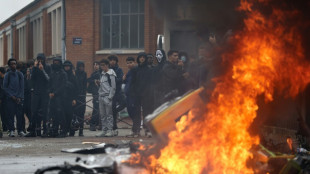
 Spain to cap gas price hikes, extend fuel discounts

 'We just need rain': Germany's Rhine river hits new low
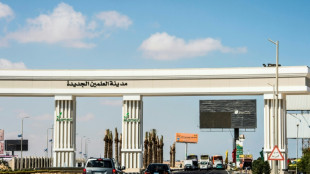
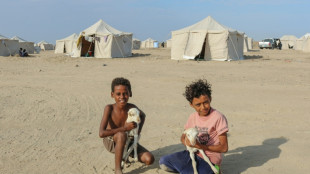 Yemen health system at 'breaking point': WHO

 Ireland undecided on second Israel match: coach
 France's Le Pen defiant after top ally hit by antisemitism claims
 Tom Cruise trades stunts for satire as toxic tycoon 'Digger'
 MEXC Unveils "WE SEE YOU" Brand Visual Refresh, Putting People Behind Every Trade in Focus
 Thai capital cleans up after deadly floods
 NATO, EU allies rally to Estonia after 'sabotage' blamed on Russia
 Families demand justice for Cameroon's 'nightmare' wave of murdered women

 Tebas says Man City should face 'most severe' sanctions if guilty of rule breaches
 Pochettino calls Man City success 'a period of deception'

 Settler attack on West Bank village injures Israeli forces, drawing rare rebuke

When rapper Ghali sang "I'm a true Italian" to 10 million television viewers last month, he spoke for hundreds of thousands of people born to immigrants in Italy who struggle to obtain citizenship.
The 30-year-old musician, born in Milan to Tunisian parents, sang a version of Toto Cutugno's global hit "L'Italiano" (The Italian) at the Sanremo music festival, one of the biggest cultural events in Italy.
In doing so, Ghali -- who was naturalised only at 18 -- put the issue of the so-called "New Italians", as second-generation immigrants are often known, centre stage.
Italy has one of the toughest citizenship regimes in Europe, with children born in the country to foreign parents unable to apply for an Italian passport until they are 18.
They have only one year to apply under a streamlined system, otherwise they must enter a costly and lengthy process, during which time they are left in limbo.
"I feel Italian, I went to school here, Italian is the language I speak every day but I wasn't a true Italian by law until I was 24, when I obtained citizenship," said Daniela Ionita.
Now a spokeswoman for campaign group Italians Without Citizenship, she describes the failure to allow children to become citizens as "psychological violence".
But she has little hope of a change in the law under the current hard-right government of Prime Minister Giorgia Meloni, whose deputy, Matteo Salvini, regularly rails against immigration.
- Blood ties -
Italy has long been a country of emigration, not immigration, and has taken an approach to citizenship that helps maintain ties with this wide diaspora.
Nationality is based on blood ties, granted to those born to or adopted by Italian citizens.
Foreigners can obtain citizenship, most easily if they have Italian relatives or marry an Italian, but for most it is a long and difficult path.
"The law on access to citizenship in Italy is one of the toughest in Europe," notes demographer Salvatore Strozza.
Children born and raised in Italy have no innate right to citizenship, except in rare cases where their parents are unknown or stateless.
They must wait until they become adults to apply, and then submit their application for citizenship between the ages of 18 and 19, with proof of uninterrupted residency in Italy.
If they miss that window, it becomes a complex bureaucratic process, which can take at least three years.
"It's the longest administrative procedure in Italy," said immigration lawyer Antonello Ciervo.
"An Argentine who has an Italian grandfather will be naturalised faster than a person born in Italy to foreign parents," he told AFP.
For children who arrived in Italy at a young age, they must also wait until they are adults to secure citizenship, in the same way as other "foreigners".
Someone born in a non-EU country must show 10 years of residency -- compared with four for those born inside the bloc -- and prove they have the means to support themselves.
At least 860,000 people born in Italy to foreign parents are currently eligible for naturalisation, of whom 95 percent are aged under 18, according to national statistics agency Istat.
- Failed reform -
Previous attempts to reform the current system, which dates to 1992, have failed -- the most recent in 2022, just before Meloni took office.
Her far-right Brothers of Italy party is opposed to granting citizenship to those born here to foreign parents -- and some members have raised the spectre of "ethnic replacement" of Italians by migrants, a concept promoted by white supremacists.
Meloni has focused instead on raising the birth rate in Italy, which has an ageing population.
Since her coalition came to power, several groups agitating for reform have paused their efforts.
"We are afraid that our efforts will be in vain or worse, that the naturalisation process will be lengthened" by the introduction of stricter checks, said Ionita.
"While waiting for a change in government, we are trying to change mentalities at a cultural and community level," she added.
Some progress has been made on this front -- Bologna, a bastion of the political left, in 2022 became the first commune to grant symbolic citizenship to all those born or raised in the northern Italian city.
"First we need to change the concept of who is an Italian within society, and then we can look to a change at the political level," added Deepika Salhan, a member of another campaign group, "On the right side of history".
K.AbuDahab--SF-PST