
Backlash at UK government's new extremism definition / Photo: HENRY NICHOLLS - AFP

 Euro-Area Growth Slows to 0.4% While Employment Stalls

 UK Economy Grows 0.7% in Third Quarter as Services Lead Expansion

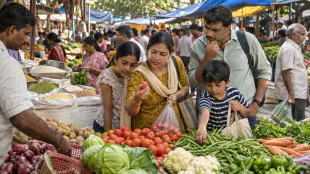 India's Retail Inflation Reaches 6.09% as Food Prices Accelerate

 China's October Activity Data Reveal a Weak Start to the Fourth Quarter

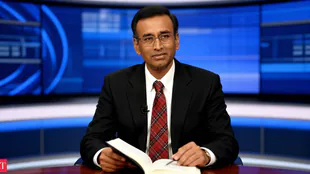 Nobel Laureate Venkatraman Ramakrishnan’s Journey from Academic Setbacks to Scientific Triumph
 استقرار أسعار الذهب مع ترقب المستثمرين لقرارات الفائدة الأمريكية
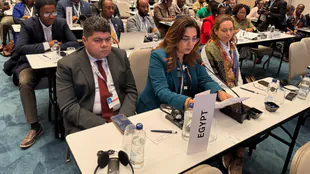
 Kuwait and Egypt Sign Eight Agreements to Expand Strategic Partnership

 تقارير إسرائيلية تكشف عن محاولات نتنياهو وزملائه للتأثير على نتائج الانتخابات عبر استهداف الفلسطينيين

 بنك القدس يتعهد بتأمين احتياجات مرضى السكري خلال أمسية توعوية في رام الله

 AI Job Losses at NAB, Qantas, Canva and Atlassian Signal Market Shift, Not Workforce Collapse

 Owner Review: 2023 Volvo XC60 Recharge Exceeds Expectations for Calgary Driver
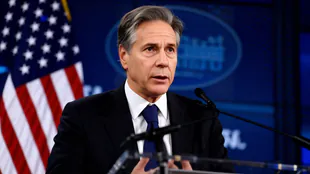
The UK government on Thursday unveiled a new definition of extremism to determine which organisations get public funds and meetings with officials, prompting criticism from civic, political and religious groups.
The change, to what ministers call a "more precise and rigorous" definition, comes two weeks after Prime Minister Rishi Sunak warned of a "shocking increase in extremist disruption and criminality" that risked "mob rule".
Sunak's comments followed months of pro-Palestinian protests in British cities that have raised questions about policing and enforcing legislation against anti-Semitism.
The marches protesting against Israel's military response to Hamas's October 7 attacks have attracted hundreds of thousands of people and seen dozens arrested for anti-Semitic chanting and banners, and other offences.
Announcing the rewording of the government's 2011 extremism definition, senior minister Michael Gove told parliament it was necessary "to protect our democratic values and enhance social cohesion".
"It is important both to reinforce what we all have in common and to be clear and precise in identifying the dangers posed by extremism," he added.
Gove rejected criticism -- including from normally sympathetic right-wing media -- that it could stifle free speech, vowing that the policy would not apply to campaigners on issues such as gender recognition and the environment.
"The government is taking every possible precaution to strike a balance... between protecting fundamental rights and safeguarding citizens," he said.
- 'Concern' -
The government previously defined extremism as "the vocal or active opposition to our fundamental values" such as "mutual respect and tolerance".
The new wording describes extremism as "the promotion or advancement of an ideology based on violence, hatred or intolerance" that seeks to achieve one of several aims.
These are to "negate or destroy the fundamental rights and freedoms of others"; to "undermine, overturn or replace the UK's system of liberal parliamentary democracy and democratic rights"; or to "intentionally create a permissive environment for others to achieve" one of the two previous aims.
Gove namechecked several UK far-right groups "whose activities we will assess against the new definition".
UK offshoots of international Islamist organisations, including the Muslim Association of Britain, as well as others such as campaigners CAGE International "give rise to concern", he said.
"We will be holding these and other organisations to account to assess if they meet our definition of extremism, and will take action as appropriate," Gove added.
CAGE, which has advocated on issues around the so-called "war on terror", and eight other groups including Black Lives Matter UK criticised the change.
They branded it "a continuation of the decades-long strategy aimed at inciting and exploiting fears against Muslims to build an authoritarian and repressive infrastructure", indicating they were exploring options to oppose it.
Qari Asim, chairman of the Mosques and Imams Advisory Board, warned it could fuel extremism and may be imposed inconsistently.
"It will be applied subjectively," he told BBC radio, adding that it risked creating "huge division in our society".
- 'Division' -
Lawmaker John Mann, the government's independent adviser on anti-Semitism, agreed that ministers should be prioritising "bringing communities together".
"The government needs to listen to people who are advising that the politics of division will not work," he told the BBC.
Archbishop of Canterbury Justin Welby on Wednesday said that there was a danger "of hollowing out the centre... and driving people to one extreme or the other", adding that this was "very, very dangerous".
Sunak's ruling Conservative party has faced claims of Islamophobia, after a former deputy chairman accused London Mayor Sadiq Khan of links to Islamists.
The prime minister has this week also been forced to apologise for reported racist comments about a prominent black British MP by one of the party's biggest donors.
Yasmine Ahmed, UK director of Human Rights Watch, seized on the Conservatives' record in her criticism of "this unnecessary and unacceptable new definition".
"There is a fair case to be made that this government could now meet the threshold of an extremist organisation," she added.
Y.Zaher--SF-PST