
'No future': West Bank village choked off amid Gaza war / Photo: Zain JAAFAR - AFP

 Euro-Area Growth Slows to 0.4% While Employment Stalls

 UK Economy Grows 0.7% in Third Quarter as Services Lead Expansion

 India's Retail Inflation Reaches 6.09% as Food Prices Accelerate

 China's October Activity Data Reveal a Weak Start to the Fourth Quarter
 Nobel Laureate Venkatraman Ramakrishnan’s Journey from Academic Setbacks to Scientific Triumph

 استقرار أسعار الذهب مع ترقب المستثمرين لقرارات الفائدة الأمريكية
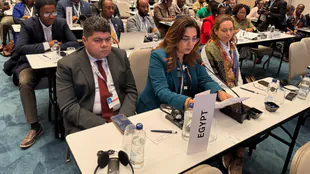
 Kuwait and Egypt Sign Eight Agreements to Expand Strategic Partnership

 تقارير إسرائيلية تكشف عن محاولات نتنياهو وزملائه للتأثير على نتائج الانتخابات عبر استهداف الفلسطينيين

 بنك القدس يتعهد بتأمين احتياجات مرضى السكري خلال أمسية توعوية في رام الله

 AI Job Losses at NAB, Qantas, Canva and Atlassian Signal Market Shift, Not Workforce Collapse

 Owner Review: 2023 Volvo XC60 Recharge Exceeds Expectations for Calgary Driver

Once a bustling Palestinian town with sought-after restaurants and auto mechanics, Huwara in the occupied West Bank has been hit hard by the fallout from Hamas's October 7 attack.
The forced closure of businesses and construction of a new bypass diverting traffic from the town of about 7,000 people has choked off economic activity, driving merchants to despair.
"Huwara, it's over. There is no future," butcher Nidal Jbour told AFP this week, standing in front of the bloody carcasses of cows and sheep hanging from hooks.
His shop is located on Route 60, which crosses from north to south through the centre of town.
Like around 500 other traders located along the road, Jbour had to close his shop after October 7 on the orders of the Israeli army, which also blocked access to the town.
The decision was explained as a necessary response to security fears stemming from the Hamas attack as well as past episodes of violence between Huwara residents and Israeli settlers living in the surrounding hills.
While the traders were gradually allowed to reopen after three months, business is nowhere near pre-war levels.
- 'Vital artery' blocked -
The Hamas attack on southern Israel resulted in the deaths of about 1,160 people, mostly civilians, according to an AFP tally of official Israeli figures.
Israel's retaliatory military campaign in Gaza has killed at least 31,341 people, mostly women and children, according to the health ministry in the Hamas-run territory.
The West Bank, meanwhile, has also experienced a surge of violence, with the Palestinian Authority reporting at least 430 deaths at the hands of Israeli forces or settlers since the war broke out.
In Huwara, security issues related to the conflict are coupled with more parochial problems, specifically related to the construction of the new bypass -- completed at the end of last year -- that has left Route 60 a shadow of its former self.
Route 60 was previously "a vital artery", said Huwara mayor Jihad Odeh, tracing it on a map hanging in his office.
The closure of shops and the temporary blocking of the road led to "a breakdown in social and economic life", he said, and now the bypass funnels traffic elsewhere.
A journey to Nablus, the large West Bank city a few kilometres (miles) away, now takes hours because of the bypass and new checkpoints.
Movement restrictions make it difficult for farmers to access and take care of their land.
Many Huwara residents have lost work permits in Israel.
"Huwara is death!" said Jamila Hamdan, a 74-year-old in traditional dress who grazes her sheep near her house.
"Day after day, the situation is getting worse," added the mother of 12 who said she was especially frightened by settlers who "come down from the hills to shout at us and throw stones".
- Recurring violence -
Israel has occupied the West Bank since the Six-Day War of 1967.
Excluding annexed east Jerusalem, the territory is now home to around 490,000 Israelis who live in settlements considered illegal under international law.
The settlements overlooking Huwara, including one called Yitzhar, are among the most radical in the West Bank.
Violence in the area escalated after Palestinians in Huwara killed four Israelis last year, before the war broke out.
In February 2023, after two brothers from the nearby Har Brakha settlement were shot dead in their car, hundreds of settlers responded by destroying stores and burning dozens of vehicles.
Mechanic Motaz Qassrawi still has charred cars from that incident on his lot.
"There are even some that belong to them (the settlers), waiting to be repaired!" he said, explaining that settlers often rely on Palestinian mechanics.
Bashar Dmeidi, a 30-year-old who returned to Huwara in 2023 after eight years in Dubai, said he "cannot sleep at night" as settlers frequently "come to sing and dance under our windows".
"Living in Huwara, it's like dying. You're dying every day a little bit, you cannot do anything," he added.
The Israeli army has said it acts to prevent all violence by Israelis against Palestinians.
The police, for their part, told AFP they were "not aware of any complaints filed by the residents of Huwara for acts of violence".
D.Khalil--SF-PST