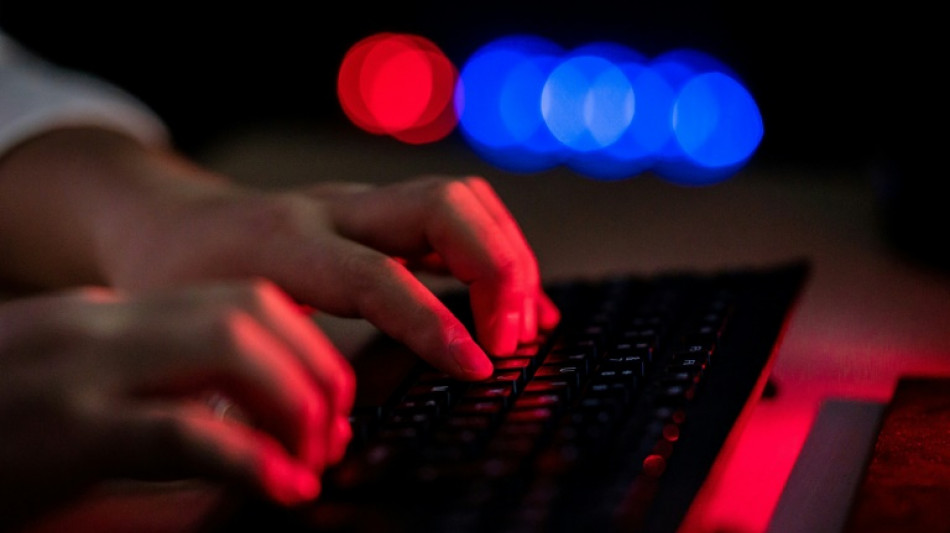
EU media freedom law approved by lawmakers / Photo: NICOLAS ASFOURI - AFP/File

 UN to hold fourth informal poll of secretary-general candidates
 Who are the Emiratis behind crisis-hit Manchester City?
 Singer Angelique Kidjo urges Africans to 'create together'
 Alleged Rihanna mansion shooter mentally fit for trial, says judge
 Mystery over UK airbase scare as police find petrol not explosives
 OpenAI unveils low-cost AI model, a day after shelving Astra upgrade
 Premier League confirms Man City guilty of serious financial breaches
 Brazil's Lula turns to Bad Bunny tune to criticise Trump ahead of polls
 Nigerian dancer eyes world record after seven-day marathon
 Swiss regulator concludes Julius Baer bank probe
 Brazil's patron saint pulled into latest election scrap

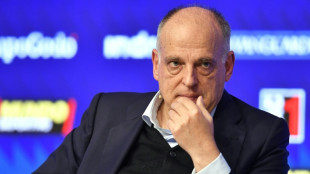
 Football overload leaves players near 'breaking point', warns Tebas
 Paris Eiffel Tower says chief to step down after uproar over removing women staff
 Amaze Holdings (NYSE: AMZE) Executes Binding LOI to Acquire BullionFX | Alchemy, a Decentralized Gold-Backed Financial Ecosystem for Valued at US$155 Million
 Clashes between French teens, police as school blockades intensify
 Stocks move sideways despite oil moving lower
 African leaders to gather in Egypt for business summit
 UK decides against charging foreign visitors for museums

 Dallaglio to sell England World Cup winners' medal
 Brazil come from behind to beat Australia 4-2 in friendly

 Ruthless An retains Asian Games badminton crown as Kunlavut triumphs

 Alonso to stay with F1 team Aston Martin in 2027
 China badminton 'still strong' despite Asian Games slump
 'Exceptional' Turner painting shown in Rome before sale
 European stocks climb as oil dips
The EU is set to better protect journalists from political pressure and surveillance under an unprecedented media freedom law approved by the European Parliament on Wednesday.
The law includes protections for the secrecy of journalists's sources and a ban on using spyware against journalists.
The legislation, backed in a vote by 464 EU lawmakers, with 92 against and 65 abstaining, also enshrines editorial independence and seeks to improve transparency on media ownership.
The law still needs to be adopted by the EU's 27 member countries before it can come into force.
The European Union commissioner for values and transparency, Vera Jourova, hailed the "historic vote", saying on X that "independent media are essential to democracies" and "it's the duty of democracies to protect them".
Reports Without Borders (RSF), a media watchdog advocating journalist safety and independence, also welcomed the vote.
"This law's adoption marks a major step forward for the right to information within the European Union," said RSF's Brussels office chief Julie Majerczak.
She called for EU member countries to "ambitiously" implement the law.
The draft text of the European Media Freedom Act was introduced by the European Commission in 2022 in reaction to deteriorating media pluralism and independence in EU countries such as Hungary and Poland, and also as spyware like Pegasus and Predator was being used to target journalists.
Jourova said in a Tuesday debate on the law in the European Parliament in Strasbourg ahead of the vote that its provisions address "clear problems" facing media in Europe.
Those included "interference by governments in editorial decisions, pressure on media of public service, media surveillance of journalists, lack of transparency of media ownership and of state advertising, or lack of coordination among media regulators".
The lead lawmaker shepherding the law through parliament, Sabine Verheyen, highlighted not only "threats to media freedom in Hungary" but also the October 16, 2017 murder of a Maltese investigative journalist, Daphne Caruana Galizia.
Malta's prime minister at the time, Joseph Muscat, was forced to resign after mass protests over perceived efforts to protect friends and allies in the ensuing investigation.
Three hitmen convicted of the car bomb killing -- Vincent Muscat (no relation to the former prime minister) and brothers George and Alfred Degiorgio -- were sentenced in 2021 and 2022 to, respectively 15 years and 40 years in prison.
The European Parliament today has a room named in Caruana Galizia's honour and gives an annual journalism award in her name.
- Limited exceptions -
During negotiations on the new law, France insisted on "national security" carve-outs, sparking concerns among journalists and media-freedom organisations.
Exceptions are included in the final law, but not for national security reasons, and only in limited circumstances.
For instance, spyware on devices used by journalists can only be deployed if a number of serious violations are identified, and then only after sign-off from a judicial or independent authority.
EU countries will also be required to ensure sustainable financing of public media organisations, and there are safeguards for journalistic content published online.
The legislation contains provisions for setting up an independent EU committee composed of representatives from national regulatory authorities to examine cases where overconcentration of media ownership might infringe the rules.
The panel would issue recommendations -- nonbinding ones -- in regards to media pluralism.
D.Khalil--SF-PST